BOTTLING THE SPIRIT OF SUMMER
The North American elderberry, Sambucus canadensis, is now in bloom for a few short weeks. The wide, pillowy umbels of creamy white flowers bob around the large shrubs and look like a hovering mist from afar. Their fleeting, subtle fragrance is a mix of honey and jasmine. It’s a seasonal spectacle for the senses that I hope to preserve for a little while longer. The berries might be the elderberry’s most well-known offering, but for a few short weeks in the summer, the flowers deserve their place in the spotlight.
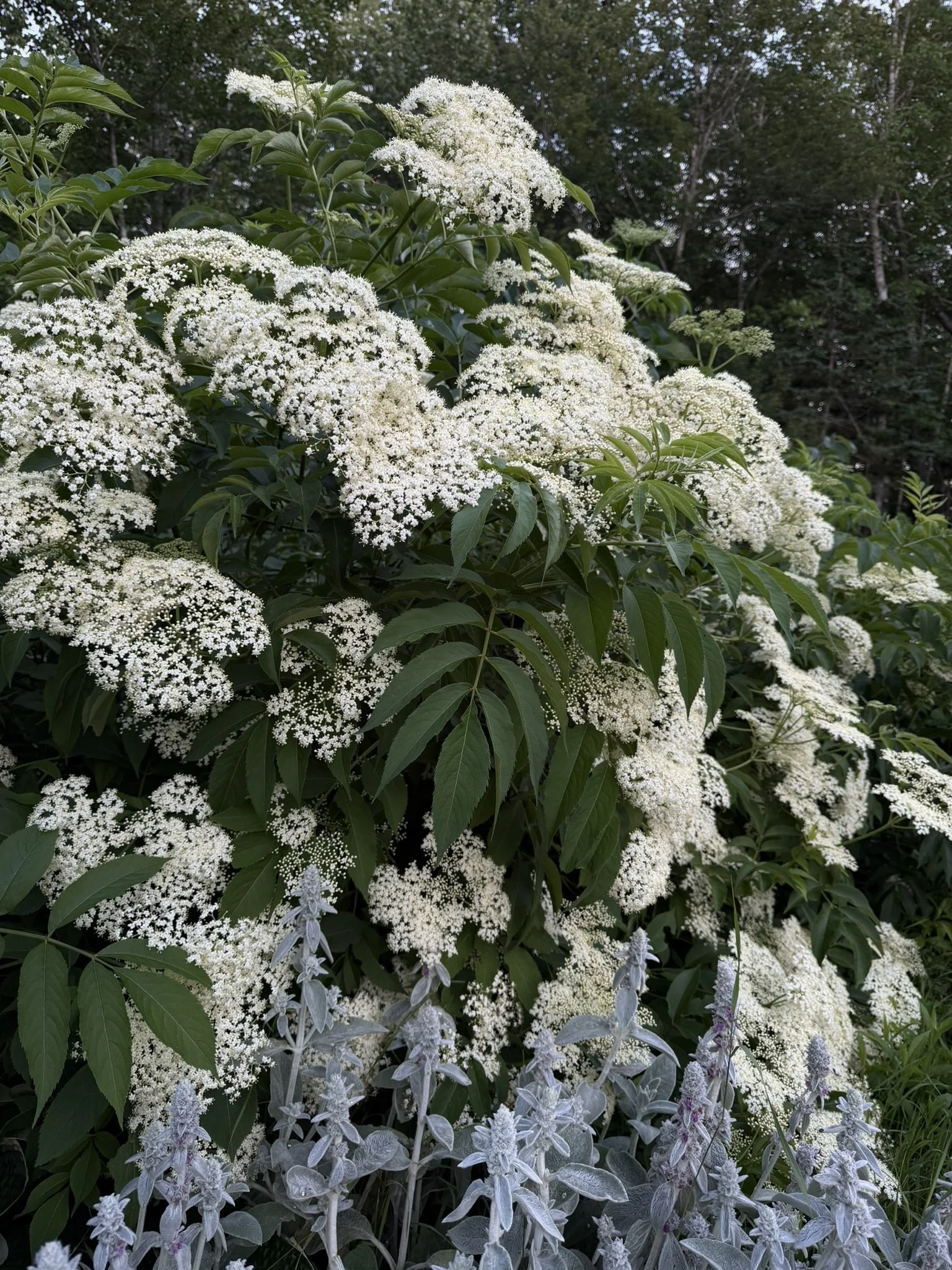
Elderberry and stachys in bloom.
One way I enjoy carrying a bit of the season into the future is by making liqueurs. They can be made with a variety of ingredients, but the basic principle is to use alcohol to extract the flavor and fragrance of an edible flower or fruit. The resulting infusion can then be sweetened and used in cocktails or desserts.
When foraging in the wild or even in your own backyard, it is essential that any plant or fruit you intend on using for food or drink is positively identified as safe for consumption. That also does not necessarily mean that everything safe for consumption will make a desirable liqueur. Although edible, a crab grass cocktail is probably not a good use of alcohol or time. If you’re curious about what plants in your garden or woods may be tasty additions to your pantry or liquor cabinet, pfaf.org can be a useful resource.
I waited for a bright morning, just as the dew was evaporating in the sun. I selected flower heads that have most of their tiny blossoms opened. Brown, wilted and spent flowers should be avoided, although a few unopened buds are perfectly fine. Also remember that every flower head you pick means less berries for you and wildlife later in the season.
For my project, I collected about 30 flower heads in total. When finished, this will make about half a gallon of liqueur. I think it’s also worth mentioning that many pollinators love to visit elderberry blossoms. I had to be mindful of bees, hoverflies, wasps, and hornets when gathering my flowers, ensuring that they were released before I brought the basket inside to clean and process.

This flowerhead is at the perfect stage of development for infusion. Mostly open buds with no spent blooms.
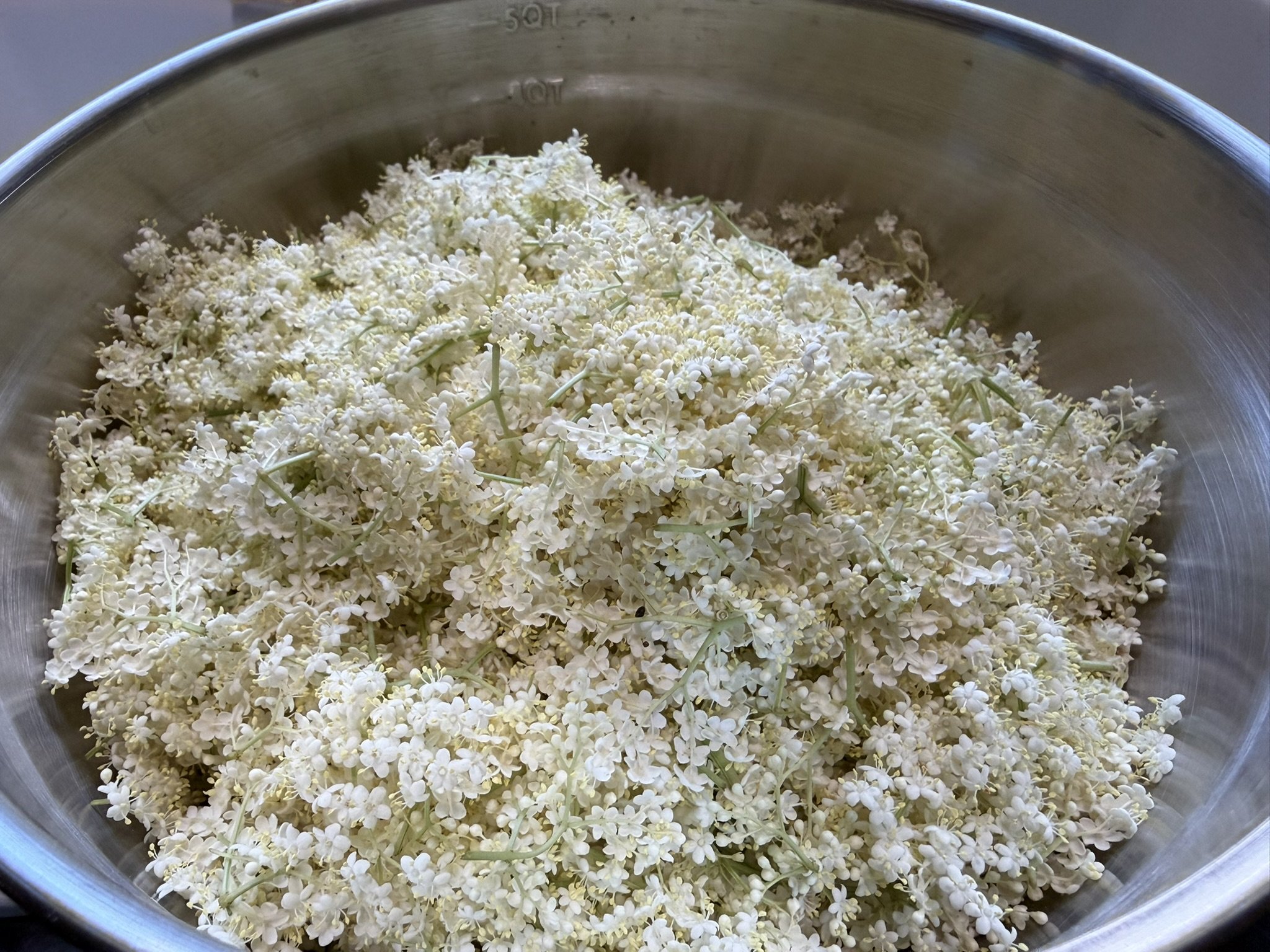
Now came the tedious part. I vigorously shook the flower heads to dislodge dirt and any insects that might have still been clinging to the blossoms. I then, carefully, removed the individual flowers from the stems. It is important to collect only the blossoms and leave as much of the green stems of the plant as possible. The stems, leaves and unripe fruit contain cyanogenic compounds and should not be included in the infusion.
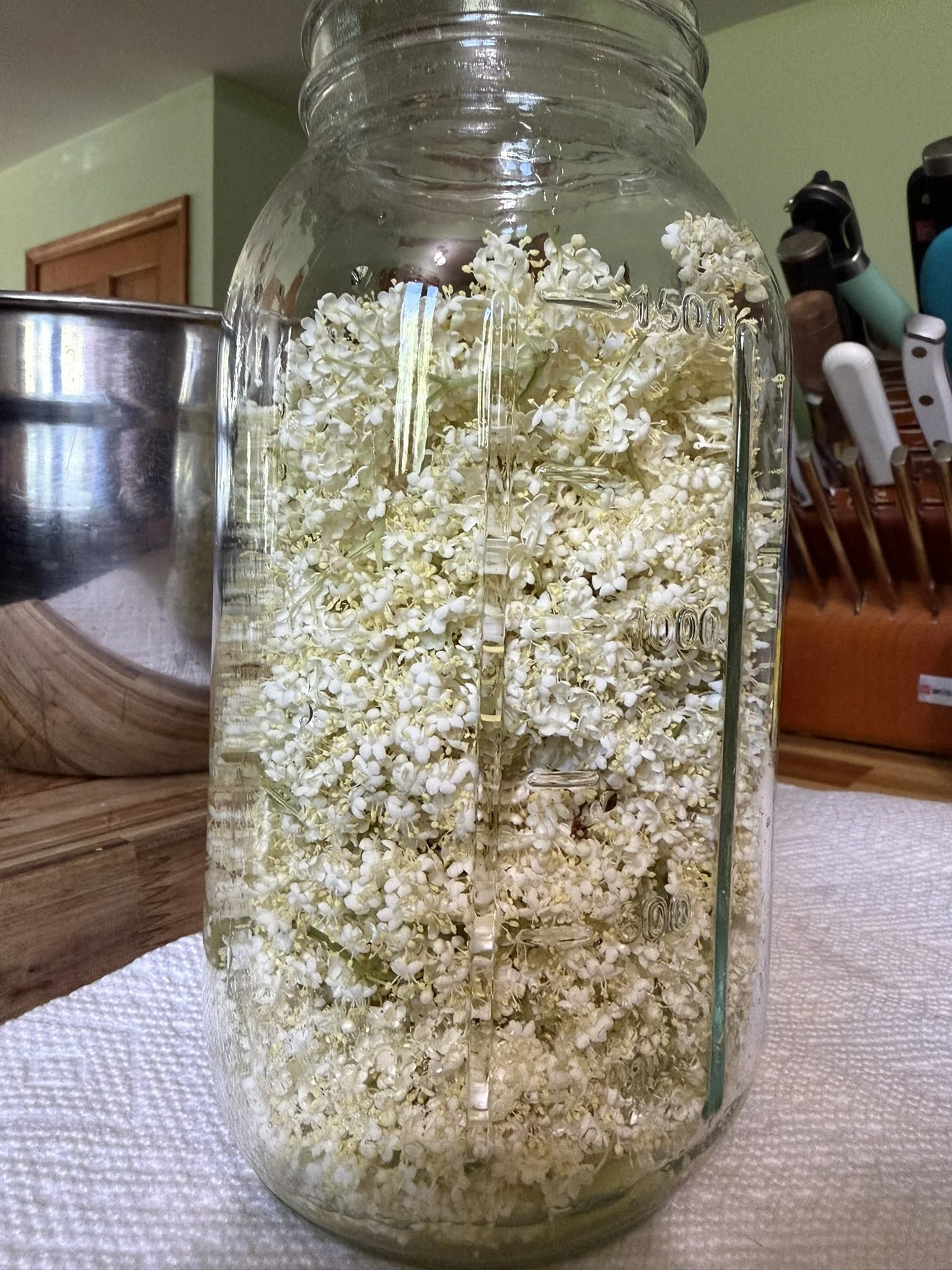
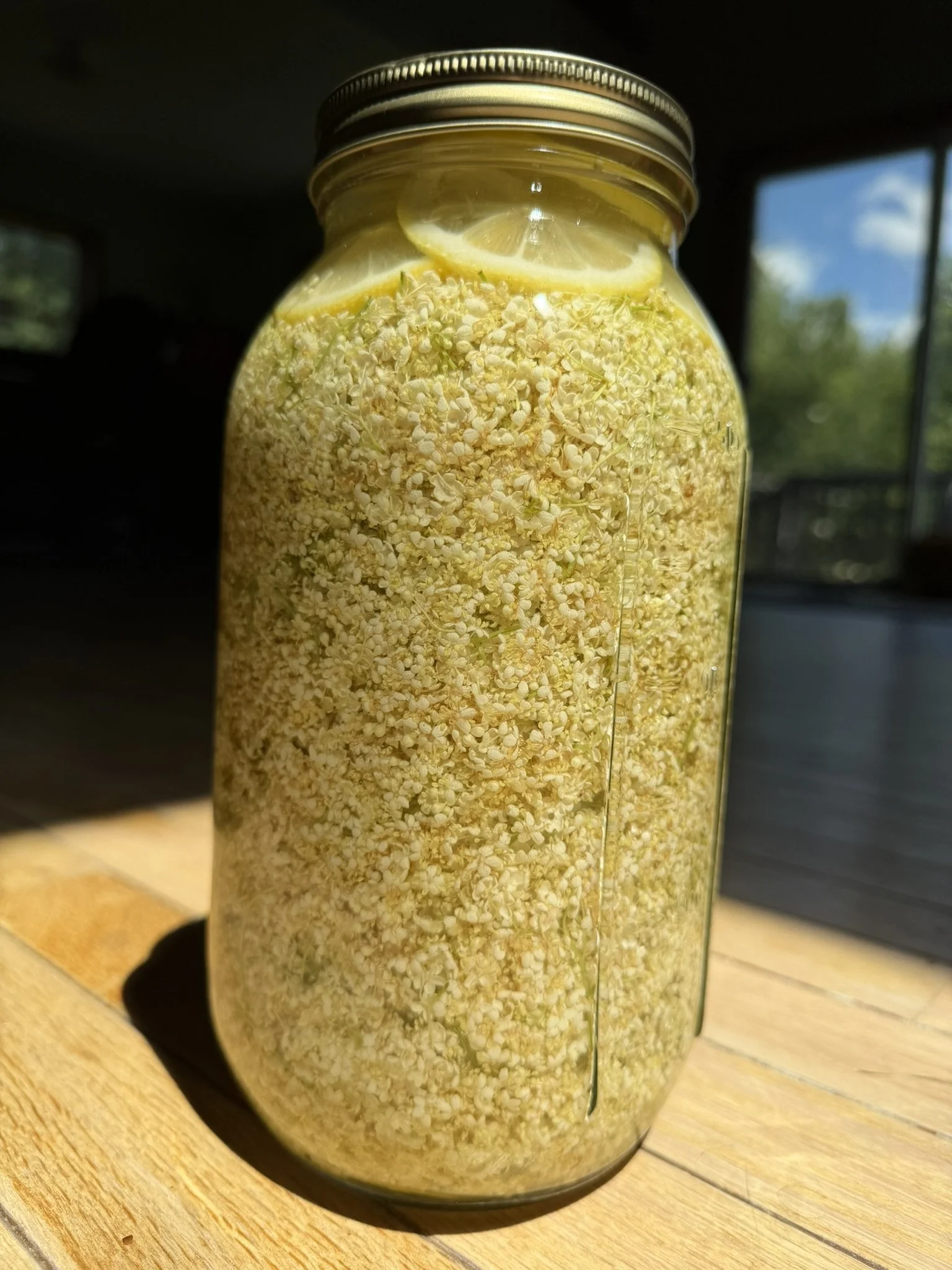
Once the flowers were separated, I prepared my container. Into a clean half gallon glass jar, I added several thin strips of lemon peel, taking care to exclude the bitter white pith. On top of the lemon peel, I packed the jar with my prepared elderberry blossoms. I then placed a few thin rounds of lemon on top of the blossoms to keep them submerged and filled the jar with good 80 proof vodka. I could have used white rum or another neutral sprit of similar proof. I capped the jar, dated it, and placed it in a cool dark corner of my basement. In four weeks, I will strain the infusion through a coffee filter and sweeten it to taste with simple syrup. Simple syrup is easy to make: Combine equal amounts of granulated sugar and hot water, stirring until the sugar dissolves. In the past, I have added about 16 ounces of syrup to 48 ounces of strained infusion. Your taste may vary, so sweeten to your liking. The finished liqueur can be decanted into clean, sealable bottles and kept in a cool, dark place.
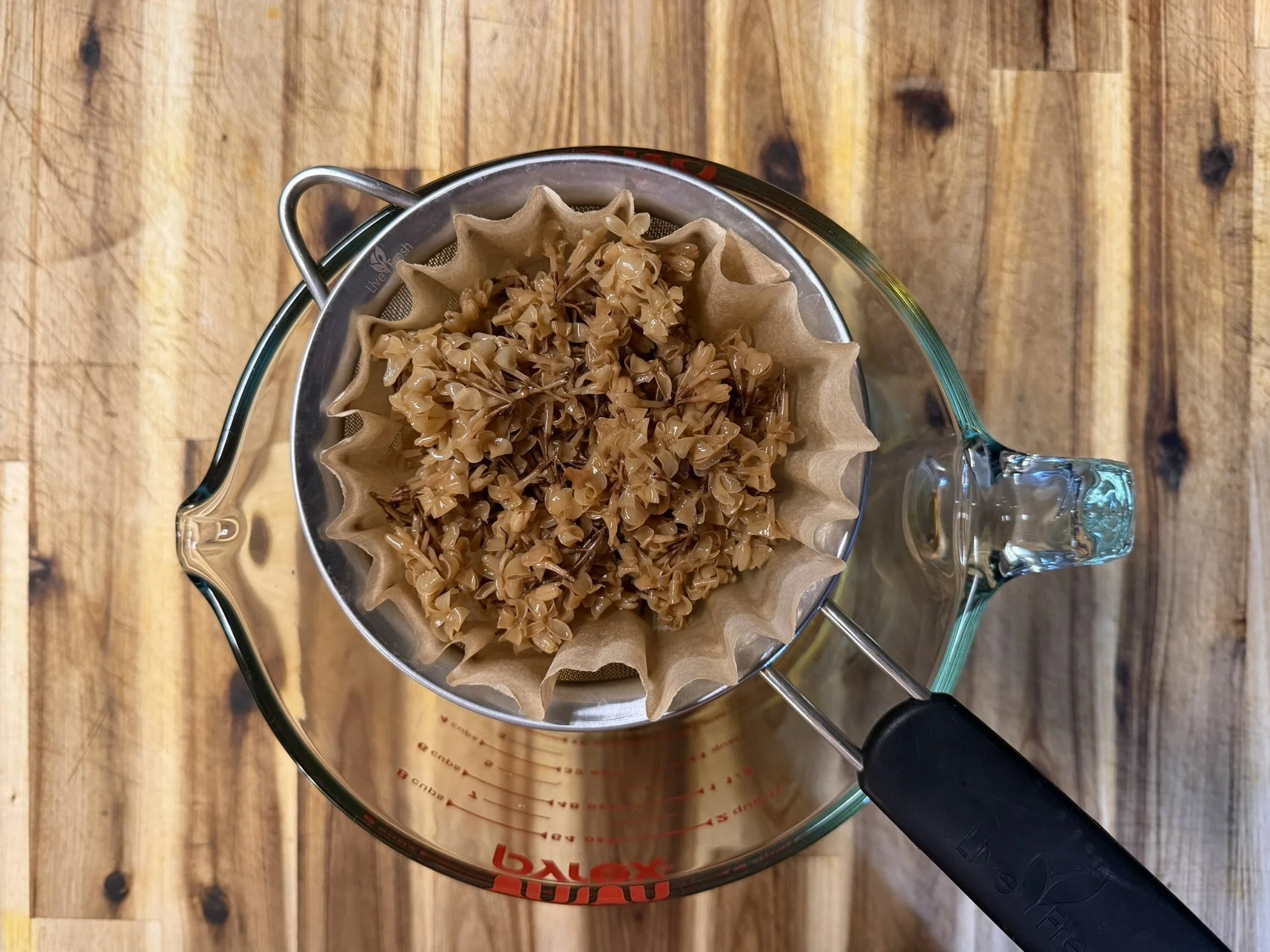
Filtering our lilac infusion that we started in June.
This same basic process works with other edible flowers and fruits. At the beginning of June, I used it to make a lilac liqueur. That batch is now ready to become a bright, floral summer cocktail. After filtering and sweetening the infusion, I was left with a fragrant, amber colored liqueur, the once purple flowers having transformed the clear vodka into a warm toned liquid treat. My favorite way to enjoy these in the hot months is in a spritz. I use one part liqueur, two parts club soda, and three parts prosecco. Mint is a lovely accompaniment to these warm season drinks, and I slap a few leaves and place them in the bottom of a large wine glass. I then fill the glass with ice, add the liquids, gently stir, and top with more mint and a wedge of lime.
Gardening teaches us that nearly everything arrives briefly and sometimes leaves before we are ready. A jar of blossom liqueur does not stop the season, but it lets us borrow a little of it for later. On a hot afternoon, poured over ice with bubbles, mint, and lime, it tastes remarkably like summer agreed to stay a while.
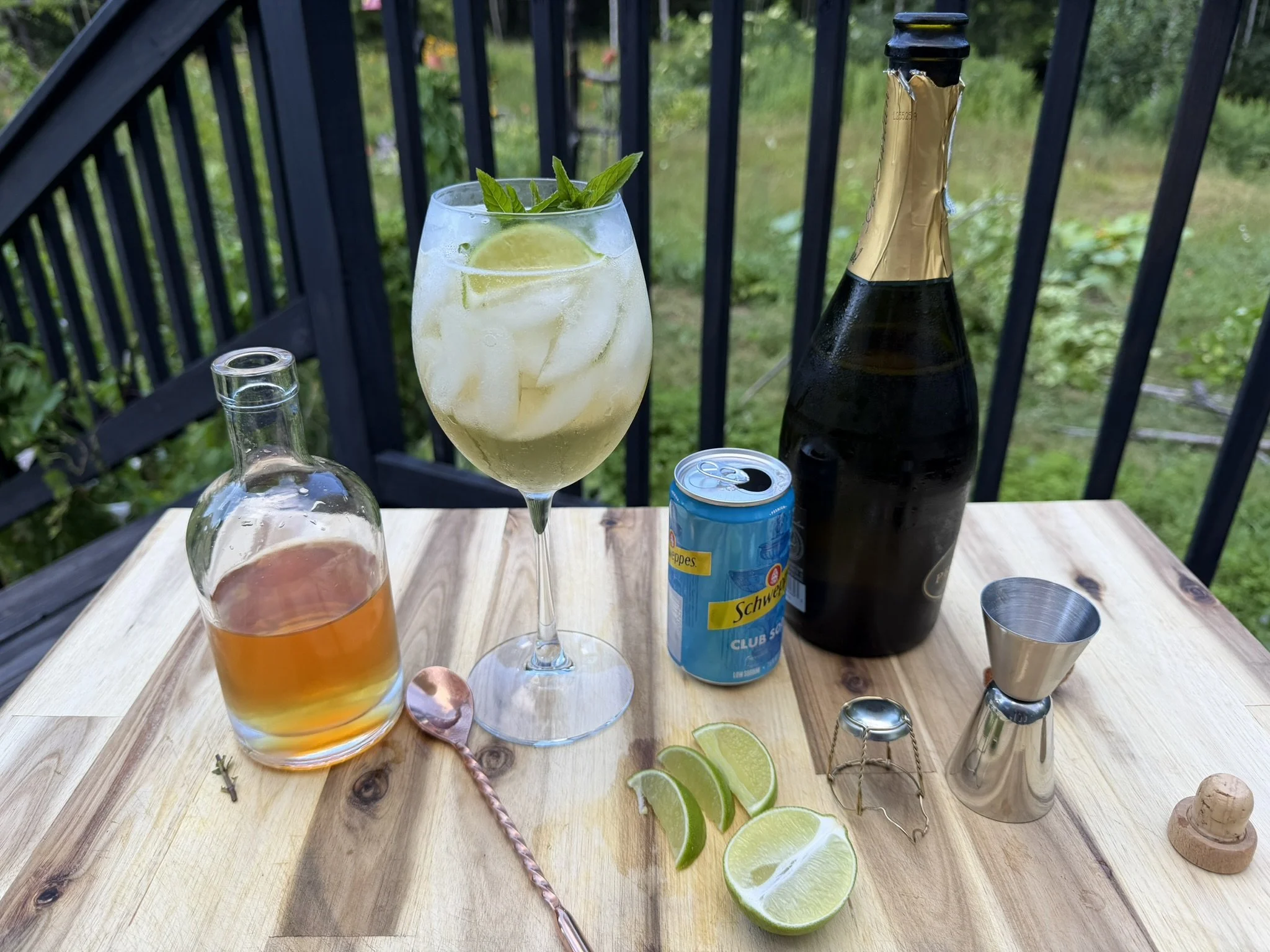
A summery lilac spritz.