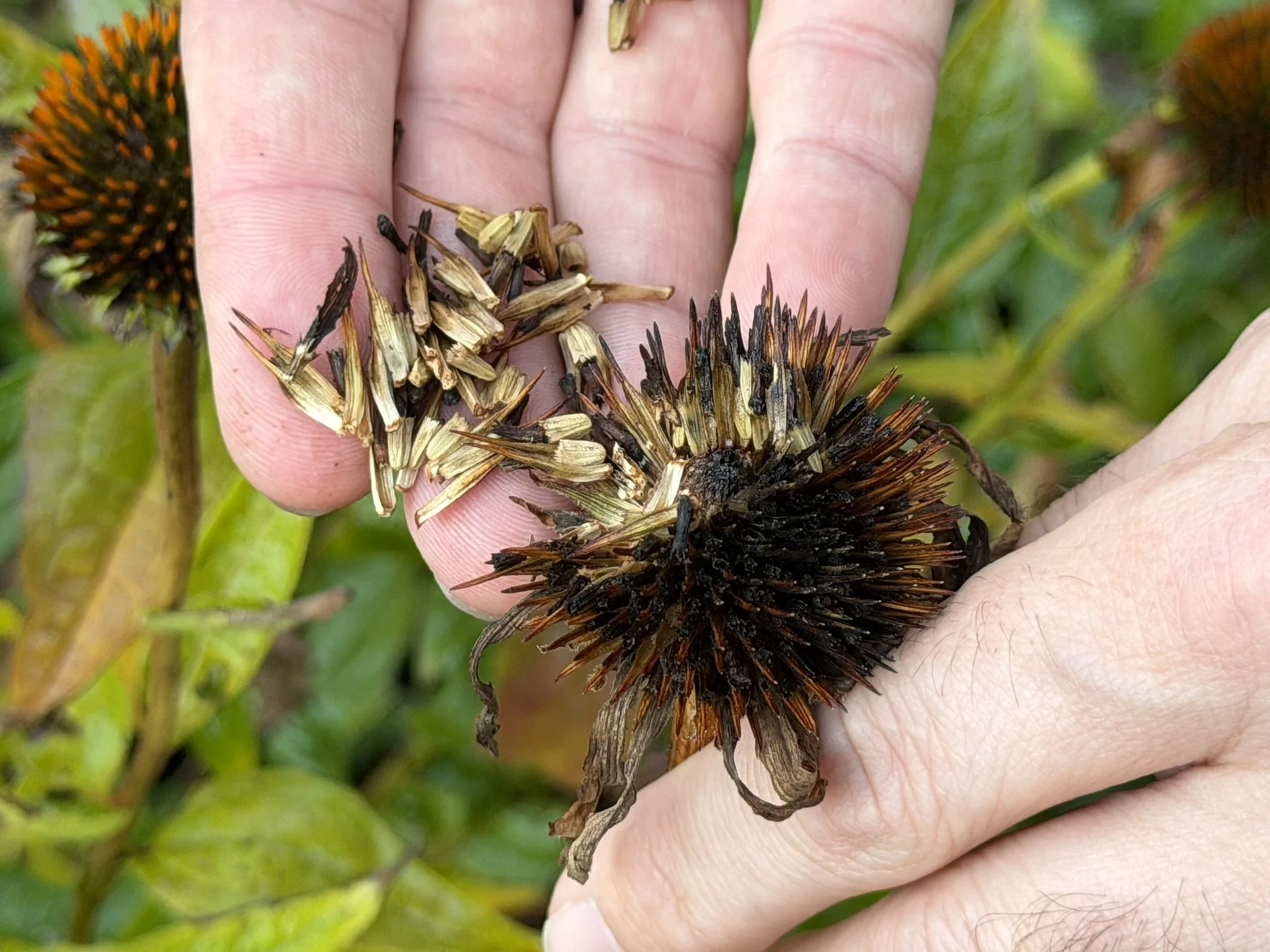
Echinacea seeds provide winter forage for finches and other seed-eating birds. And they add some architectural interest.
A few cold nights have come and gone, the fall foliage is reaching its peak, and the garden is showing signs of Jack Frost’s bite. It’s the end of the growing season. The tended beds of perennials are withdrawing in preparation for the winter to come. This is usually the time when you’ll hear folks talk about putting their gardens to bed. But a perfectly clean garden isn’t necessarily healthier or more beautiful.
We usually leave the stems and remnants of summer’s flowers, foliage, and seed heads that have architectural or wildlife interest through the winter. The dried seed heads of echinacea, sometimes called coneflower, provide food for overwintering finches, and add structure to the garden in the colder months. Other perennials with hollow or pithy stems, such as monarda, heliopsis, and lilies, can provide nesting and overwintering habitat for solitary bees and other insect garden companions. If you want native pollinators in your yard, leave a few areas of hollow-stemmed plants standing through the winter.
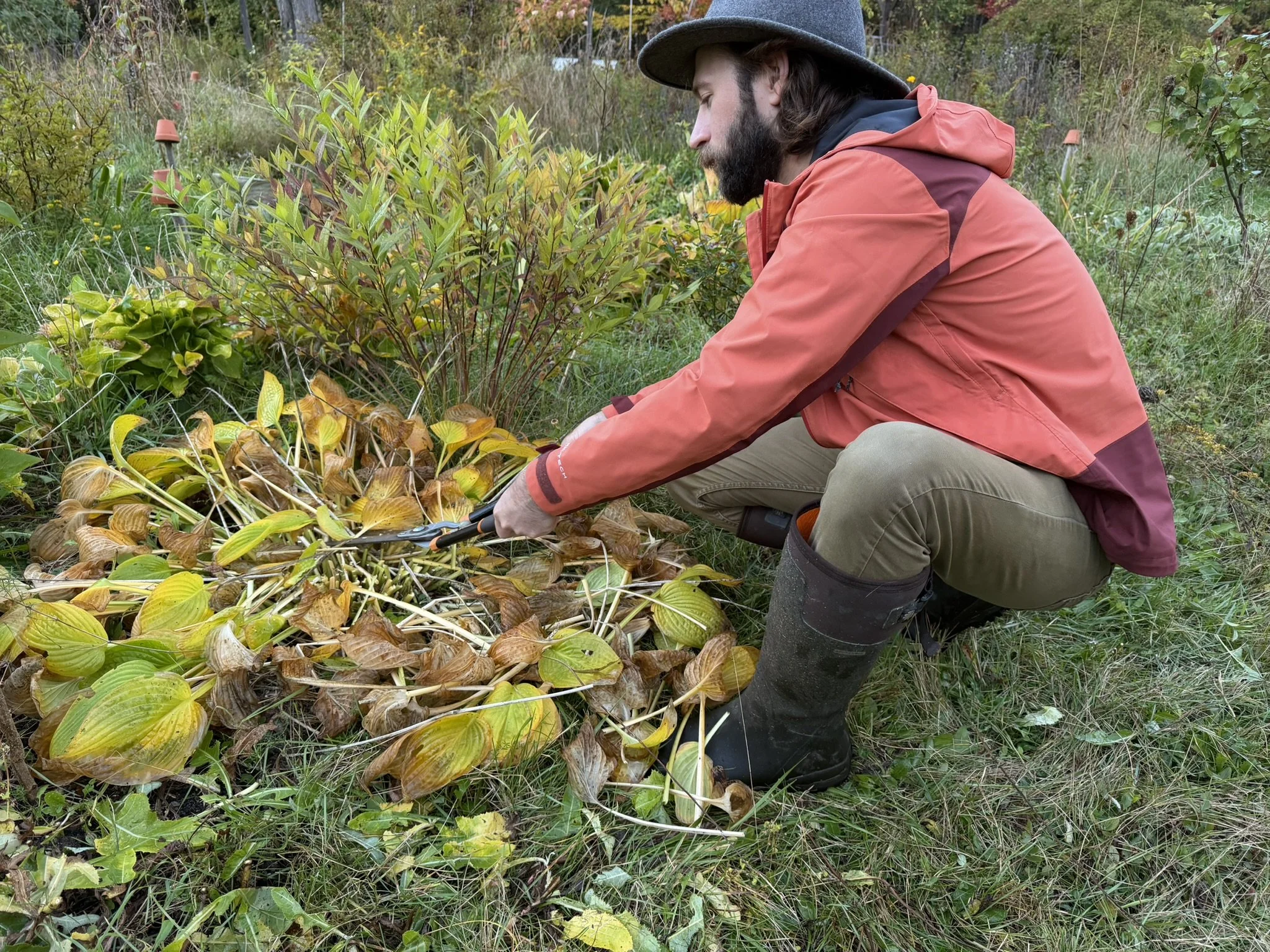
Cutting back frost damaged hosta leaves to just a couple inches above the ground.
While we leave some stems standing through the cold months, that doesn’t mean no garden cleanup is necessary. Hostas collapse into a wilted, wet glob, a perfect meal and hiding place for slugs and snails. Not to mention the aesthetics of a mass of slimy, rotting leaves. I clip hosta leaves back to within a few inches of the ground as soon as I see them begin to die back. I do the same for lady’s mantle, ligularia, and other herbaceous perennials that collapse with a hard frost. Once cut back, I compost the leaves.
Roses can be prone to fungal diseases. In an abundance of caution, I gently rake up the thin layer of fallen leaves beneath our roses and dispose of them in the garbage. This helps remove potentially harmful fungal material, including that associated with diseases such as black spot, from the garden.
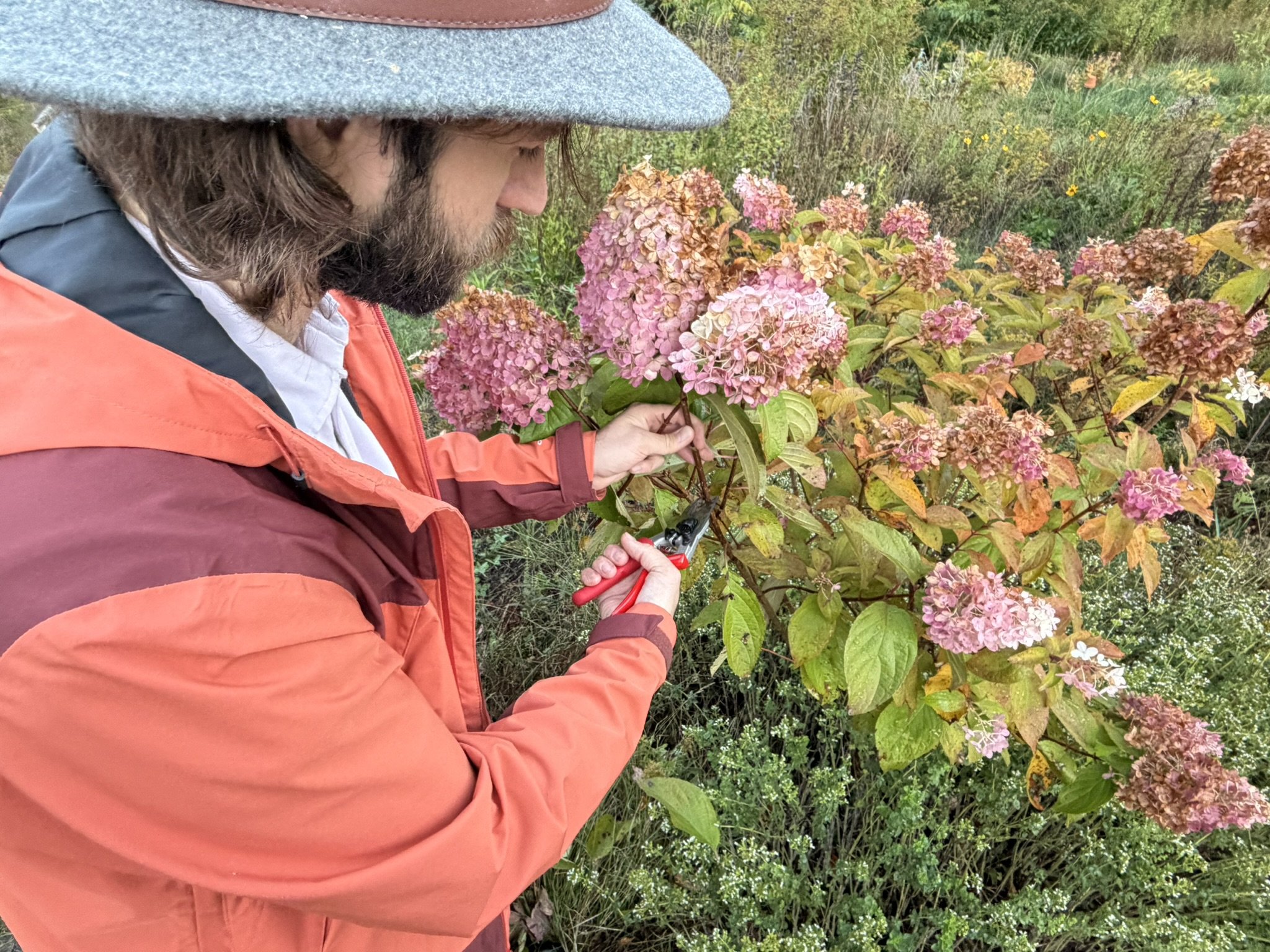
This is also a good time to bring remnants of the peak season indoors. Panicle hydrangeas make excellent, long-lasting dried flowers. I still have beautiful blossoms that I dried last year, their color and texture largely preserved. Herbs, especially cold-hardy ones such as cilantro and parsley, along with healthy woody herbs like thyme, sage, and rosemary, can be cut and dried now for use through the winter. Herbs can be placed in a dehydrator, hung in a cool, well-ventilated space, or placed in a very low oven, 200 degrees F or lower, until cracker dry. “Cracker dry” means the stems snap rather than bend. Once dried, the herbs can be stored in an airtight container for several months.
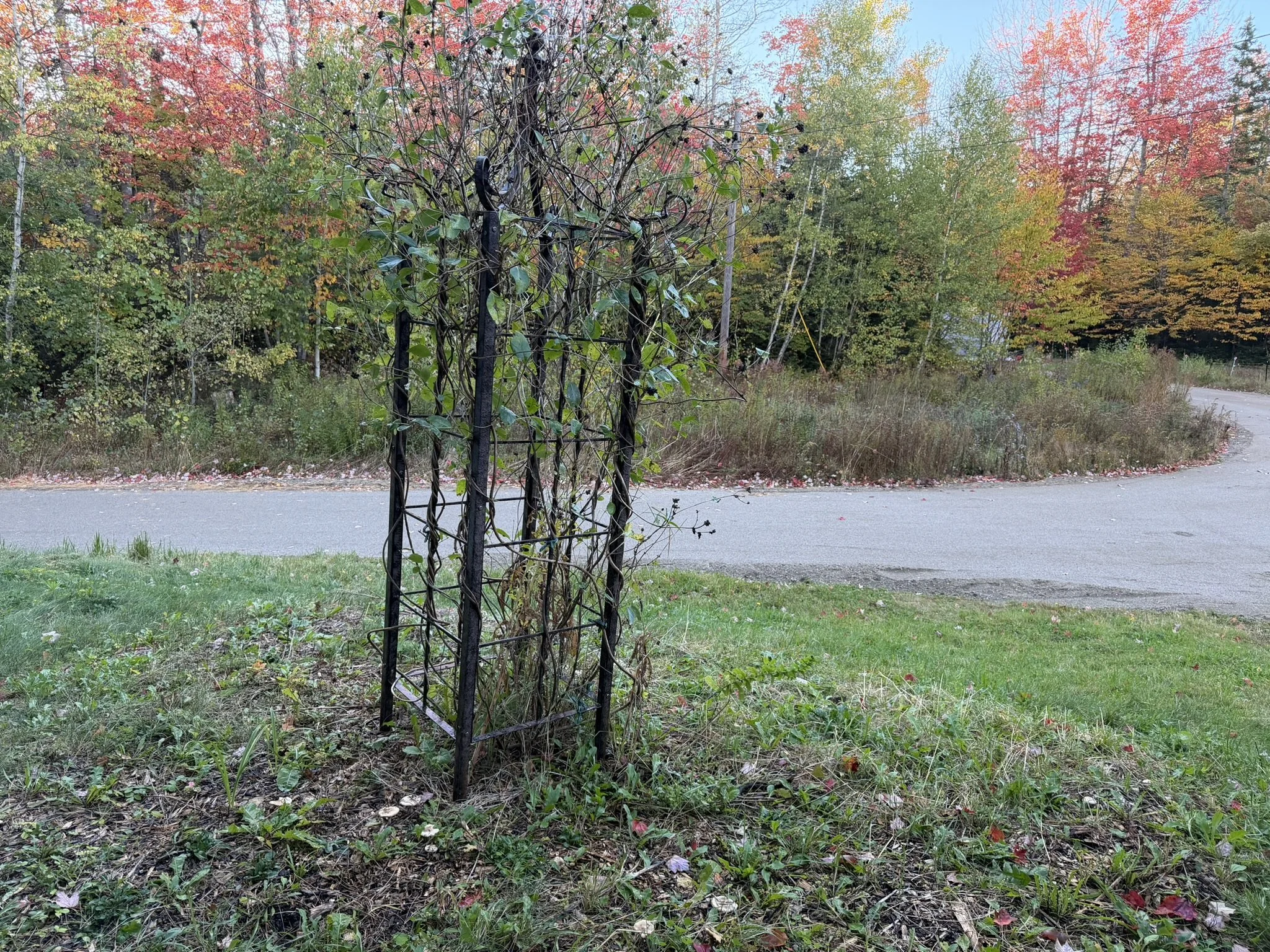
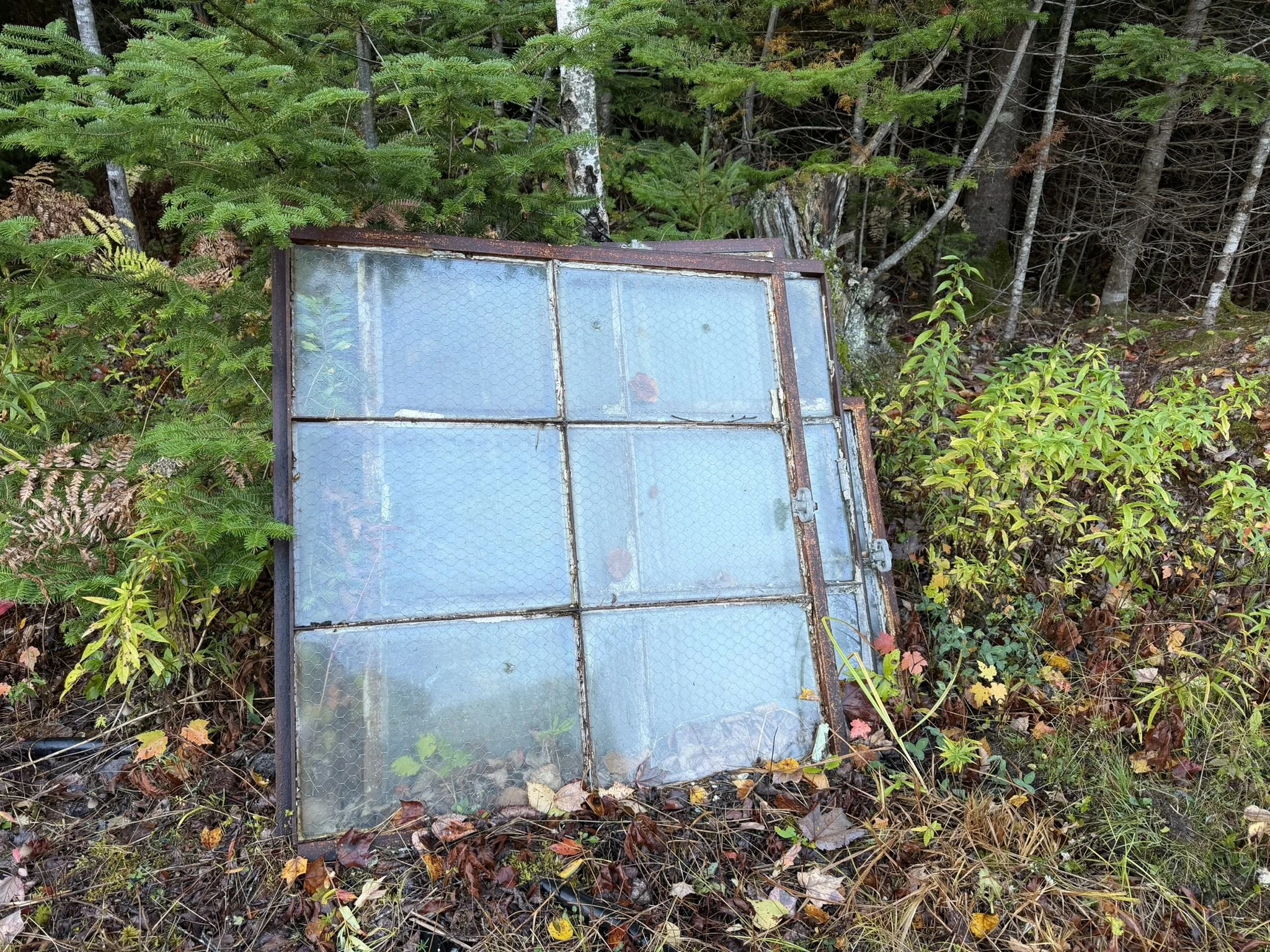
This is also the time when I realize there are projects I intended to complete this year that will have to wait until the next. I have been collecting windows for a glasshouse that I never got around to building. I had hoped to create a new bed around a decorative obelisk that still sits alone in a weedy patch of ground. The truth is, gardens are not projects that reach completion in the fall. Gardens are an ongoing endeavor of improvement and change.
Putting the garden to bed isn’t about finishing every project and raking the beds clean. There will always be one more thing to cut, rake, divide, or tidy. Gardening doesn’t have an end date and it changes with the seasons. Spring will be waiting with fat buds, unfinished projects, and your fresh ideas.