Growing wine caps in the berry patch
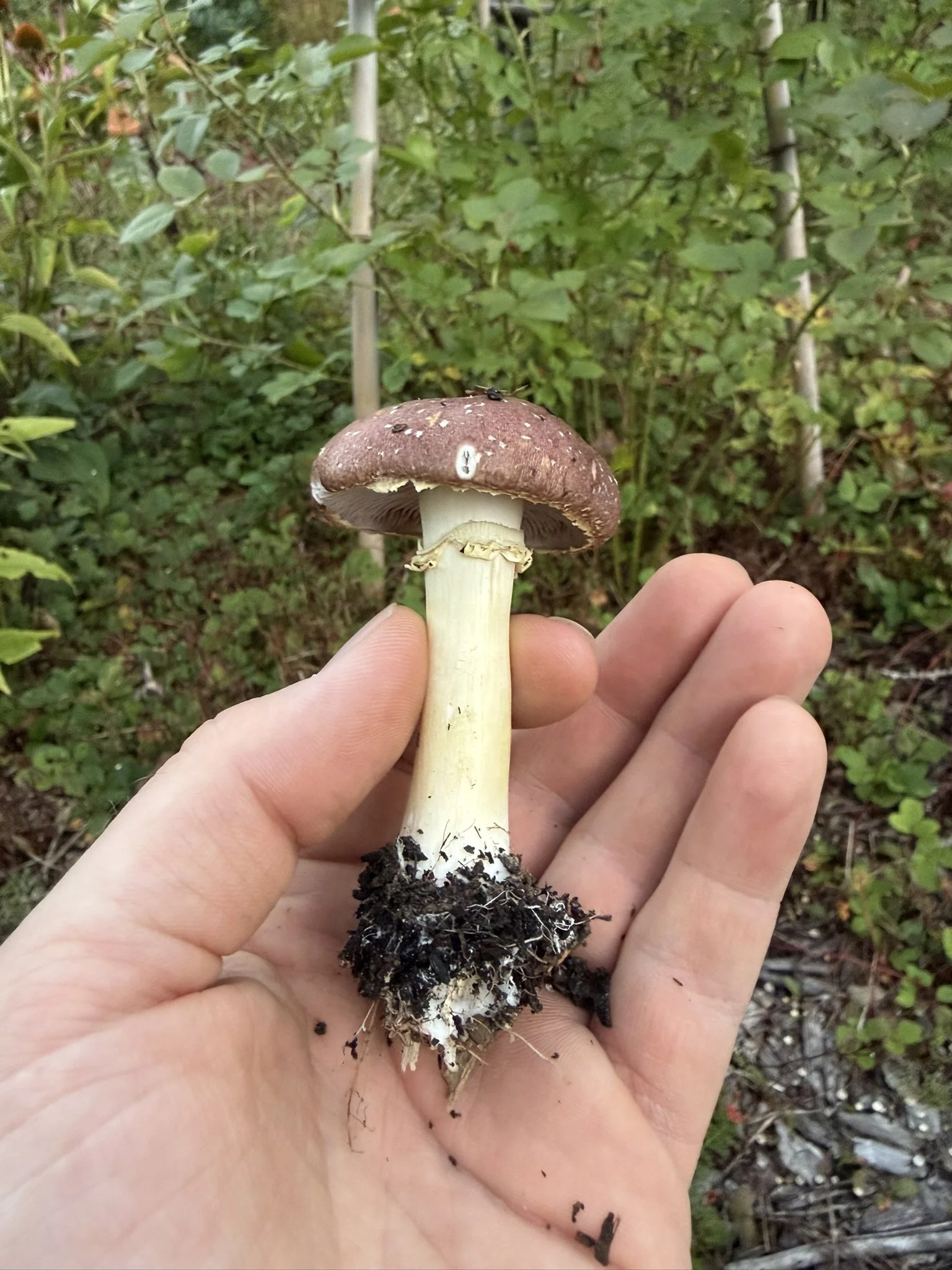
Wine cap mushroom from a previously planted mushroom bed.
Yesterday, a few minutes after sunrise, I walked outside to find my car draped in a crystalline glaze. Fall has arrived. I will miss the warmth of the summer sun, the melodic hum of bees and the choppy clicks of flying grasshoppers. I will miss the surprise and color of emerging blooms, too, and the bounty of produce from the garden. Even if we have a favorite time of year, each season has its gifts. Fall has plenty to offer.
This time of year, we harvest frost-sweetened beets, turnips, broccoli and other cool-season crops. With the return of regular rain and some warmth left in the soil, it’s also a good time to plant perennials and young trees. Along with the rain and cooler temperatures comes another seasonal delight: mushrooms.
In summer, many species of fungi stay hidden, spreading through the forest floor beneath leaf litter or through our lawns and gardens beneath mulch and grass. You may have seen their webs of fungal tissue, called mycelium, while weeding or digging in a flower bed. Mycelium can look like a dense web of thin white roots or a gossamer net of golden yellow beneath layers of decaying leaves. Then, as the rains come and temperatures cool, many fungi send up fruiting bodies: the mushrooms we see in fall. They come in every color. Some are culinary delicacies; others are deadly if eaten. I find all of them fascinating, and they are my favorite part of fall. Searching for and cataloging as many mushrooms as I can on a walk through the woods has been a pastime since I was a boy. My spouse and I have enjoyed taking mushroom foraging classes together. They’re also a great way to meet people with similar interests.
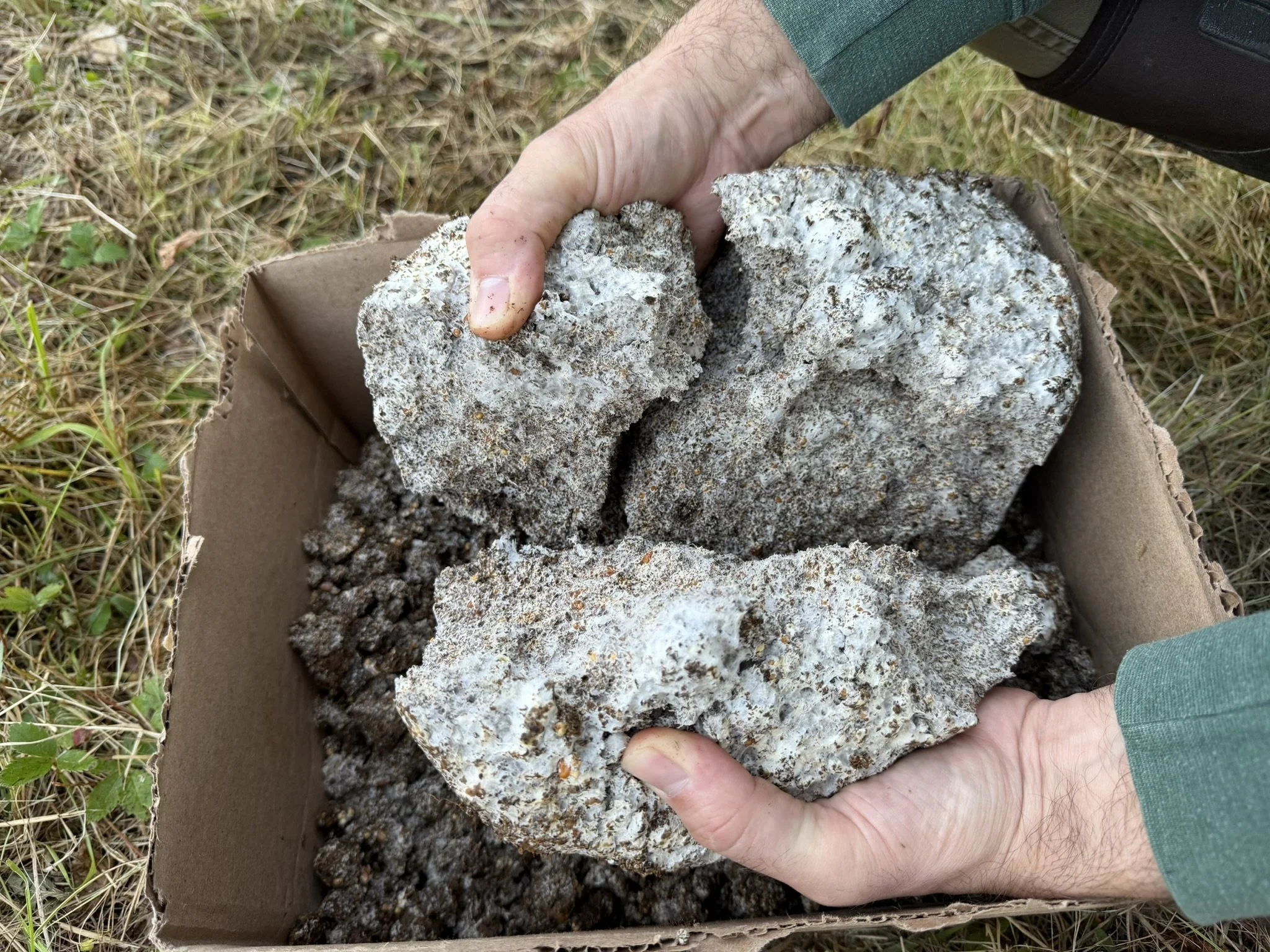
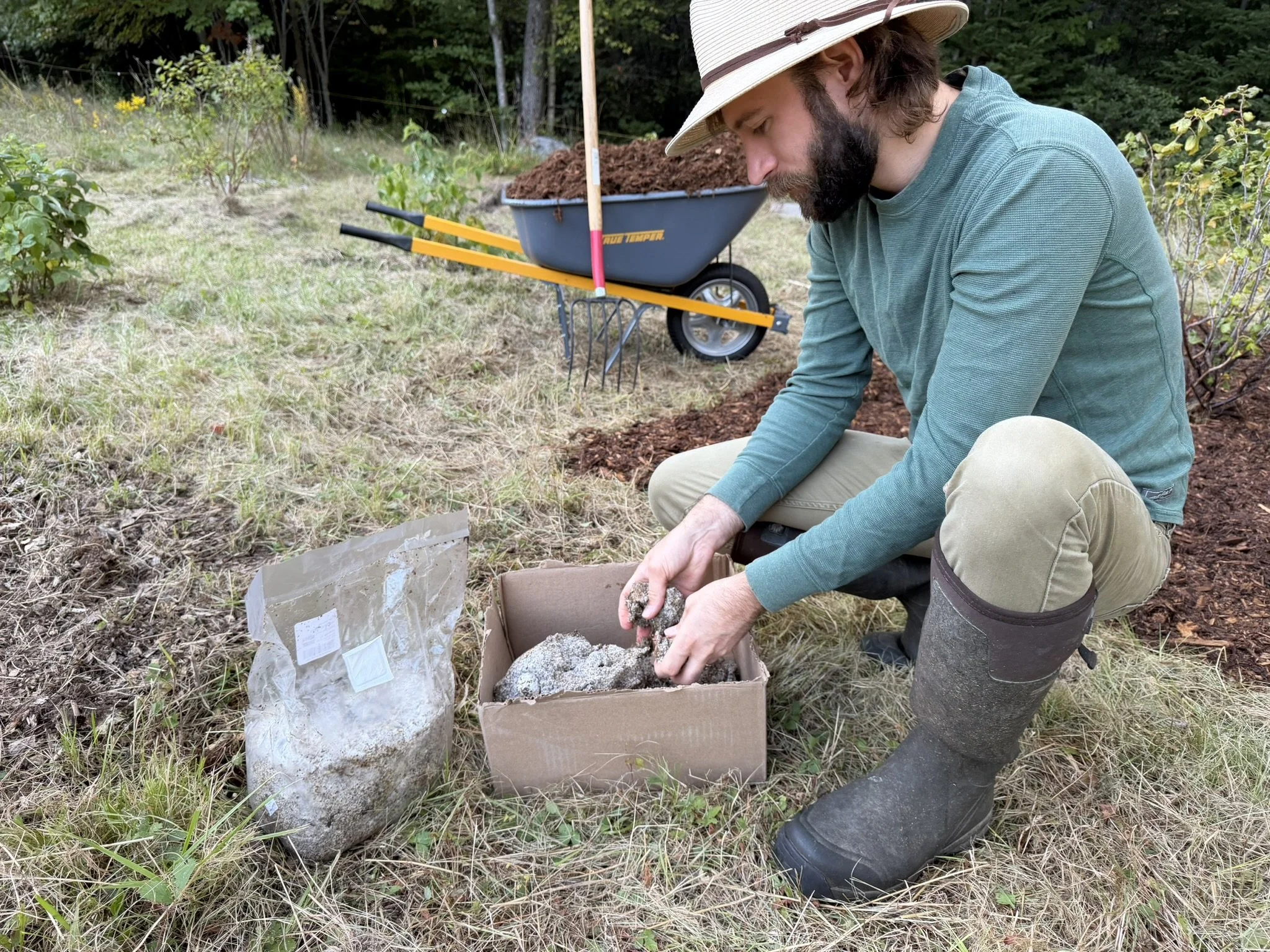
Breaking up wine cap mushroom spawn. The mycelium, or underground structure of the mushroom, has colonized this brick of sawdust.
Mushrooms can be cultivated in the garden, too. Several species can be grown at home, but I’ve found wine caps (Stropharia rugosoannulata) easy to grow and reliable producers. This year, we added a wine cap bed around our berry patch. We started by buying mushroom spawn from a reputable vendor. You can find vendors online, at farmers markets and at some agricultural fairs, such as the Common Ground Country Fair in Unity, Maine. We bought the spawn for our first wine cap bed there three years ago. Wine cap spawn often comes in a plastic grow bag filled with sawdust or grain colonized by mycelium. It looks like a white, moldy brick, but that white growth is the wine cap mycelium.
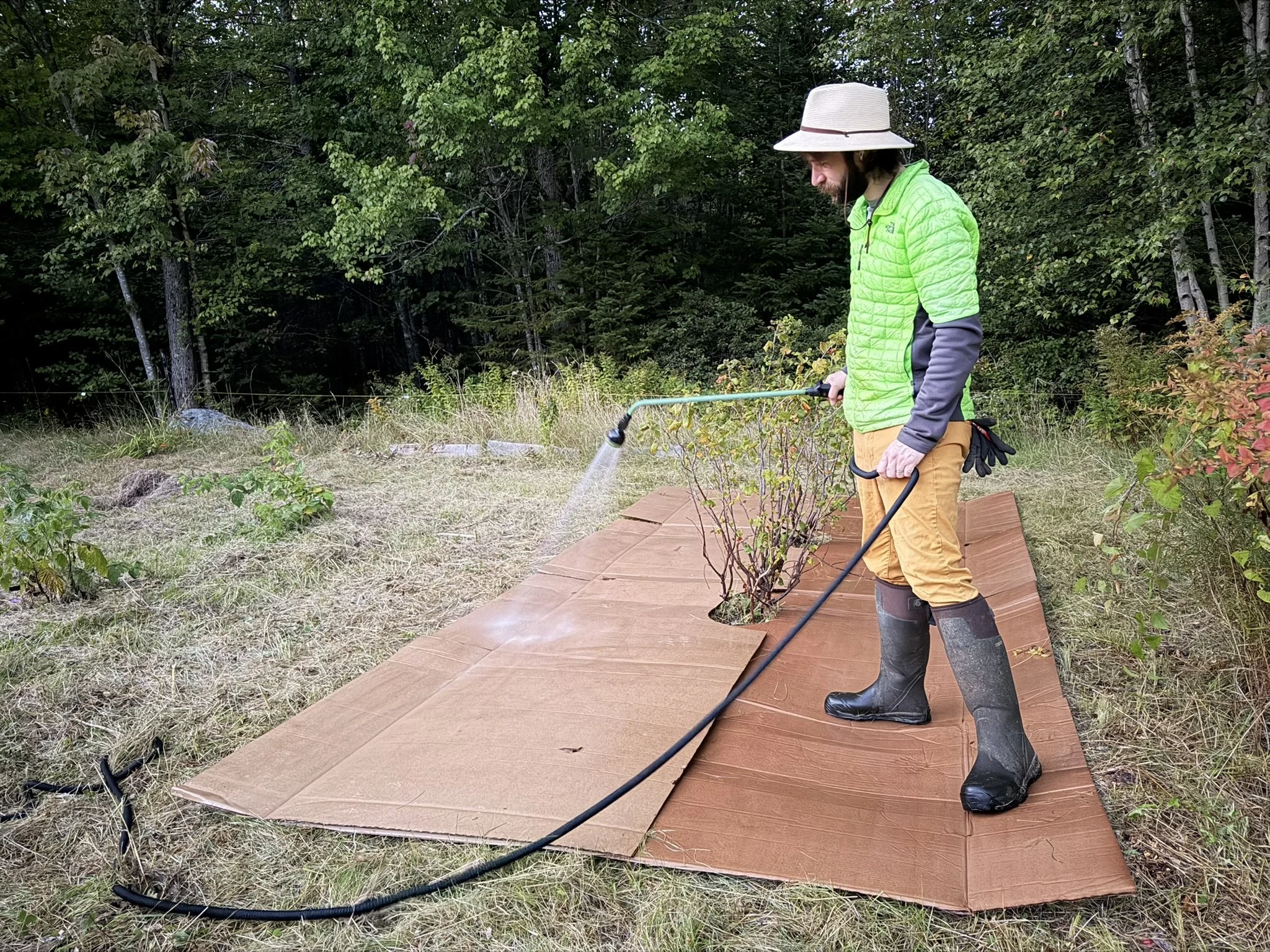
With the spawn in hand, we prepared the new bed in our berry patch. The spot gets some direct morning sun but is shielded from harsh afternoon light. As the berry shrubs grow, they’ll provide more shade. Wine caps don’t need dense shade and can tolerate some sun; the important thing is to keep the bed moist. I laid down cardboard to suppress the grass and watered it thoroughly, helping it settle against the ground. On top, I spread about an inch of wood chips. Hardwood chips, or a mix of hardwood and softwood chips, work well for this bed.
Arborists clearing branches beneath power lines can be a great source of free wood chips. If you can catch them. Their chips are often a mix of hardwood and softwood. I would avoid dyed mulch, cedar and pine bark for a wine cap bed as these mulches can inhibit fungal growth. Once the wood chips were spread over the soaked cardboard, I broke apart the spawn bricks and scattered the pieces evenly across the bed. For this project, I used five pounds of spawn for about 15 square feet, or 15 pounds in all. Then I covered the spawn with about three inches of wood chips and watered the bed thoroughly.
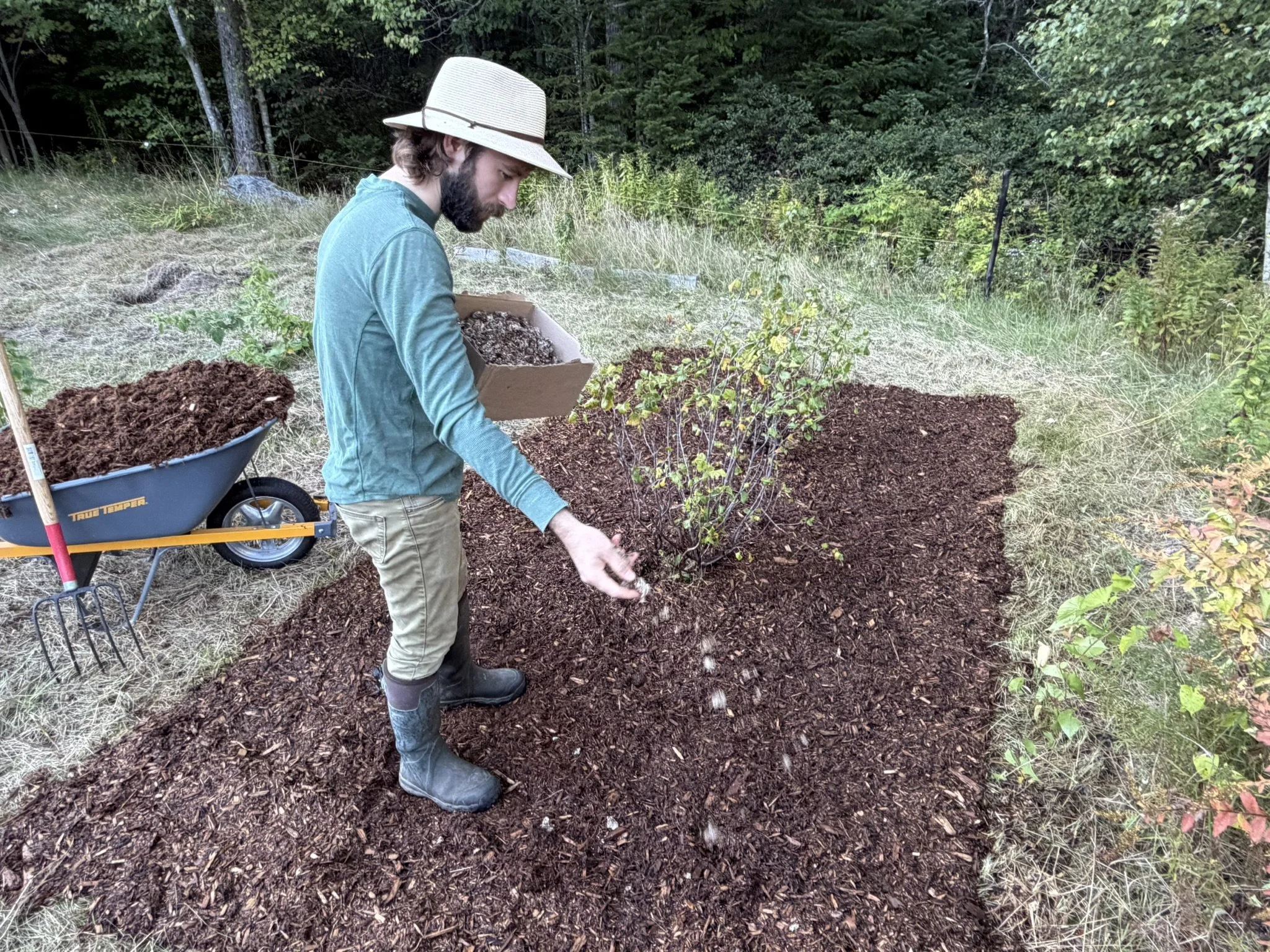
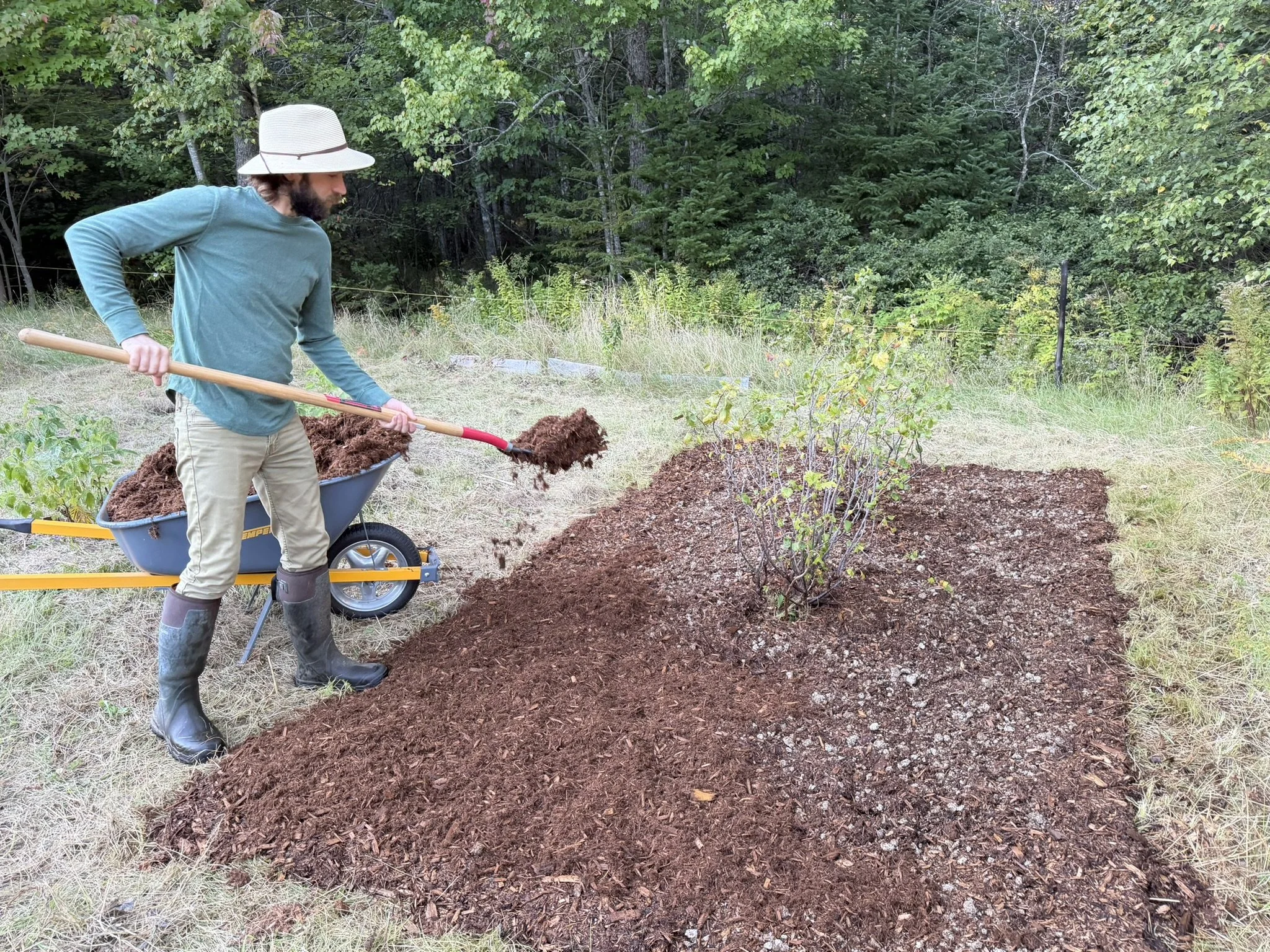
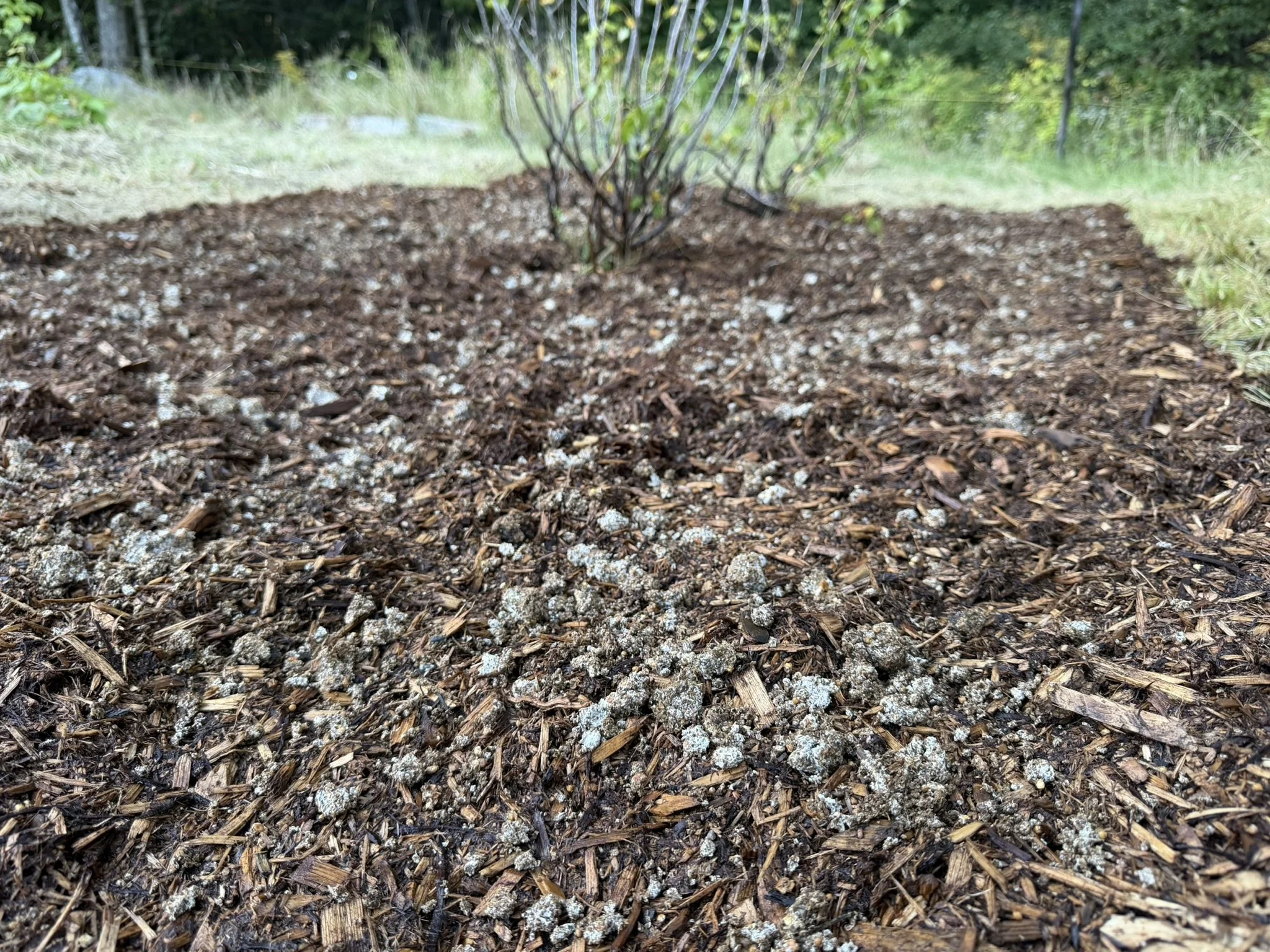
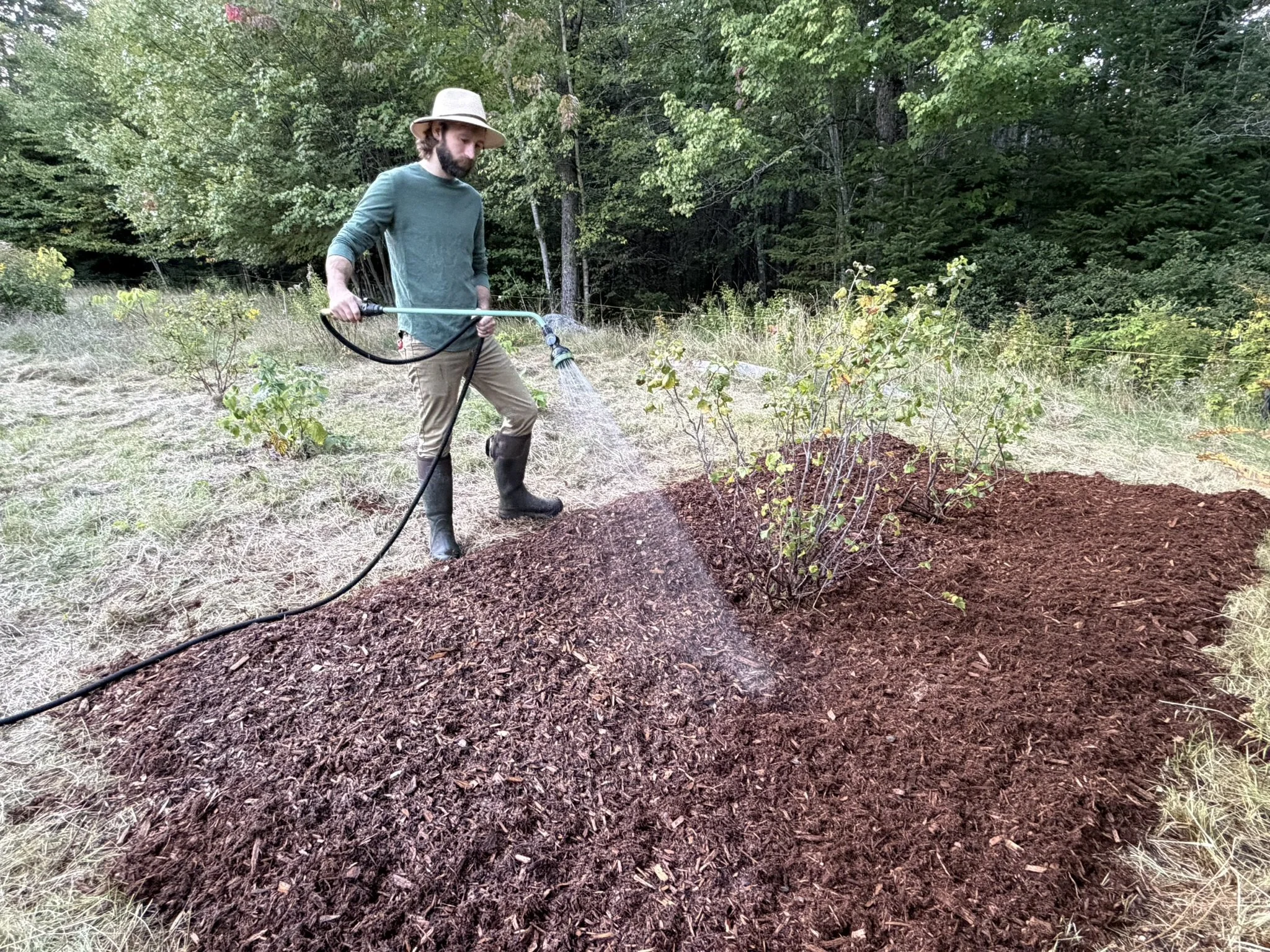
I expect our first wine caps to be ready for harvest next fall, though we may see some in early summer if we get enough rain. I hope the bed will produce for several years. Our previous wine cap beds have spread throughout other parts of our garden. A happy surprise.
Wine caps are mild-tasting mushrooms with a meaty texture. Their flavor reminds me of artichokes, and they pair well with cream sauces and dishes made with almonds or cashews. Before eating any mushroom, it’s important to positively identify it, even if you believe it came from a bed you planted. And cook it thoroughly. A mushroom identification class is a good place to build that skill. Land trusts, such as Frenchman Bay Conservancy, and adult education programs sometimes offer such classes.
Fall is a season of transition. Summer’s flowers and other garden delights may be fading, but something else is beginning. Why not try something new and bring mushrooms into your garden?