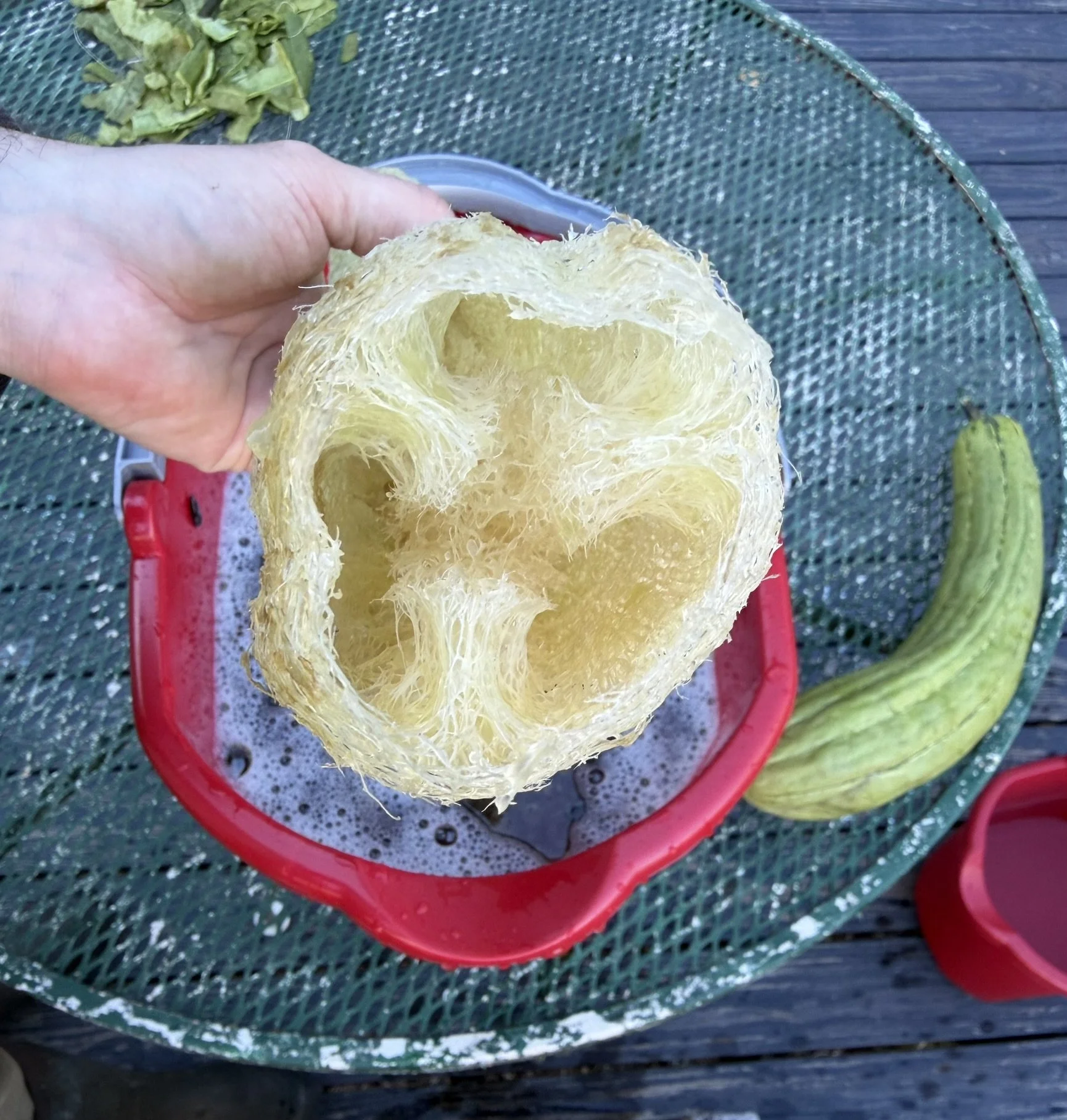
Freshly cleaned luffa with skin and pulp removedYou can grow beauty. You can cultivate spectacular colors in every hue and fragrances that range from sweet, honeyed perfume to an earthy musk reminiscent of a fine aged cheese. You can tend and prune wood and leaf into familiar figures, dogs, dragons, snails, and queens, or shapes only you have imagined. Along with beauty, you can raise food from the earth in your garden. Sweet, bright red cherry tomatoes. Sun-warmed peaches that dribble juice down your chin as you bite into their tender, fuzzy flesh. Crisp, tender greens that provide the first fresh crunch of spring. You can grow beautiful things and a bounty to fill your plates. But did you know you can grow sponges to clean the vases that held those perfumed flowers and the plates that served your summer bounty?
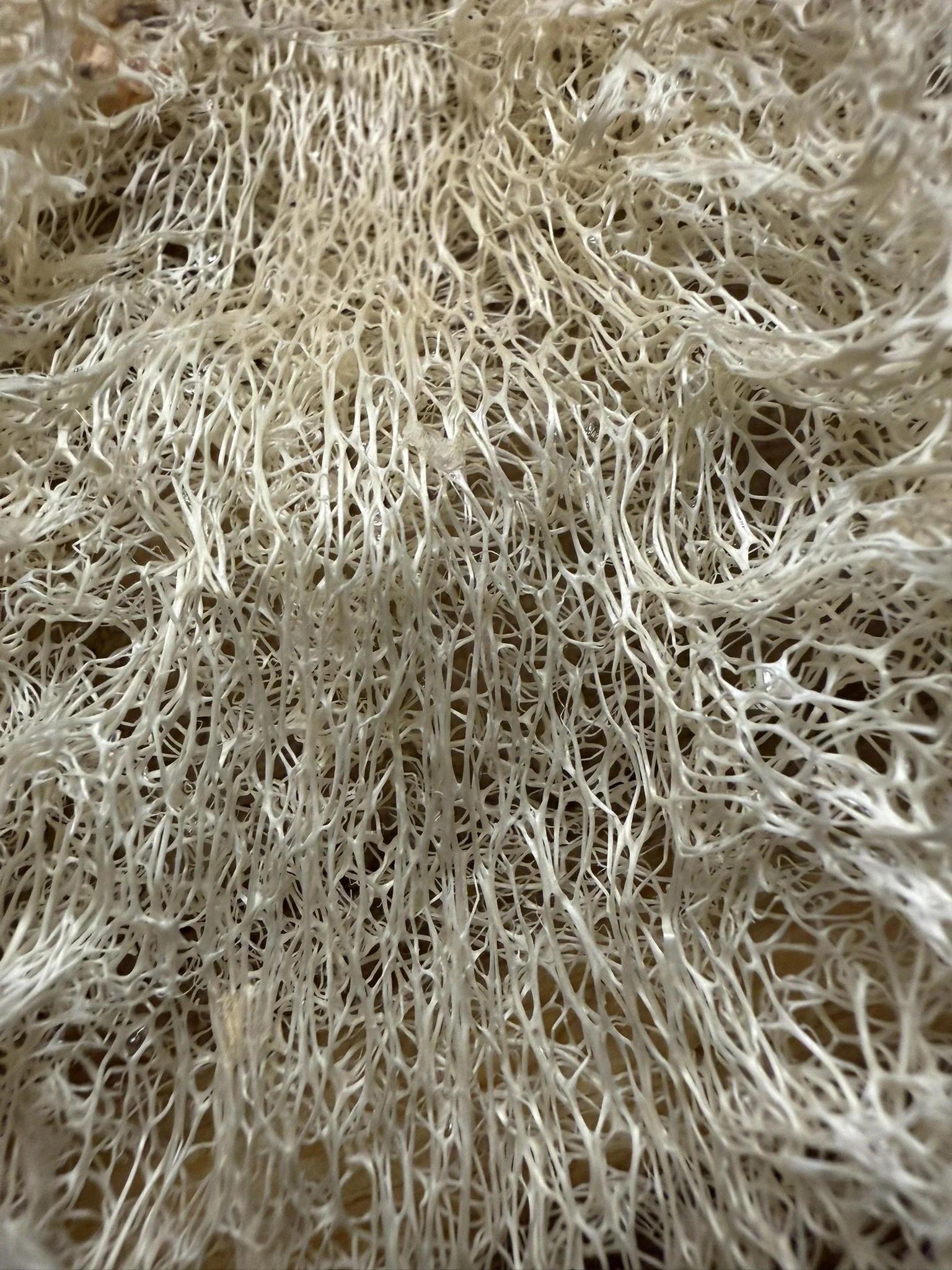
Interior of a cleaned and dried luffa spongeLuffa, loofah, and loofa. You may hear these names used for plastic mesh bath poufs, but here I’m referring to Luffa aegyptiaca. This smooth gourd, a cucumber relative, can be eaten when young and tender. At this stage, it’s similar in flavor and texture to summer squash. Native to the Indian subcontinent, it is widely grown as a food crop in tropical Asia. When mature, the fruit develops a fibrous framework that, once cleaned and dried, can be used as a sponge. Luffa’s use as a bath sponge can be seen in Byzantine mosaics that are over 1500 years old. After centuries of service in warmer climates, a few of their descendants found themselves in my greenhouse in Maine.
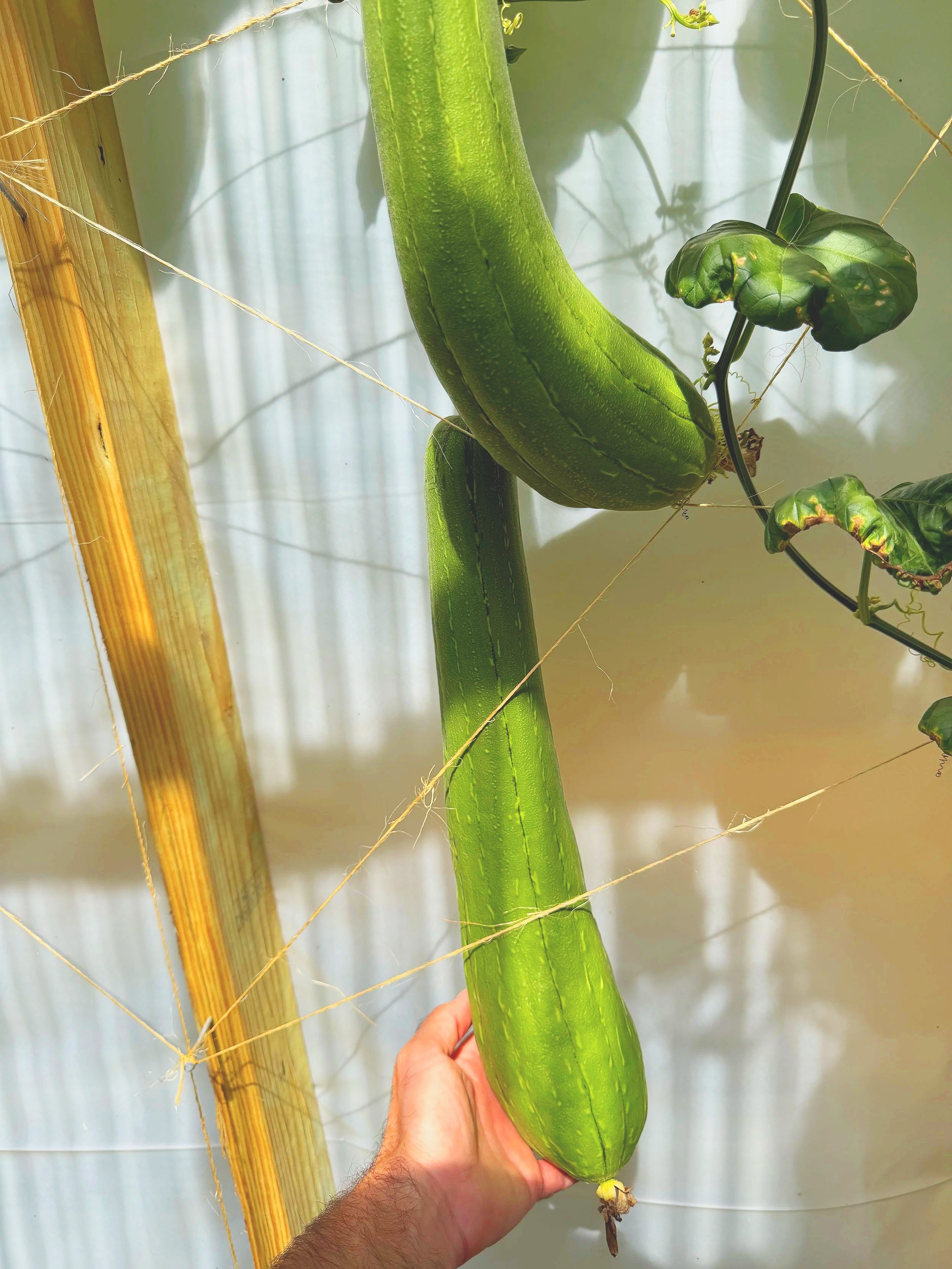
Luffas on the vine in the greenhouseLuffa plants generally need a season of 150–200 frost-free days to grow, flower, develop fruit, and mature. In our limited growing season in Northern New England, it requires some planning and protection to extend the season and allow the fruit to fully develop. I started my luffa seeds, a gift received the previous winter, in our greenhouse toward the end of April. The seeds were about half an inch long and a quarter of an inch wide, with a matte black surface. They look like a large watermelon seed. I pressed these seeds, pointy end down, into three-inch pots of equal parts coco coir and perlite, although any light seed starting mix would work. The seeds were set just below the surface of the soil. Once the seeds were planted, I watered them thoroughly. Store bought seed starting mix can be hydrophobic, meaning that it repels water. If you’re using a dry mix, add water and stir it in before filling your pots to ensure it is evenly moistened.
Once the seeds were potted and watered, I kept them in the warm greenhouse, ensuring temperatures remained above 60°F. You could also start them indoors in a warm spot with ample light, such as a sunny window or beneath grow lights. After a few weeks, the seeds had germinated, and the seedlings had opened their first two leaves, the cotyledons. It’s so exciting to see new leaves and life sprout from the dirt in early spring, even in a controlled environment.
I waited a few more weeks before transplanting the seedlings into their permanent summer pots. In early June, I moved a couple into four-gallon pots in the greenhouse. Like other members of the cucumber family, luffas are heavy feeders and need rich soil with consistent moisture and good drainage. I filled the pots with a mix of 75 percent well-aged compost and 25 percent perlite, which helped with aeration and drainage. To keep the soil consistently moist, I installed a timed, solar-powered drip irrigation system fed by the greenhouse rain barrel. Hand watering would have been possible, but the irrigation system helped keep up with the plants’ needs throughout the summer.
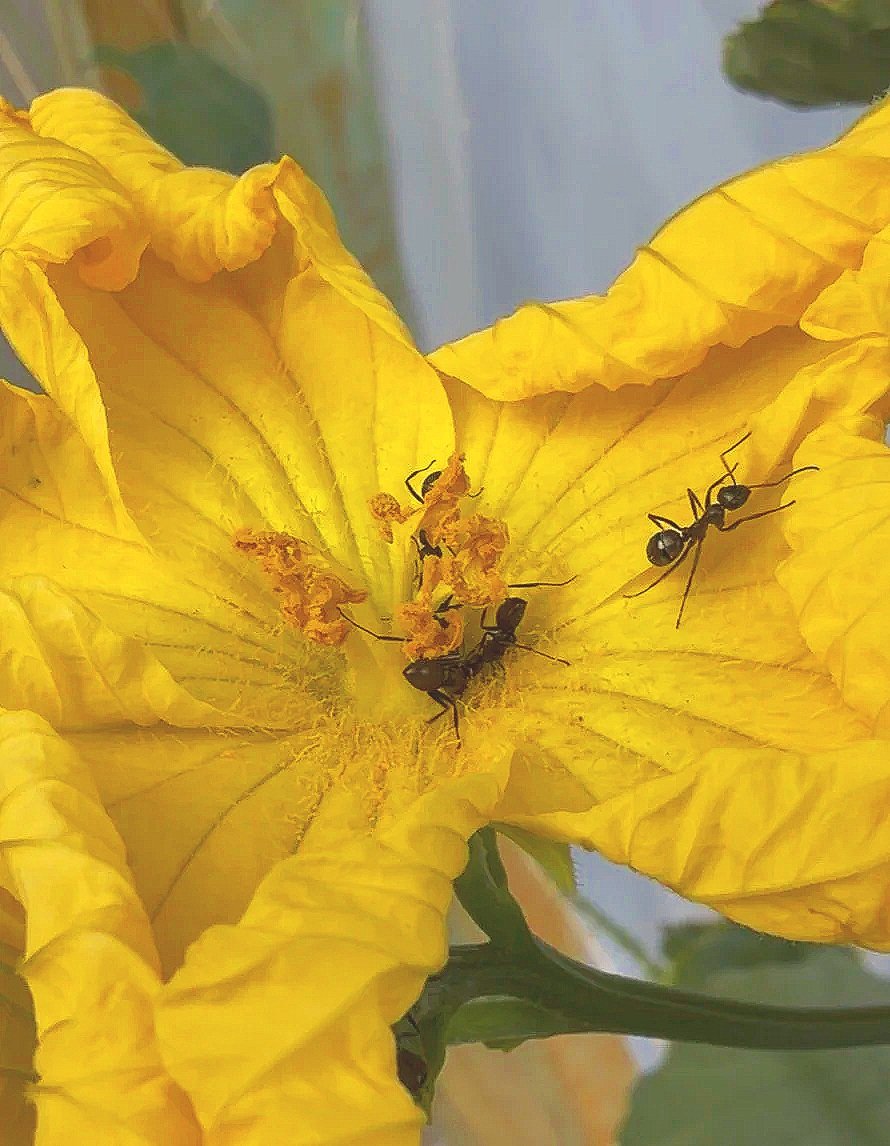
Male luffa flower with pollen covered stamensLuffas are aggressive climbers. My grandmother grew them in Arkansas when I was a child, and I remember their lush, rambling vines taking over parts of the garden, sprawling across a nearby muscadine trellis, and covering the garden paths. These plants need support and room to expand. Here in Maine, I provided supports along the greenhouse’s north wall, where the vines received ample sunlight through the clear southern walls and didn’t shade the other plants in the greenhouse. When they reached the roof, about eight feet above their pots, they began to flower.
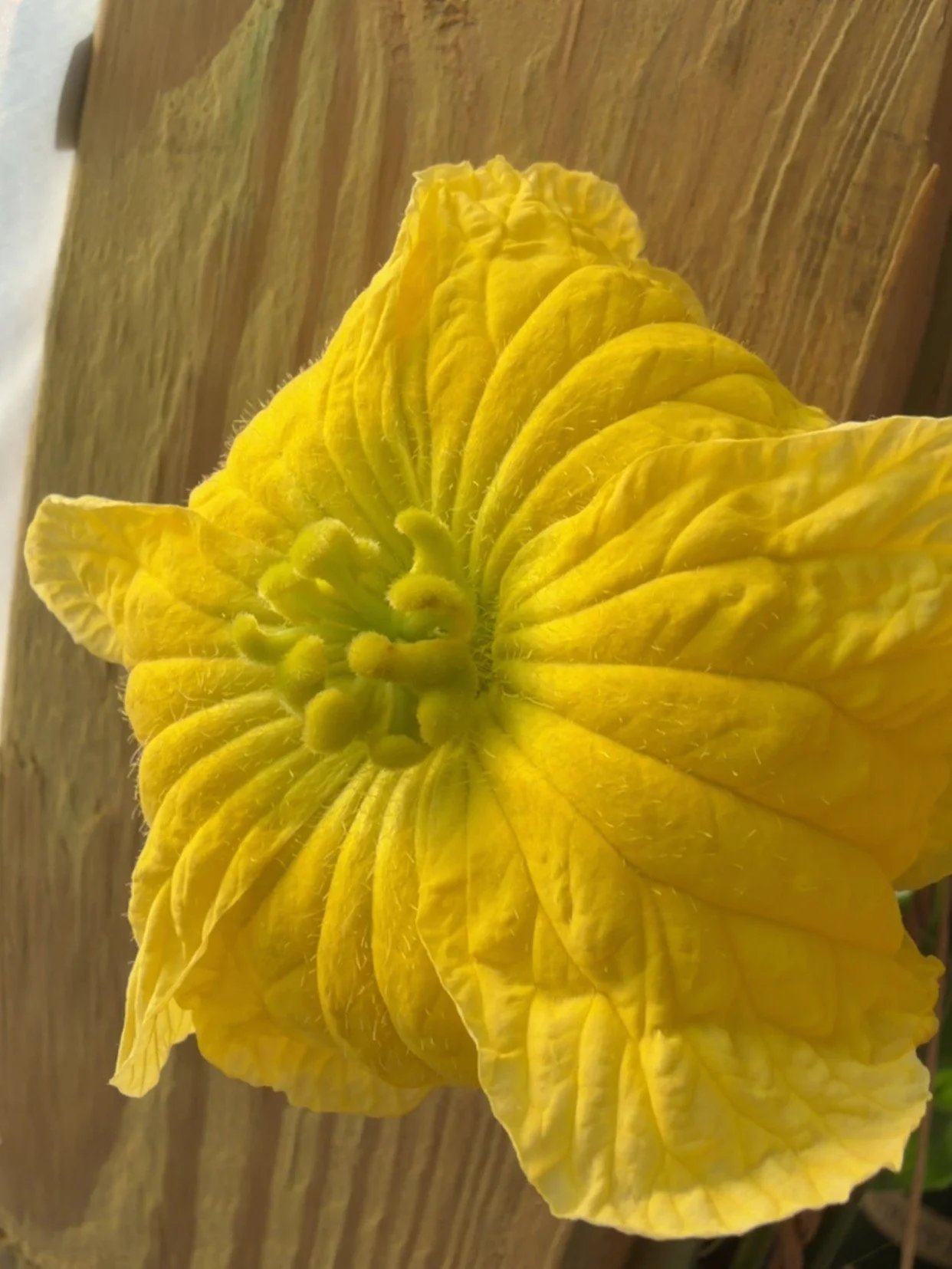
Female luffa flower with stigmas exposedLike their relatives, cucumbers, zucchini, pumpkins, and other gourds, luffas produce male and female flowers. You can identify a female flower by the tiny, immature fruit at the base of the blossom. Male flowers lack this swelling. Outdoors, bees and other pollinators would likely handle pollination. In my greenhouse, I provided some human assistance. Using a small paintbrush, I gathered pollen from the stamens of open male flowers, then gently brushed it onto the stigmas of female flowers. Within a few weeks, I could see the fruits growing.
Ideally, luffa fruits are harvested when they are dry and lightweight, with brown skin that crackles under pressure. Our Maine climate did not allow for those ideal conditions. After nearly 190 days in the greenhouse, the fruits were beginning to dry but still held some moisture. Worried that freezing temperatures could turn them to mush and ruin our future sponges, I harvested them before they had fully dried.
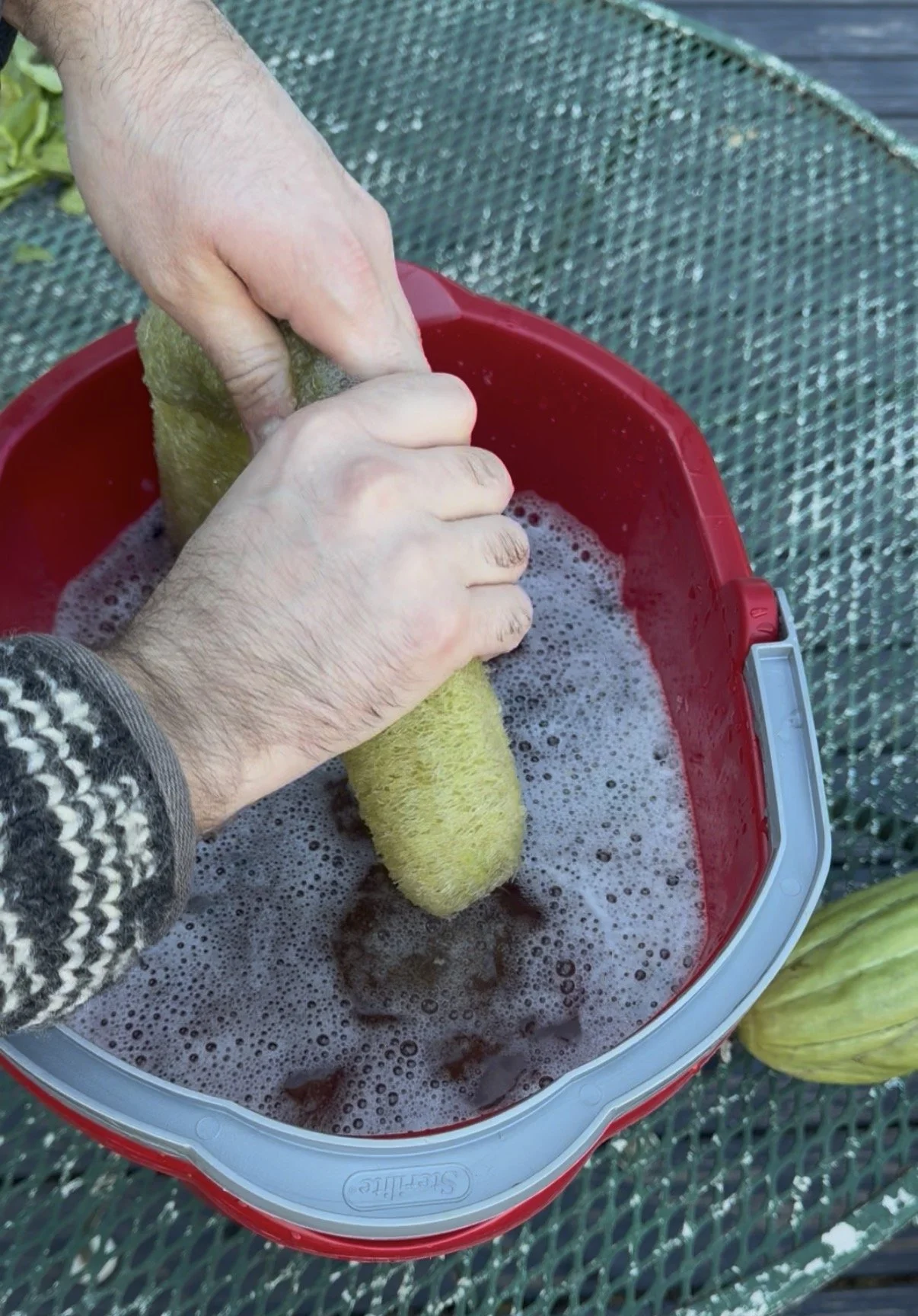
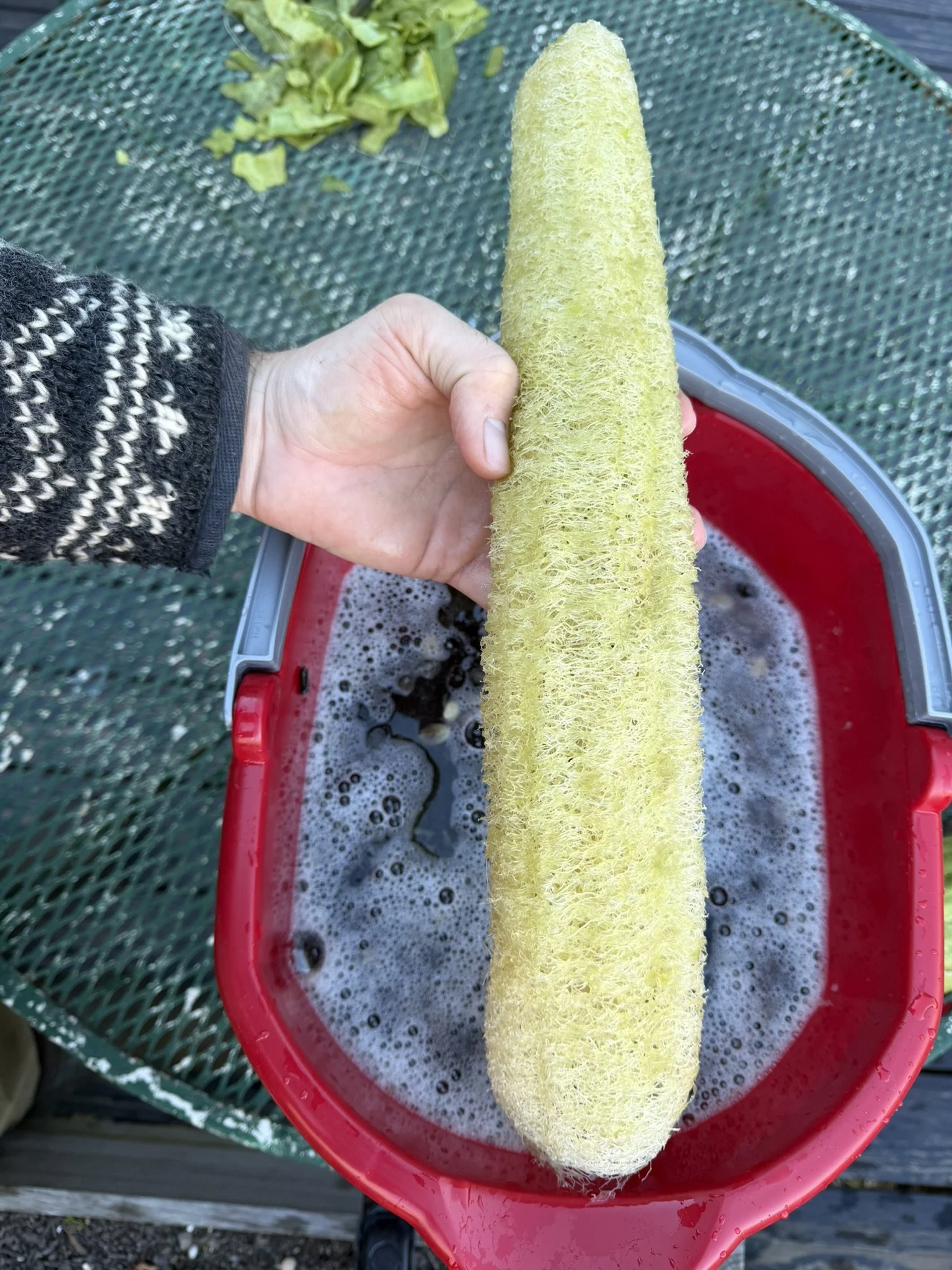
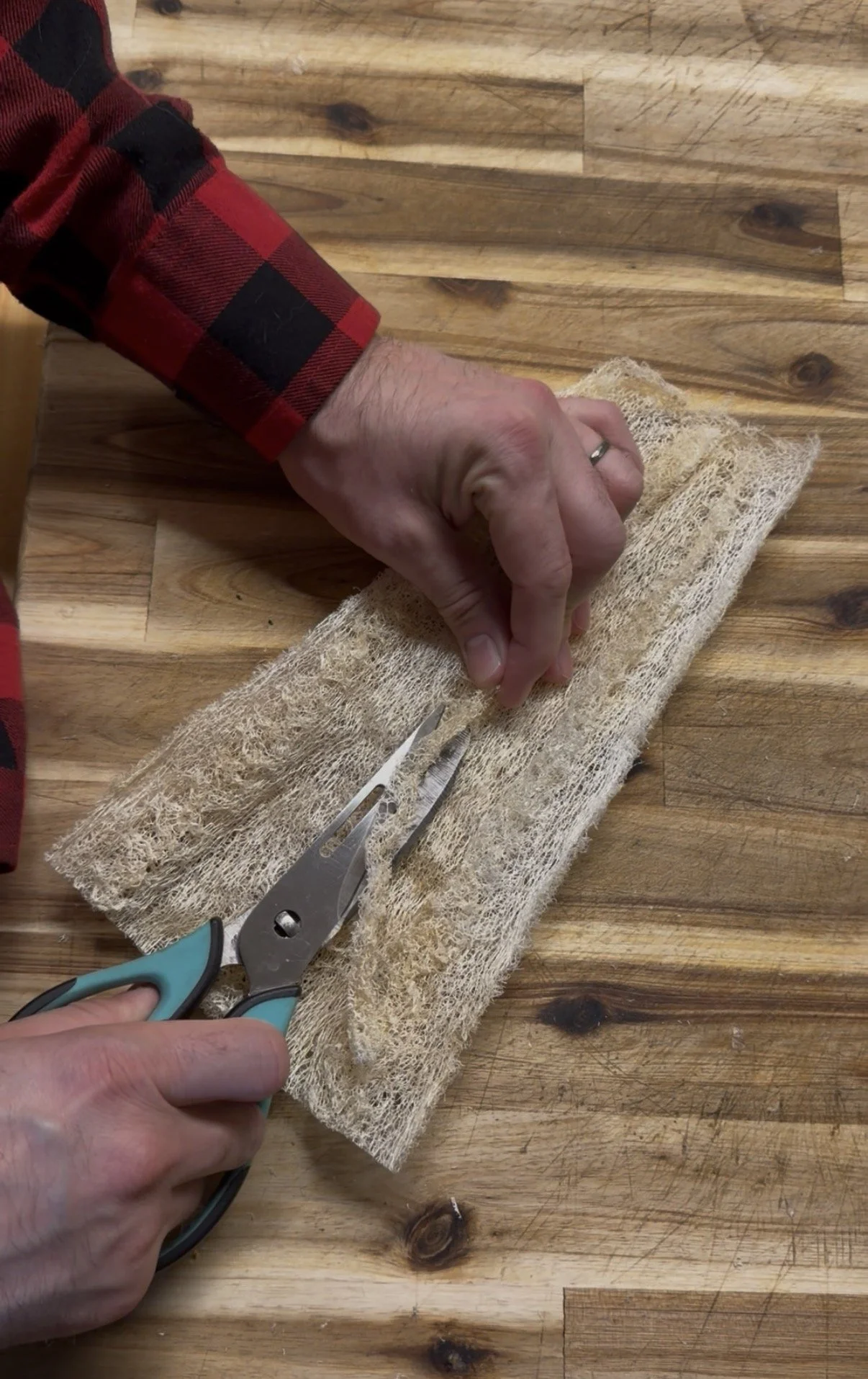
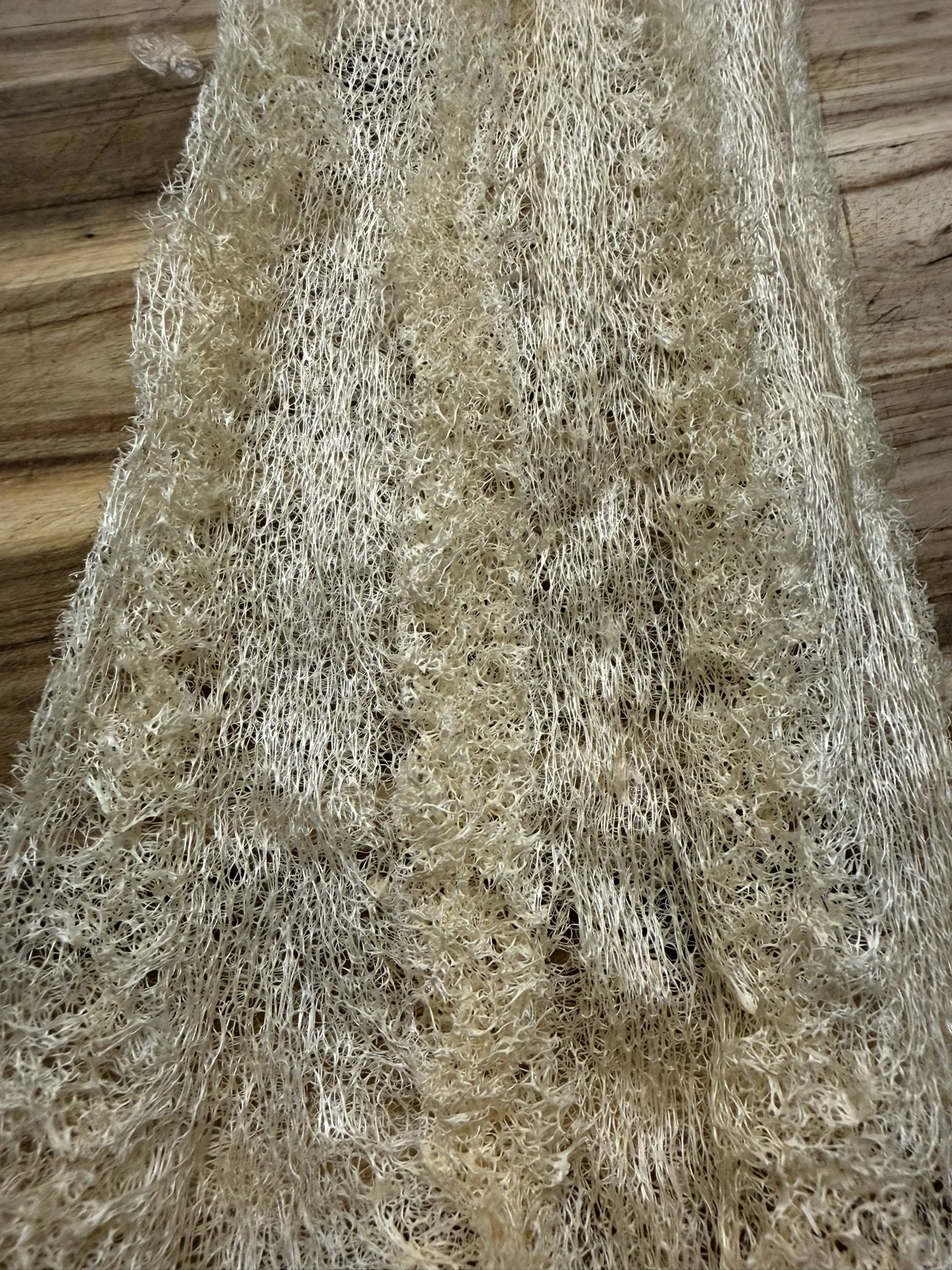
After harvesting, I filled a bucket with warm water, grabbed a plate lined with clean paper towels, and set up a cleaning station on our back porch. I rolled each luffa fruit on the table, pressing gently to loosen the skin from the fibrous interior. Then I bent the blossom end until it broke free and slid my thumb between the skin and the fibers along the length of the fruit. This gave me room to peel away the remaining skin. Once peeled, each luffa went into the warm water. I squeezed and rolled it between my hands until the pulp and seeds came free, which took about five minutes per fruit. I scooped the seeds from the water and spread them on the paper-towel-lined plate to dry. For saving, I selected firm, black seeds and discarded pale or soft ones. These seeds appear mature, but appearance alone cannot guarantee they will germinate.
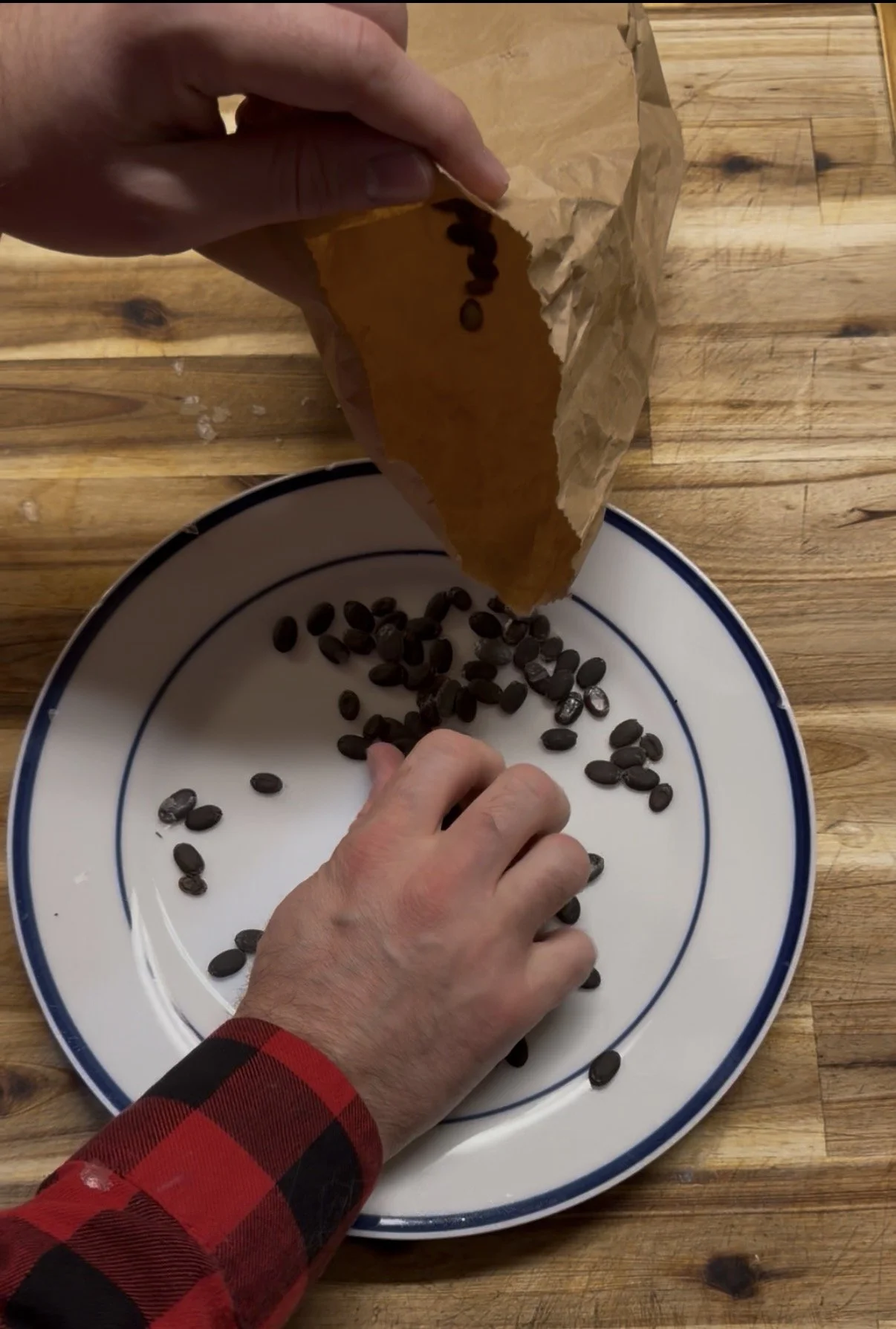
Saving seeds for next year’s sponges
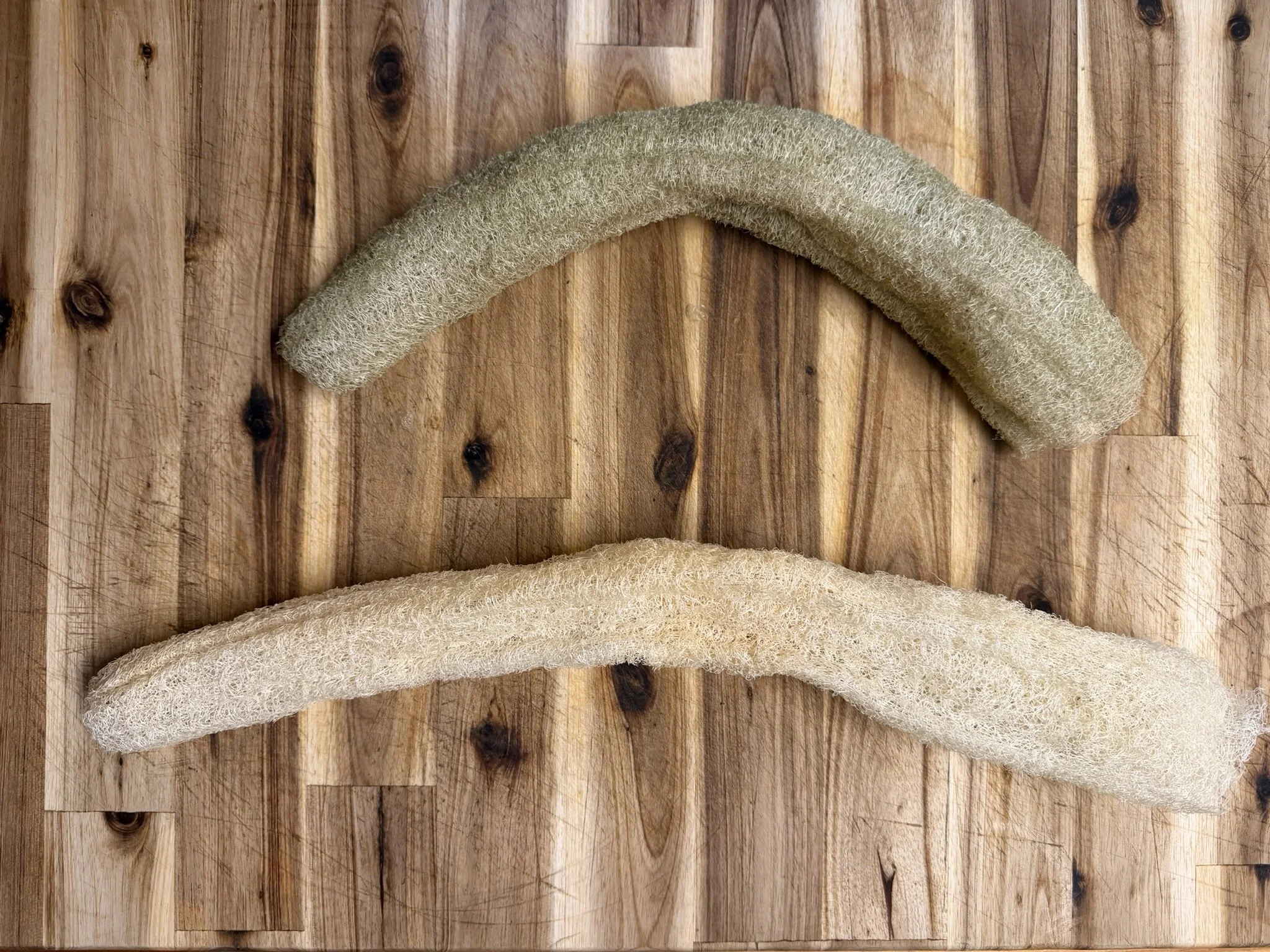
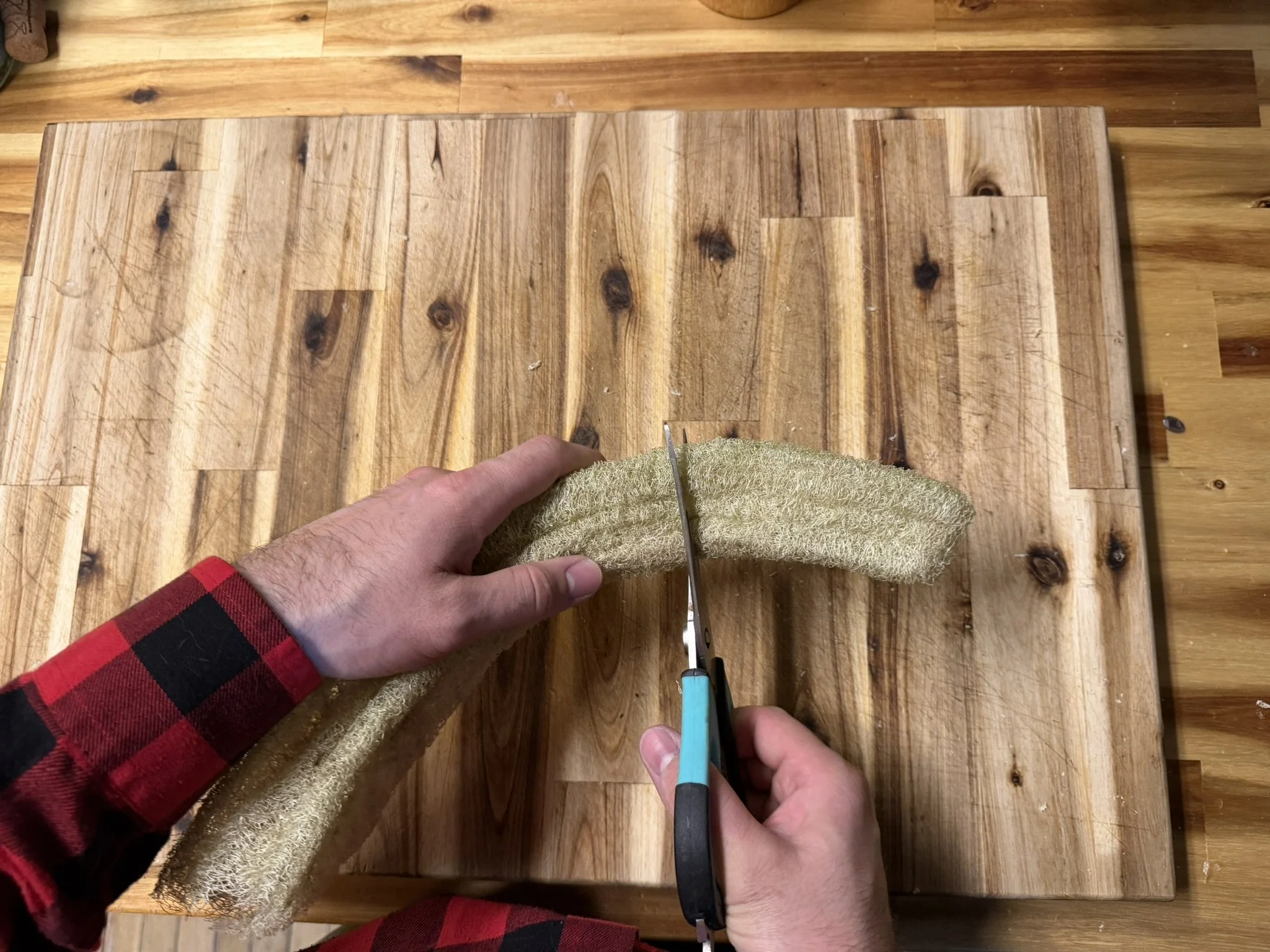
Once cleaned, one luffa went into a mild bleach solution to whiten its fibers. This was an experiment, not a necessary step. My unbleached sponges ranged from light green to beige. After soaking, I rinsed the bleached sponge thoroughly and let all the luffas dry completely. From here, you can cut the dried luffas into usable lengths, about six inches, or whatever fits comfortably in your hand for exfoliating shower sponges. You can also cut them into smaller sections for dishwashing. I sliced some lengthwise, removed the interior ribs, and asked my spouse to sew the flattened sections onto pieces of old terrycloth towels.
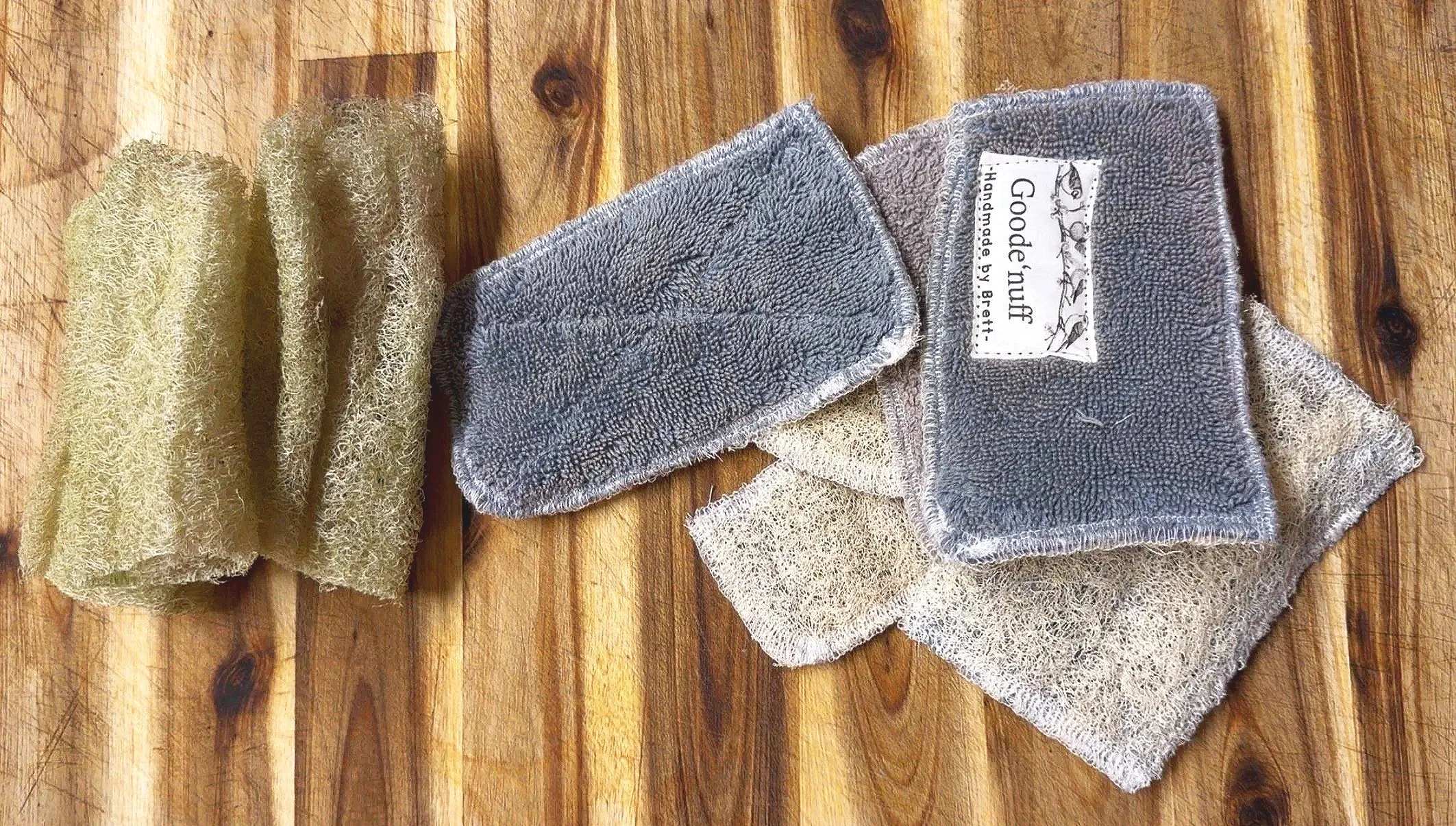
Kitchen cloths made from recycled terrycloth on one side, scrubbing luffa on the other. Thanks, Goode’nuff, for your sewing skills!
These make fantastic kitchen sponges. One side is soft terrycloth; the other provides a firmer scrub. Test the luffa on an inconspicuous area before using it on delicate surfaces, and rinse and allow the sponges to dry between uses. If you have a family member or friend that sews, or maybe you sew, this is a great use for the luffa fruit.
If you have the space, warmth, and patience, try growing this multipurpose gourd. I plan to grow next year’s crop from the seed I saved this year. Growing my own cleaning supplies is a habit I’m not ready to scrub.