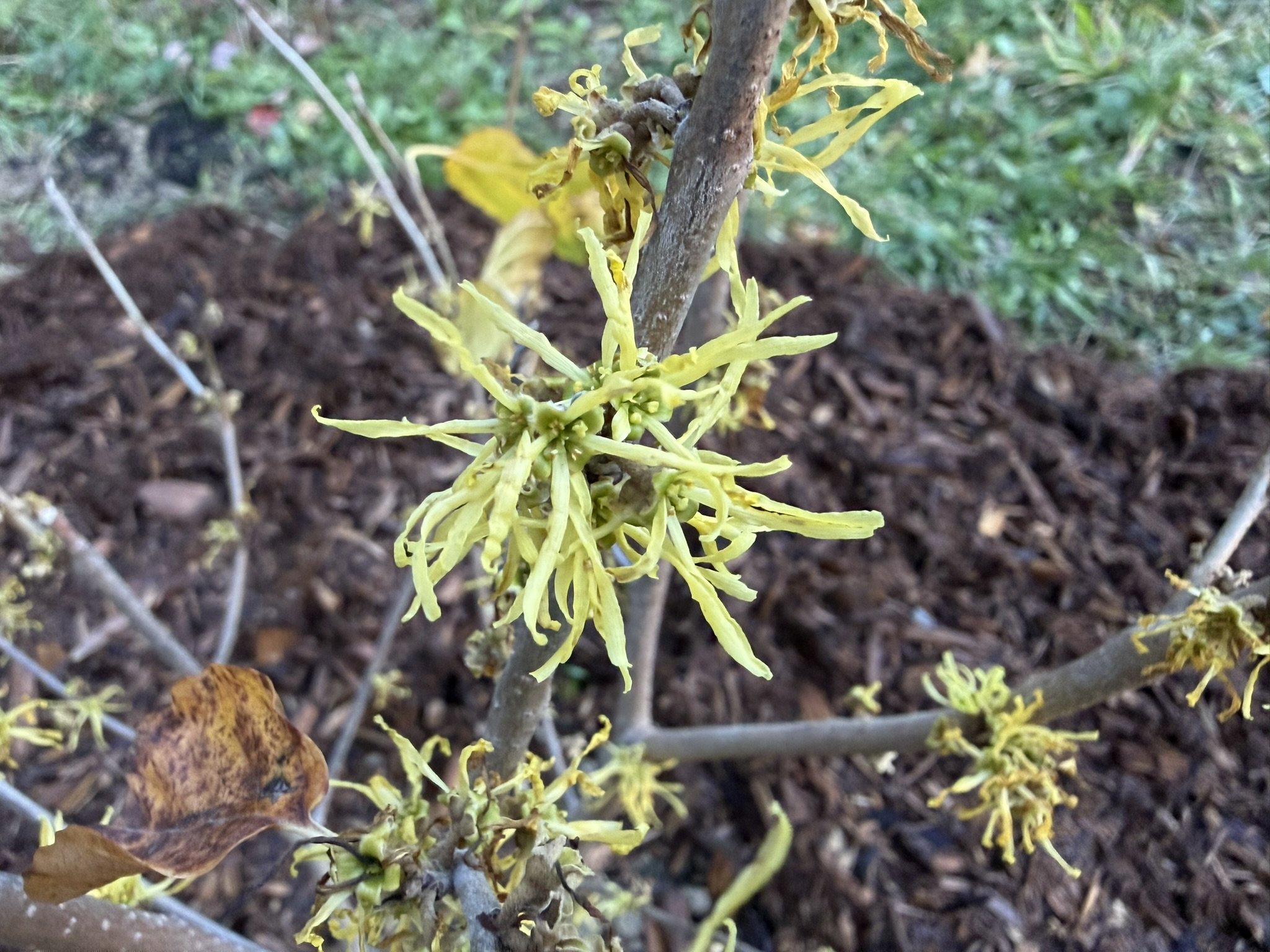
Common witch hazel, Hamamelis virginiana, in bloomBrrr! The evenings are downright chilly. It’s cold enough that we have, reluctantly, turned on our heat. As many Mainers know, that’s a significant pivot in the year toward winter. Our cats are certainly happy with the warmth coming off our radiators, and I must confess, I’m happy I no longer have to wear a jacket while sitting on the couch. You might think this is the end of outdoor blooms.
My spouse and I recently went on a mushroom-foraging trek through the woods, looking for wild edibles. Although we didn’t find many mushrooms to bring to the kitchen, we did enjoy the fall colors. At the wooded edge of a clearing, we came upon a bizarre shrubby tree, about 12 feet tall, with scalloped leaves just beginning to turn gold. All along the branches were strange, fragrant flowers with long, thin, crinkled yellow petals. This was a wild Hamamelis virginiana, or common witch hazel. You may have seen this name on shelves in the skincare aisle of your drugstore. Various tinctures, ointments and potions feature witch hazel extracts. Beyond its place in the medicine cabinet, this native shrub is remarkable for blooming in the fall and holding onto its flowers for several weeks. Here in northern New England, common witch hazel generally blooms in October and November, sometimes continuing into December.
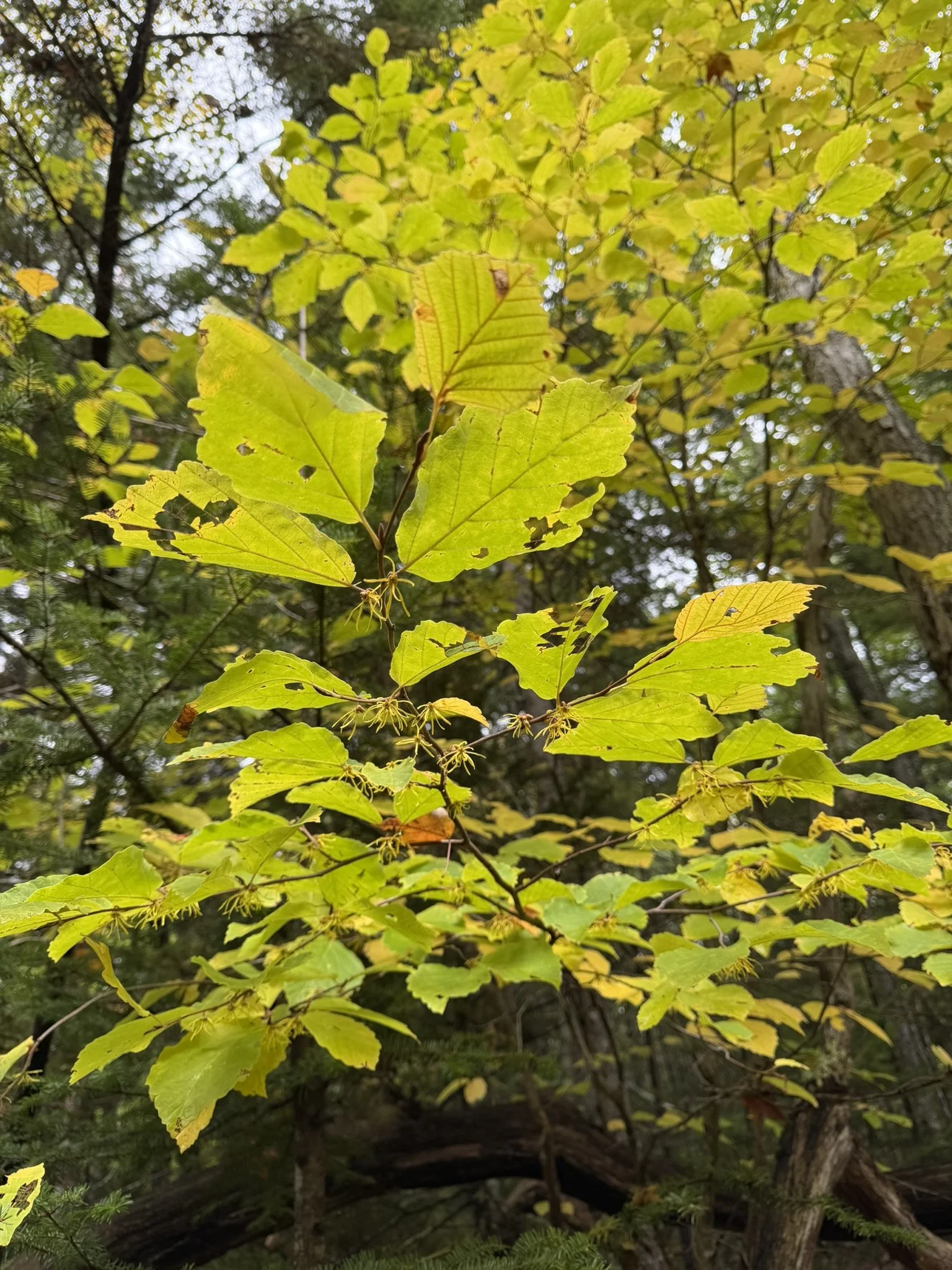
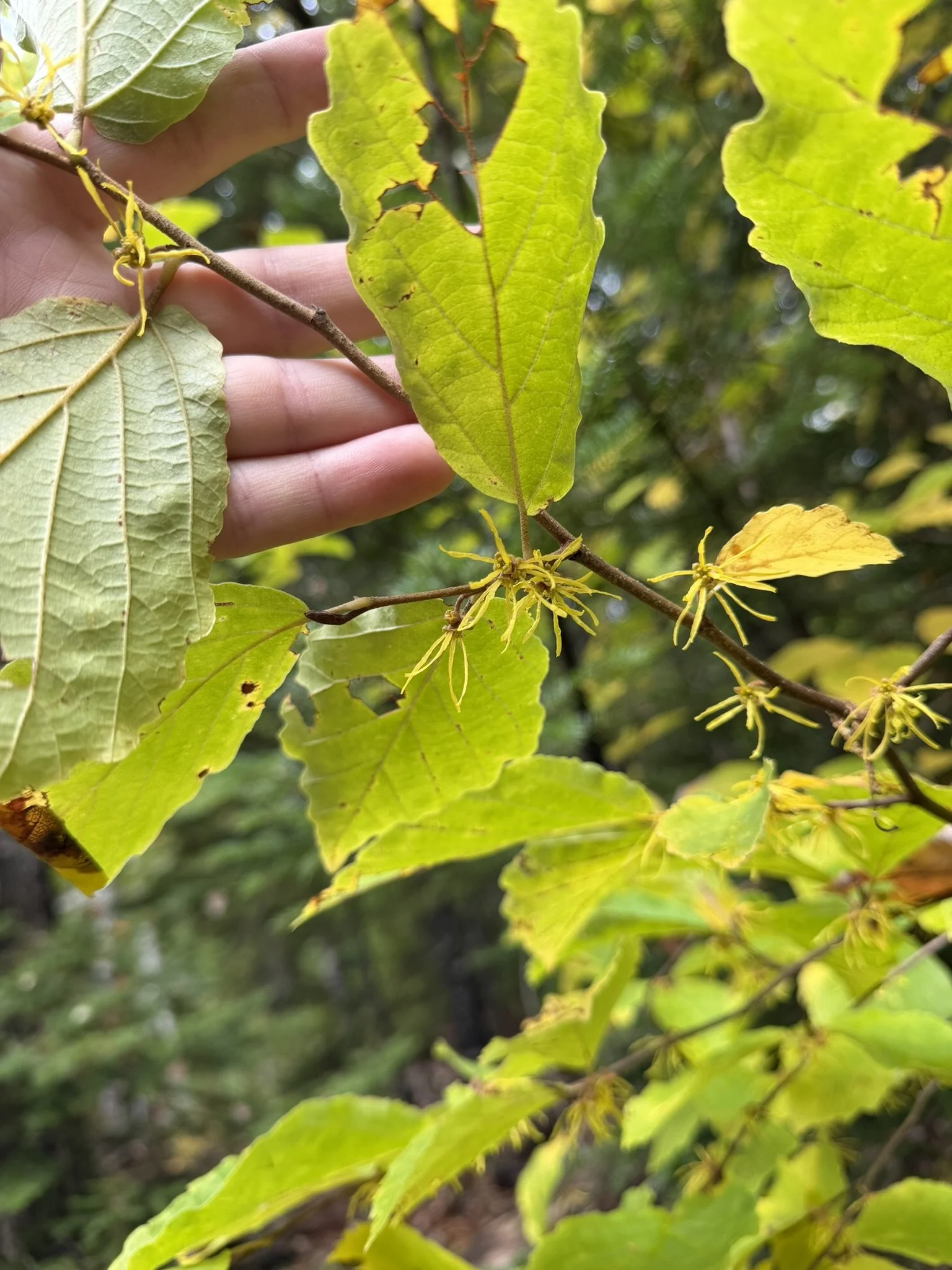
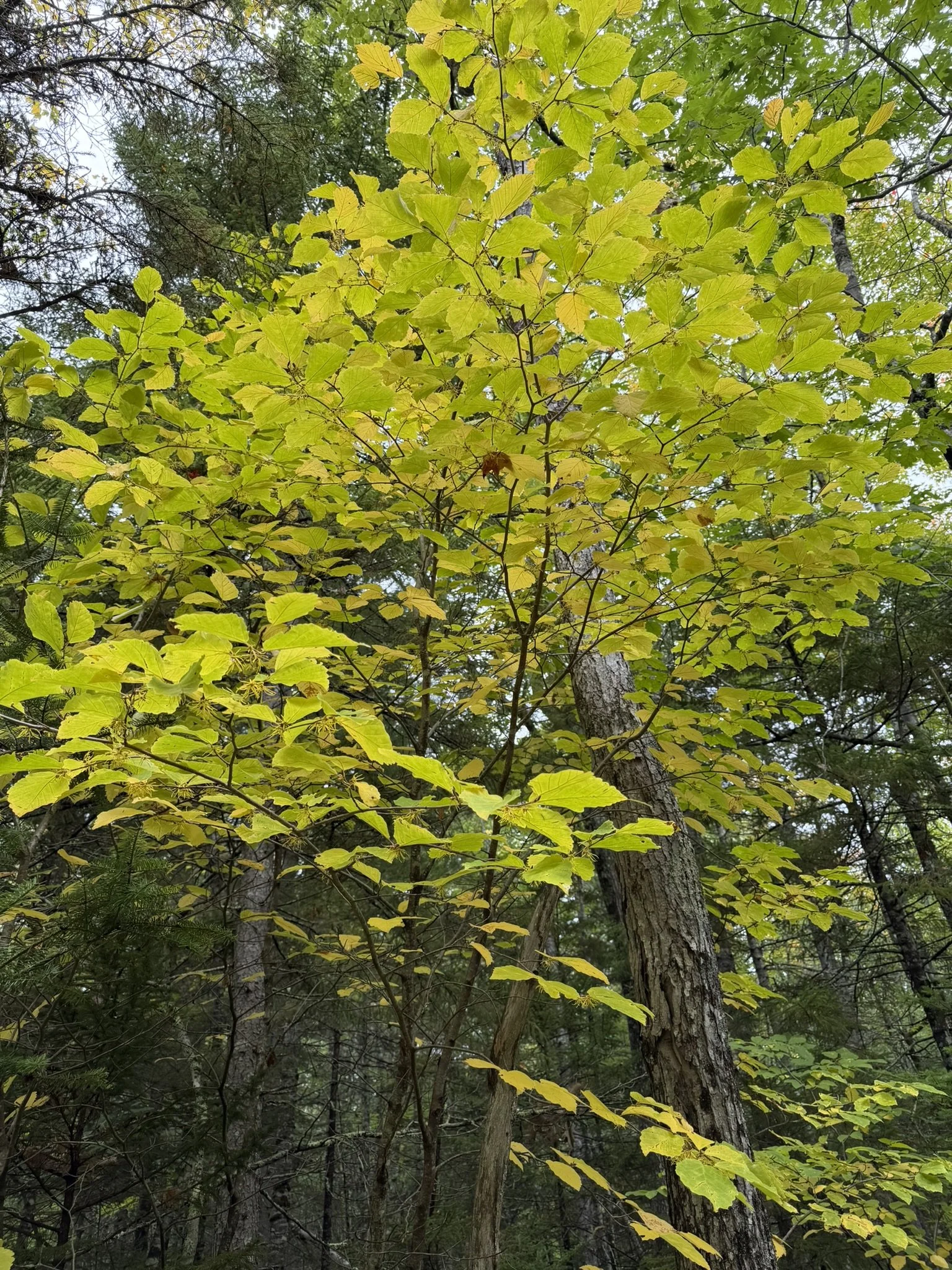
Wild common witch hazel, Hamamelis virginiana, found on a mixed forest woodline in Ellsworth, ME. The long-lasting flowers give off a spicy, lemony scent, especially noticeable on warmer fall afternoons. Common witch hazel produces flowers, usually in clusters of three, along its zigzagging stems and branches. Each flower has four wavy, straplike petals. These thin, banana-yellow petals coil up in cold weather and unfurl again as temperatures rise. They remind me of coral polyps or an alien plant you’d see on one of Captain Kirk’s missions. These unusual flowers provide nectar for bees, flies, moths and other insects at a time of year when little else is available. After pollination, fertilization doesn’t occur until spring. In our climate, that could be six months after a pollinator visits the flowers. The fruit develops over the growing season and ripens the following fall, when it can often be found on the branches alongside fresh flowers. When ripe, the woody capsules burst open with such force that the seeds can be flung several yards away.
Despite all its peculiarities, the plant’s name has little to do with its witchy season of bloom. According to the Arnold Arboretum, “witch” probably comes from an old word, wych, meaning “to bend.” Its forked branches were also used for “water-witching,” or dowsing, in the belief that they would bend toward hidden water. Although their leaves resemble those of hazels, witch hazels are not closely related to true hazels.
Such an unusual native is welcome in my garden. I picked up a common witch hazel from a local nursery. There are five species of witch hazel: three native to North America and one each to China and Japan. If you are shopping for a witch hazel, you will notice many cultivars and hybrids available. Pay attention to the flowering period on the label. Common witch hazel blooms in fall, while other species flower in winter or early spring, including Hamamelis vernalis, native to the Ozark Plateau.
I took my planting cues from the wild specimen we found while foraging. It stood at the sunny edge of a mixed woodland. The ground was thickly covered with fallen leaves from many seasons past, and the soil was moist without being waterlogged. Common witch hazel prefers slightly acidic, well-drained, mesic soil, meaning soil that is neither too dry nor too wet. It tolerates shade, although flowering is generally more abundant in sunnier locations. It is also exceptionally hardy, able to withstand temperatures down to -40.
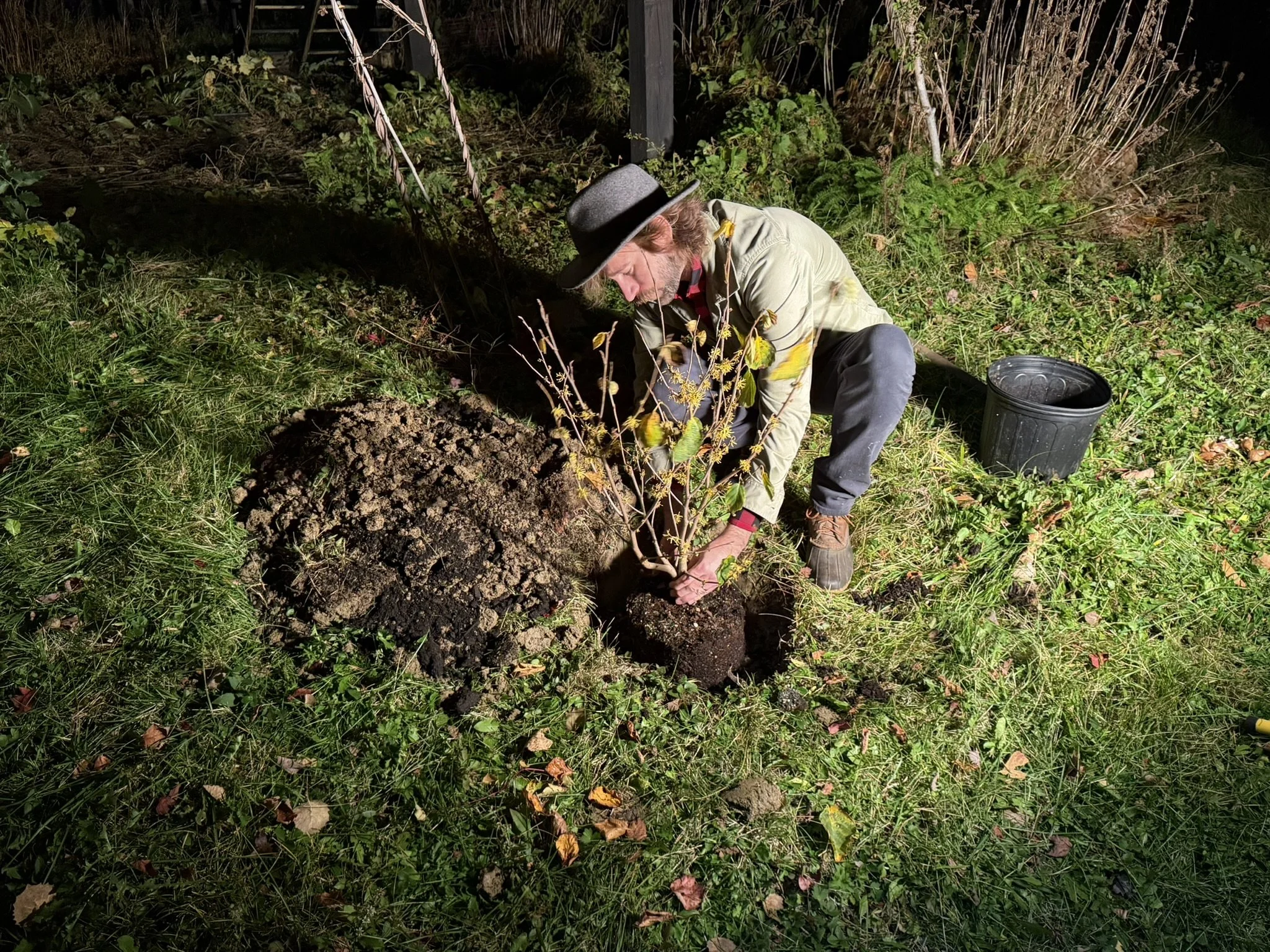
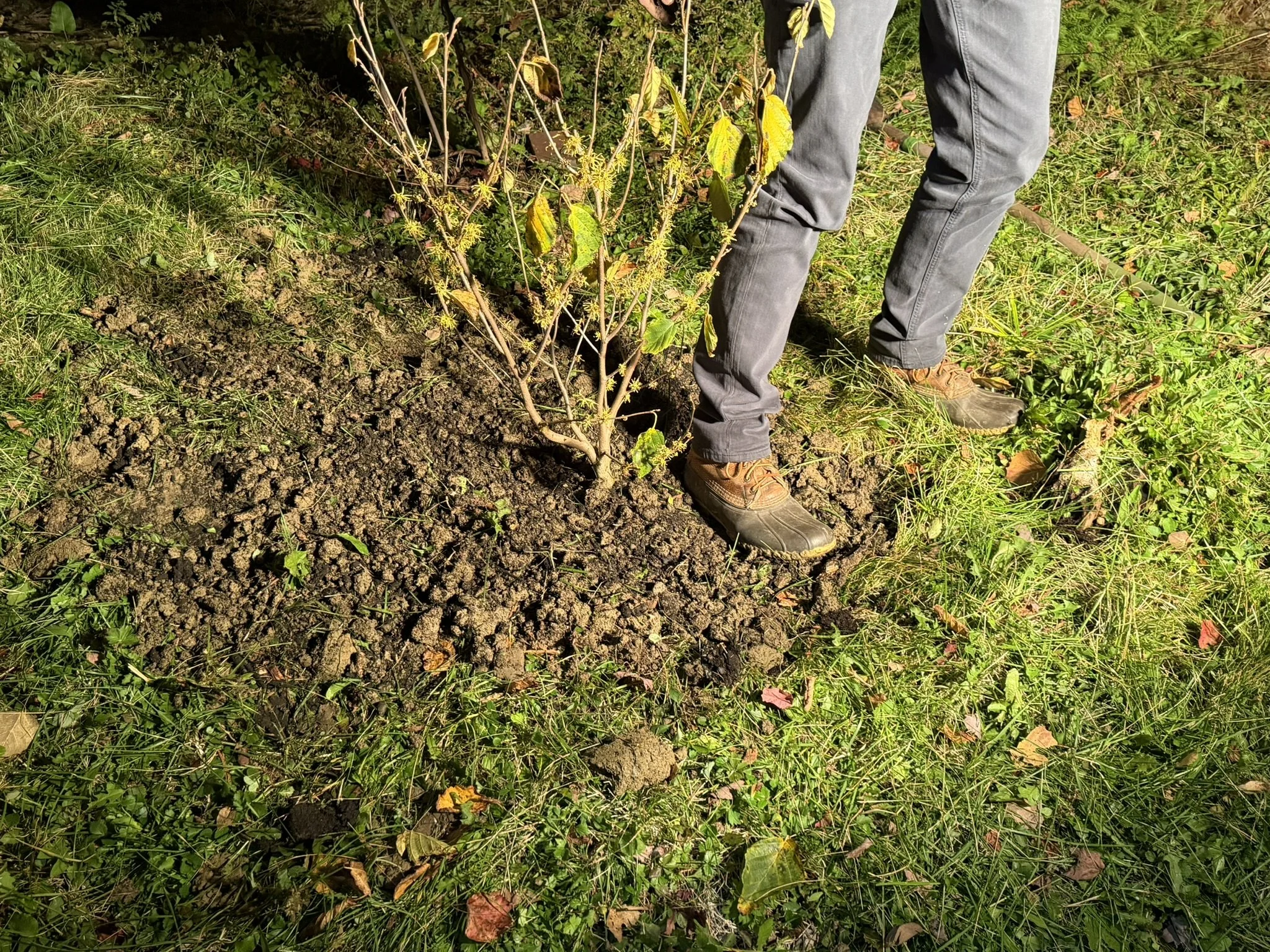

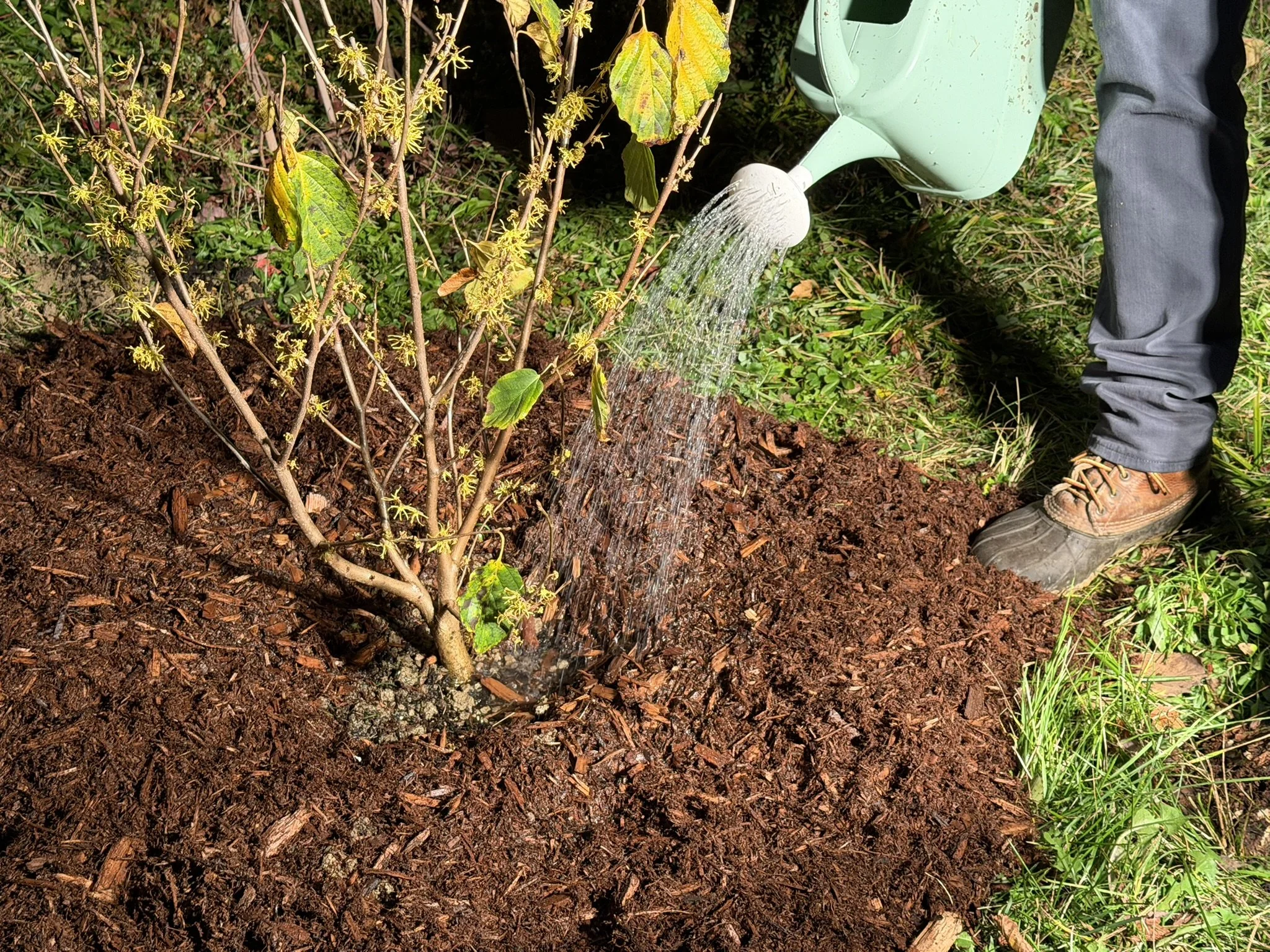
The root flare should sit at or just above the surrounding soil level. | After backfilling around the root ball I gently tamped down the soil with by heel. | Wood mulch or leaves around the base of the plant helps retain moisture, leaving a few inches around the base of the main trunk mulch-free. Mulch piled against the trunk can cause rot and makes the plant more prone to disease. | Carefully watered in our newly planted common witch hazel.
I chose a spot for ours in an area where I intend to plant natives and other low maintenance perennials. This southeast corner of our house receives morning sun for about half the day and sits beside a deck. To start, I dug a hole as deep as the root ball and about twice as wide. The root flare should sit at or just above the surrounding soil level. I mixed the native soil with a little compost, removed the witch hazel from its pot and placed it in the hole, backfilling around the root ball with the soil and compost mixture. Once planted, I gently firmed the soil with the heel of my boot. To regulate moisture and help insulate the roots, I covered the soil with a couple of inches of wood mulch. Mulch should be kept back from the stems. I could have used decomposing leaves, as I saw beneath the wild specimen. I always water deeply after planting, even if the soil is already moist. Watering also helps settle the soil and remove air pockets. As this tree grows, I expect and hope to smell the scent of it’s fragrant blossoms waft across the chairs on the deck while I enjoy a cup of hot cider and the transition of autumn into winter.