Japanese beetles, meet your match
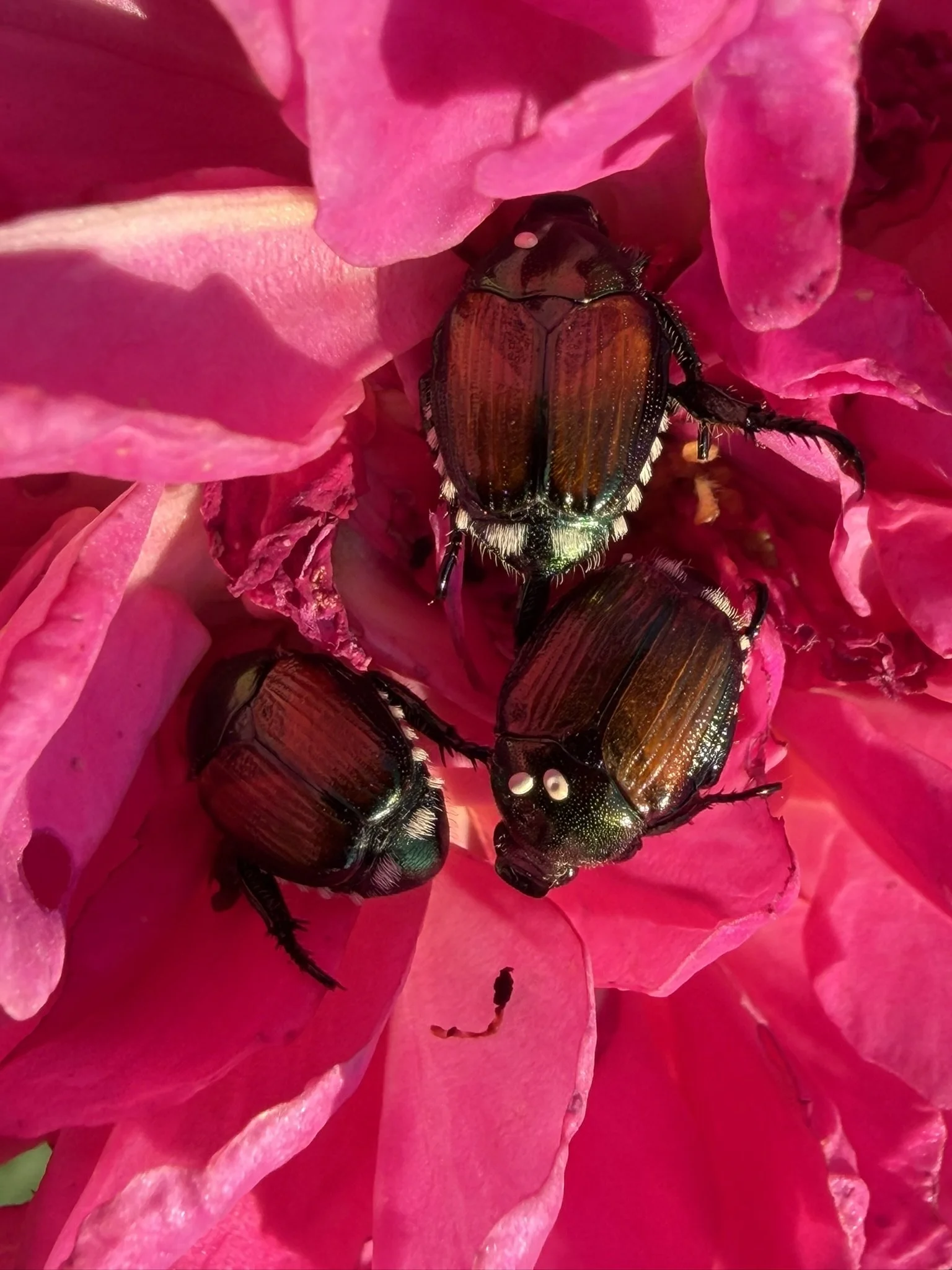
Congregating Japanese beetles on a fragrant rose. Notice the white eggs of the winsome fly on the beetle’s thorax.
Our summer days are now soupy and drenched in sunlight. Bright red sour cherries, shiny and perfect, are ripe and ready to pick. After a short break, our reblooming roses are putting on their second flush and will continue flowering until frost. Every couple of days, a few more zucchinis are ready to bring into the house. Along with these cheery signs of high summer comes another reliable presence, though not one I greet with much enthusiasm. The Japanese beetle.
Japanese beetles, Popillia japonica, look like iridescent jewels. These roughly half inch long beetles have metallic green heads and thoraxes with coppery brown wing covers. If you look closely, you can see five small tufts of white hair along each side of the insect and two larger tufts at the rear.
According to the USDA’s Animal and Plant Health Inspection Service, or APHIS, these beetles, which are native to Japan, were first discovered in the United States in New Jersey in 1916. Over the past 110 years, they have spread throughout much of eastern and central North America. There have been many efforts to control their spread, including federal trapping and quarantine programs. However, if you garden in Maine, you are probably quite familiar with this voracious insect.
I see Japanese beetles mostly on our cherry trees, roses, flowering quince and some native plants, such as evening primrose. They feed on the soft tissue between leaf veins, leaving behind a lacy skeleton of foliage. In our yard, they also enjoy nibbling on rose petals, especially those of lighter colored and more fragrant varieties. The beetles will often congregate in large numbers on a few plants while leaving others alone. Foliage damaged by feeding releases odors that attract still more beetles. You may have two identical plants, but only one becomes infested. It is a vicious cycle. According to University of Maine Cooperative Extension, Japanese beetles have been reported to feed on more than 400 species of plants, including grapes, blueberries, roses, apple trees and beans.
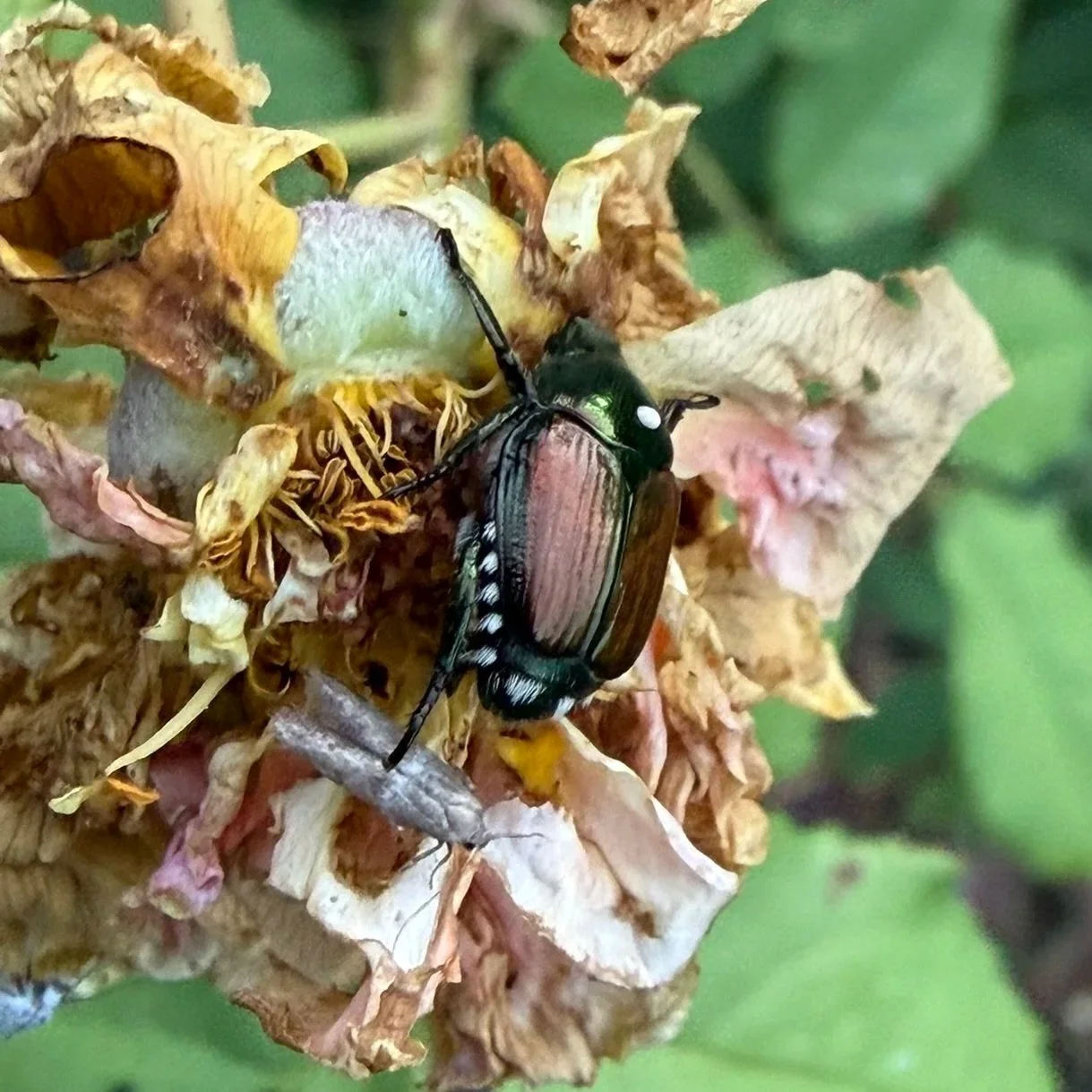
Japanese beetle feeding on what remains of a rose blossom.
At this time of year, the beetles are emerging from the soil and flying in search of food and mates. The adults feed and reproduce for several weeks. Females periodically burrow into the soil and lay a few eggs at a time, up to 60 over the course of their lives. When the eggs hatch, the larvae, or grubs, feed on roots throughout late summer and fall. They move deeper into the soil to overwinter, then return to the root zone and resume feeding in spring. In summer, they pupate before emerging from the soil as adults, beginning the cycle again.
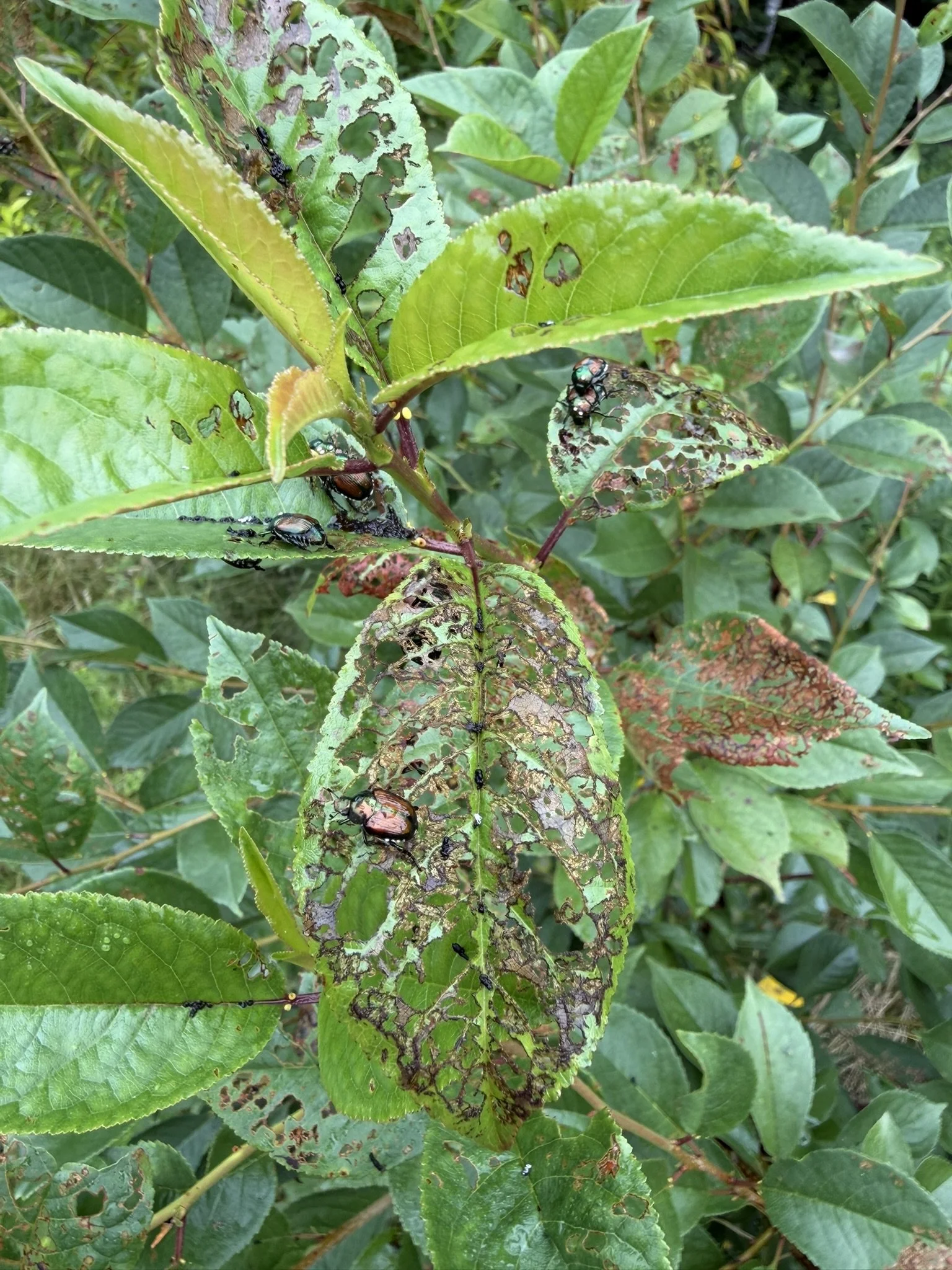
Skeletonized leaves on one of our sour cherries. Typical beetle damage.
What can be done about this destructive insect? A quick online search will provide plenty of suggestions. The most effective way to keep Japanese beetles away from a particular plant is a physical barrier. I have had 100 percent success using a fine mesh net. Although effective, this method is not necessarily practical in a large garden. With the beetle’s varied palate, you cannot cover every vulnerable plant. Mesh should also be kept off flowers that still require visits from pollinators.
Another method of control is removing the beetles by hand. All it takes is a 12 oz glass of water with a few drops of dish soap. I often go out in summer with a cup of soapy water, pluck the beetles from the leaves and pop them into the cup where they quickly drown. I then empty the cup into the compost bin. I have also used an old battery powered vacuum to suck them directly from the leaves. I freeze the canister and compost its contents the following day.
Biological controls are also available. Milky spore, a bacterium that infects Japanese beetle grubs, can take several years to become established. UMaine Extension does not recommend it, however, because it has produced spotty results in Maine. Pheromone traps can be purchased, but they may attract more Japanese beetles to an area than they capture. Conventional insecticides may kill the beetles, but they can also harm other insects, including beneficial pollinators and the Japanese beetle’s natural enemies.
Several animals help keep beetle populations in check. A platform bird feeder stocked with a few mealworms may attract insect eating birds such as robins, song sparrows, blue jays and catbirds. Once drawn into the garden, they may pick off some of the beetles as well.
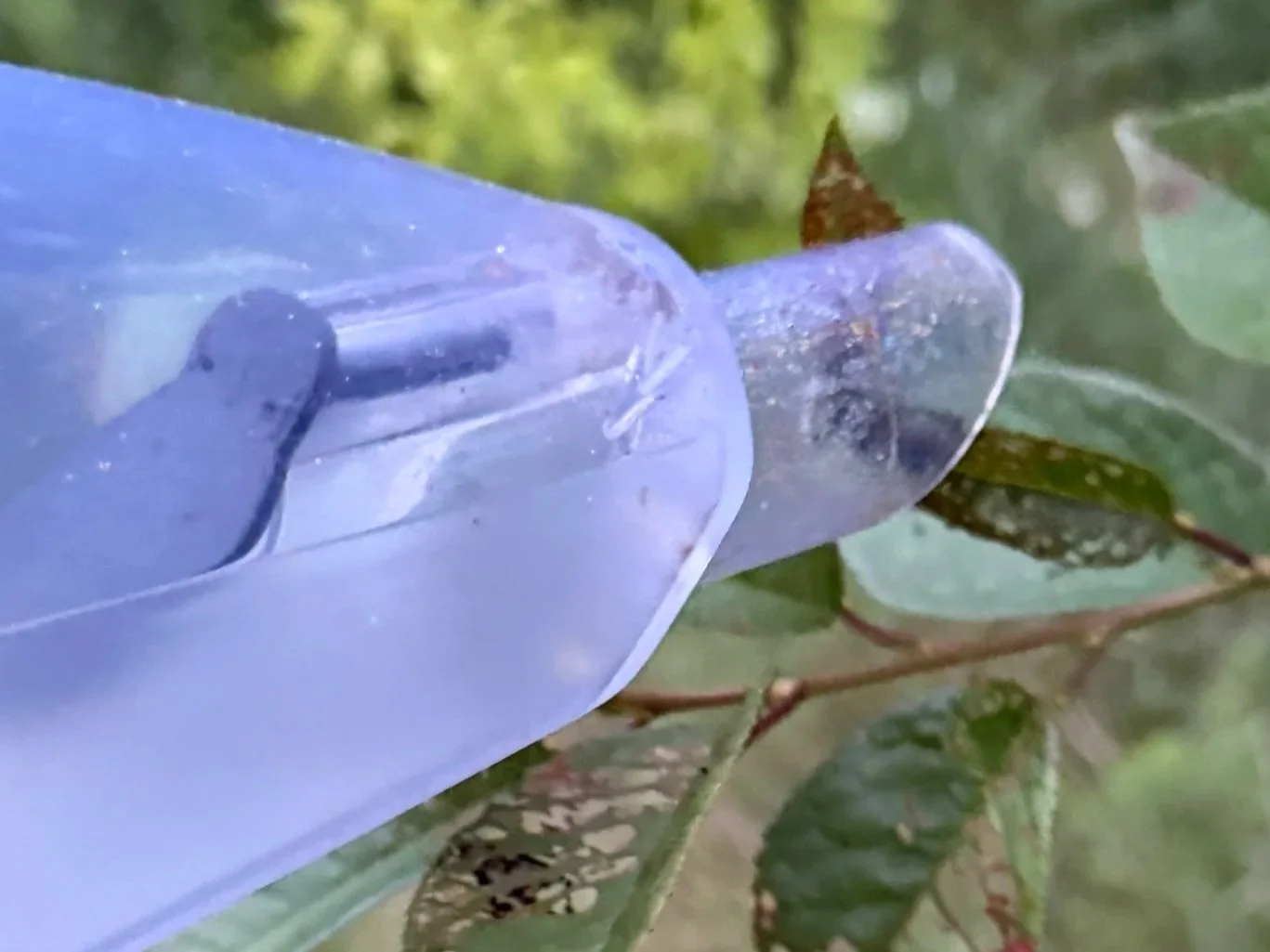
Vacuuming up Japanese beetles.
The most effective control in my garden is the winsome fly, Istocheta aldrichi. This small, inconspicuous fly was introduced from Japan specifically to help control Japanese beetles. It is not simply a parasite but a parasitoid, an organism that ultimately kills its host.
The female fly places a pearly white egg just behind the beetle’s head. Within a few days, the egg hatches and the fly larva enters the beetle. The beetle becomes lethargic, stops feeding and eventually drops to the ground, where it burrows into the soil and dies. The winsome fly completes its development inside the beetle’s remains, overwintering there before emerging in early summer to begin the cycle again. Adult winsome flies sustain themselves on flower nectar.
It seems to have taken the winsome fly a few years to establish itself in our garden, but this year nearly every Japanese beetle I have seen has at least one fly egg deposited on its thorax. My top recommendation is to encourage these companion parasitoids to make a home in your garden.
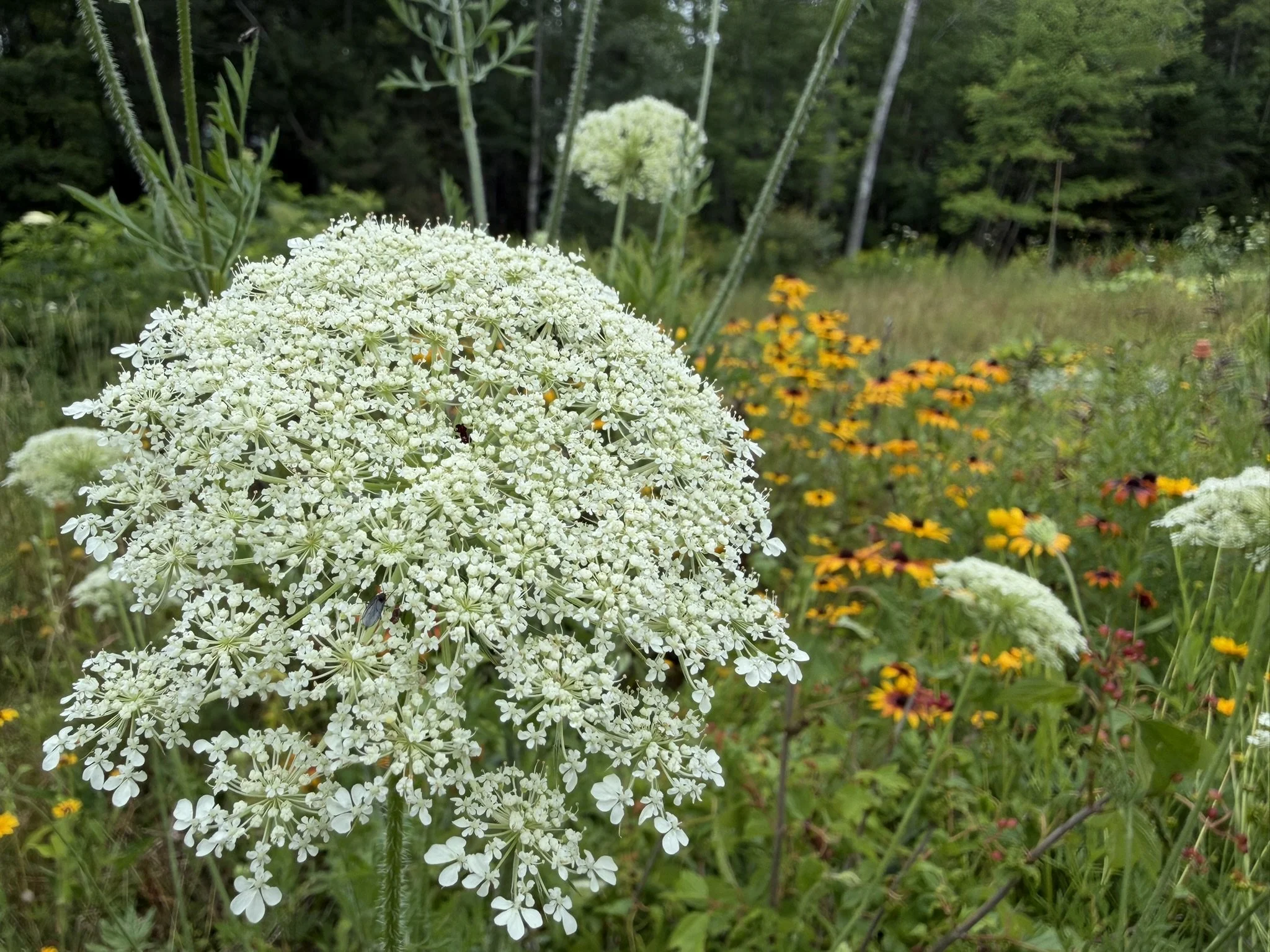
Queen Anne’s lace provides nectar for adult winsome flies.
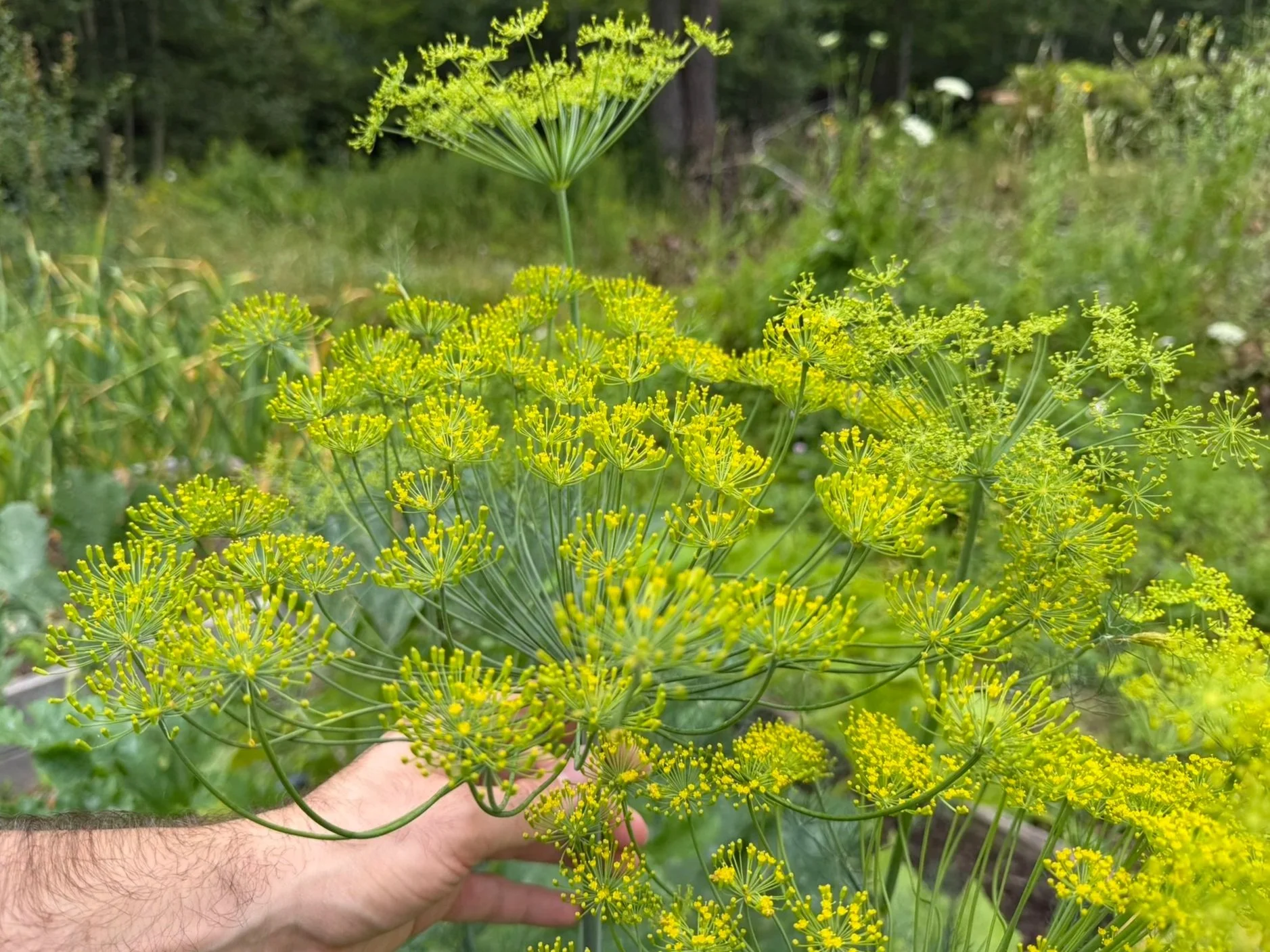
Shallow flowers, like those of this mammoth dill, bring insects that prey on many garden pests.
As nectar feeding flies, they need small, shallow flowers that their short mouthparts can reach. Yarrow, dill, sweet alyssum, Queen Anne’s lace, lovage and daisies are excellent choices. When handpicking (or vacuuming) Japanese beetles, I avoid those carrying freshly deposited winsome fly eggs. I know they will soon stop feeding, drop to the ground and help produce the next generation of flies.
Japanese beetles will probably always appear in the garden among my roses and cherry trees in July, but they no longer seem like an invading army. Nearly every one I find now carries a small white reminder that nature has noticed them too and has begun to respond. Sometimes a garden reaches balance through our intervention. Sometimes it needs the right conditions, restraint and a little time.