A HOME FOR THE NIGHT SHIFT
We have entered the season of sunlight. The sun is now above the horizon for 15-plus hours each day, giving us more than 16 hours of light to hike, kayak, garden or just laze about after a long day of work. Unfortunately, along with the warmth of the long sun comes an onslaught of biting insects.
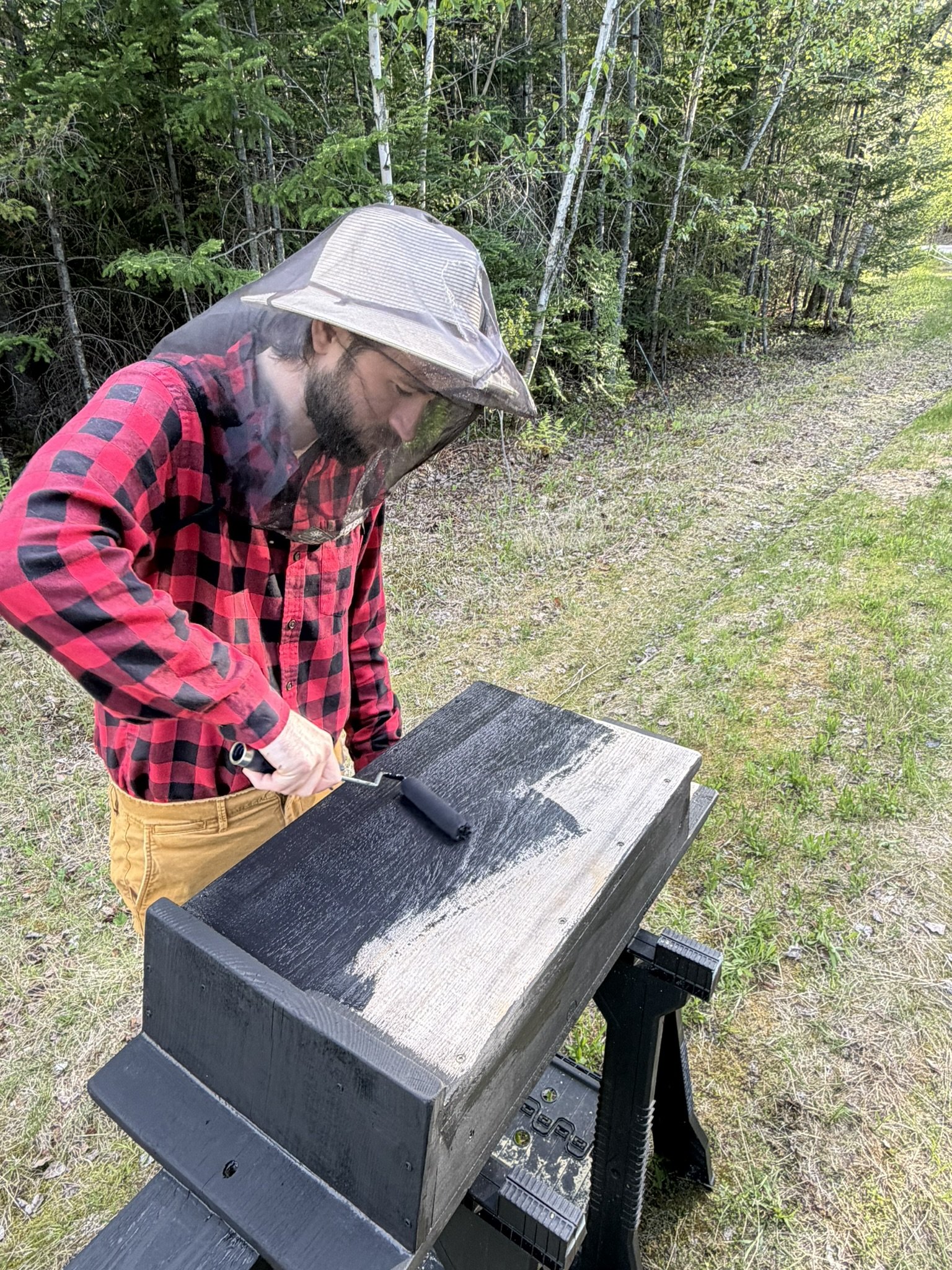
Painting the outside of the bat box a dark color to help preserve the cedar and soak up the sun’s warmth.
First to arrive are the blackflies. These buzzing, biting, swarming insects breed in fast-moving, cold streams found throughout Maine. Their painful bites often leave raised, pink welts on my skin that itch for days, reminding me of my poor decision not to wear protective clothing or spray insect repellent before I ventured outside. Then, as you may have experienced, the blackflies dissipate as the summer season progresses. They are replaced by several species of blood-sucking mosquitoes. Approximately 40 species of mosquitoes call Maine home. While the mosquitoes, in my opinion, are not as much of a painful nuisance as the blackfly, they do add a layer of distraction from the joys of summer’s warmth.
I have tried a few home remedies to dissuade the vampiric plague of blackflies and mosquitoes from making a meal out of my tender flesh: citronella candles, scented geraniums and mint growing on the deck, and even a garlic supplement to keep the biting insects at bay. Truth be told, none of those remedies has been particularly effective.
Natural predators, however, may be a solution. Or, at least, they may reduce the number of biting, flying insects in your neighborhood. One such tool is the bat. According to the Maine Inland Fisheries and Wildlife website, Maine is home to eight species of bats. Five of these species hibernate through the winter; the other three are transitory and overwinter in warmer climes.
Bat boxes, human-made structures built to house bat colonies, can be purchased from local craftsmen or online. Plans for DIY bat houses can also be found through the Maine Department of Inland Fisheries and Wildlife if you have the tools and materials for such a project. I was recently gifted a two-chambered bat box that can house up to 150 Little Brown Bats or 100 Big Brown Bats. These two species are the most likely tenants of such a structure.
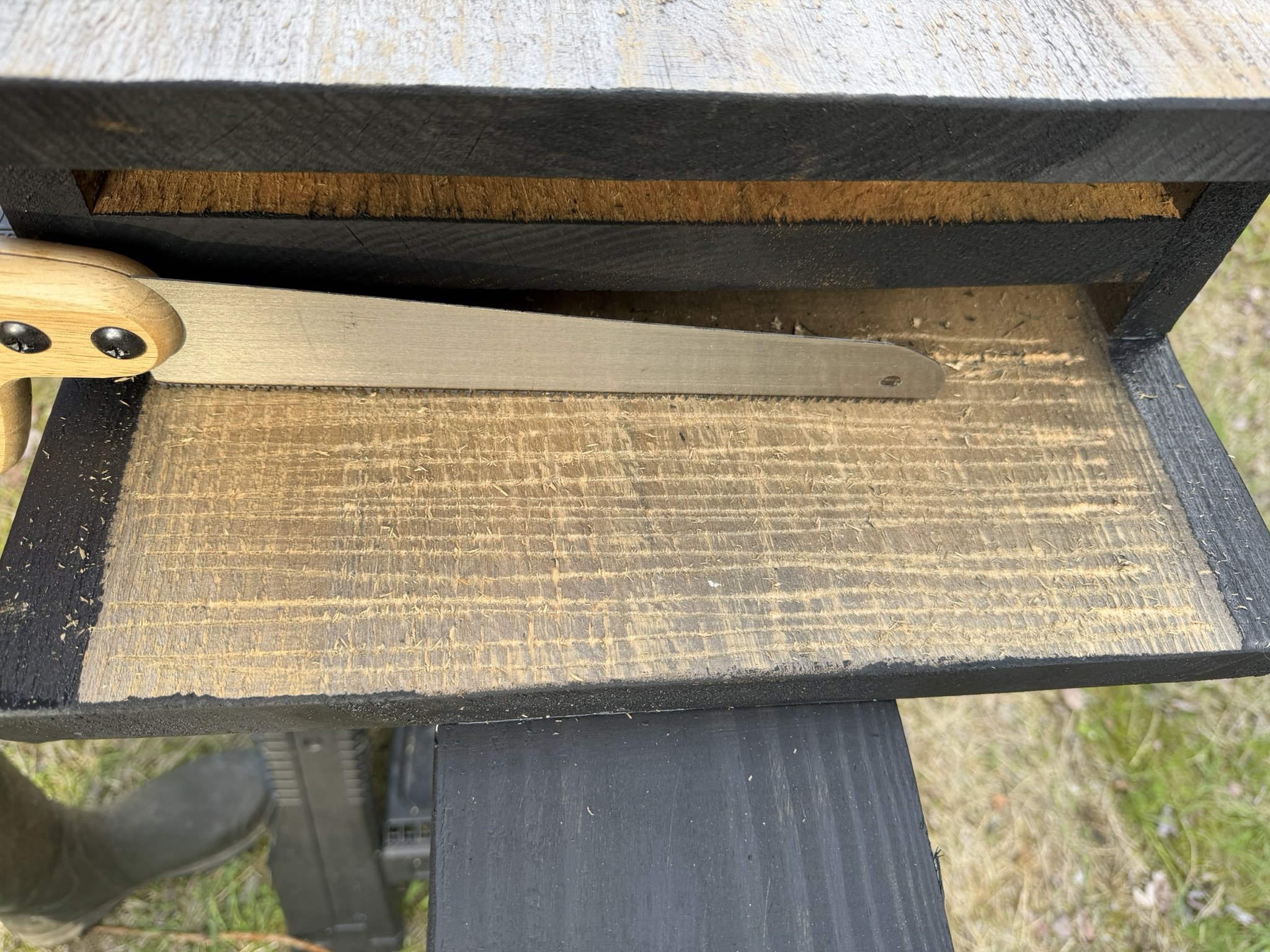
Scoring the landing board for better grip for incoming bats.
Our bat box was unpainted, untreated cedar. I gently sanded the exterior of the bat box and cut several grooves on the landing board using a handsaw. These grooves provide a surface that the bats can grasp when they land. The inside of the bat box is rough-sawn wood, with plenty of material for the roosting bats to hold while they sleep and nurse their young.
Bat Conservation International recommends that bat boxes for our area of northern New England be painted a dark color. Along with the dark color, the box should face south or receive at least six hours of sunlight per day. In our case, we had some leftover black latex paint that we used to coat the outside of the bat box. It’s important to use water-based latex paint, as opposed to oil-based paint. Water-based paint off-gasses more quickly and is less toxic to wildlife. The dark color, exposed to the sun, provides the sleeping bats with the warmth they need to thrive at our northern latitude.
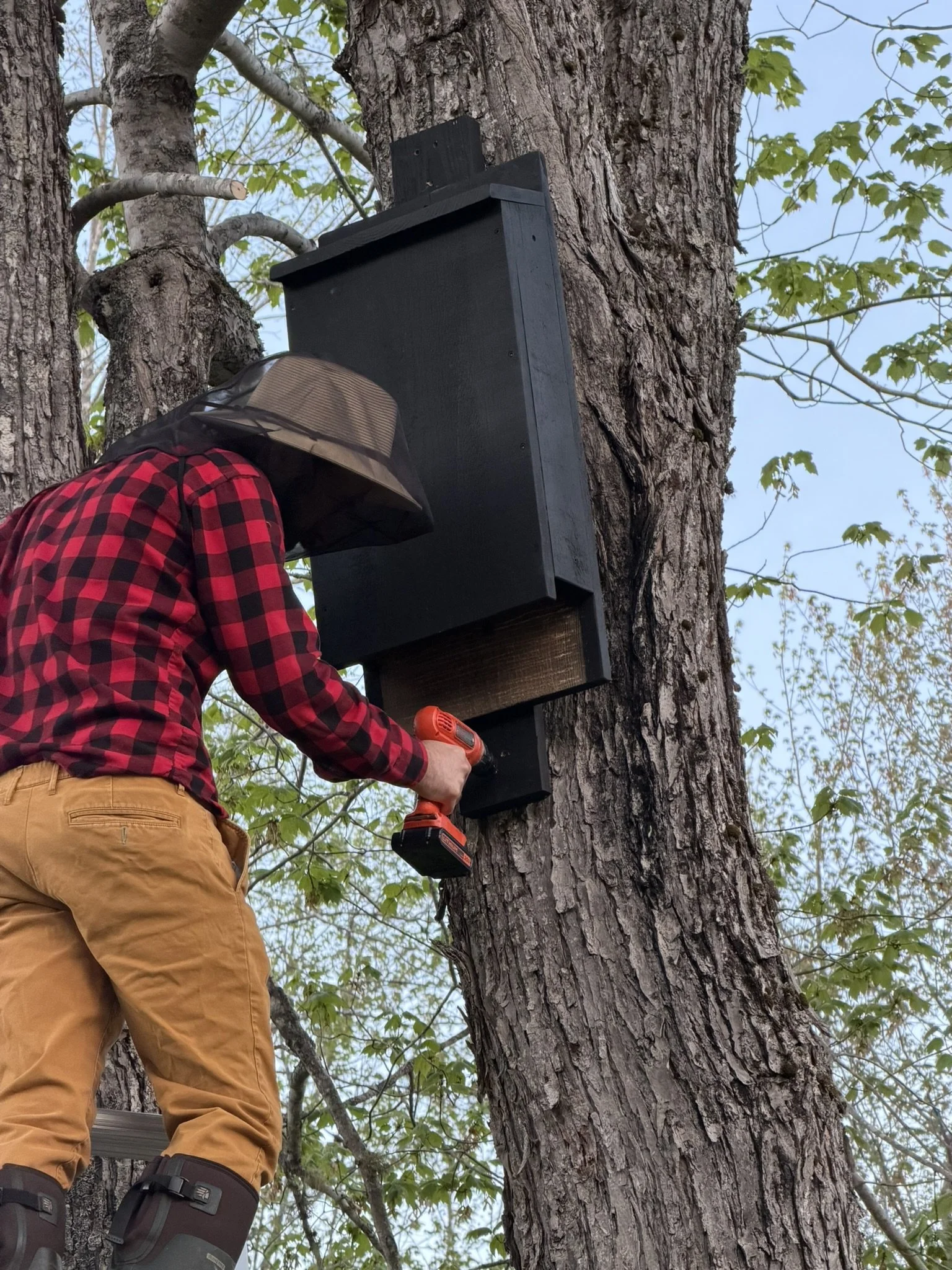
Once the bat box was painted and dry, I secured it to the south side of a tree about 16 feet off the ground. This ensures the slumbering bats are safe from predators and receive the sun’s warmth. The space below the bat box is clear of obstructions, such as limbs or debris. This means that bats leaving the box have a clear path of descent for takeoff, which is necessary for bat flight.
Bats can eat half their body weight in insects each night. More, if they are nursing. That translates to potentially thousands of mosquitoes each night, per bat. As an important and threatened species in New England, providing a home for these hardworking creatures is a pleasure and a benefit to the gardener.
Why not try to provide a home for these industrious mammals in your garden this summer? Maybe these creatures of the night will provide a reprieve from the vampiric onslaught of summer’s insect bites.