IN THE THICK OF THE GROWING SEASON

Dandelions have turned into fluffy poms, the lilacs have just passed their peak, and the warm June air is heavy with the spicy scent of fragrant viburnum. We have enjoyed a glorious mix of sunshine and rain showers that soaked the ground, hopefully recharging our wells after last year’s lingering drought. Along with the rain, warmth, and sun, we are also gifted with garden chores. This week, equipped with a sun hat and bug net, I went to work.
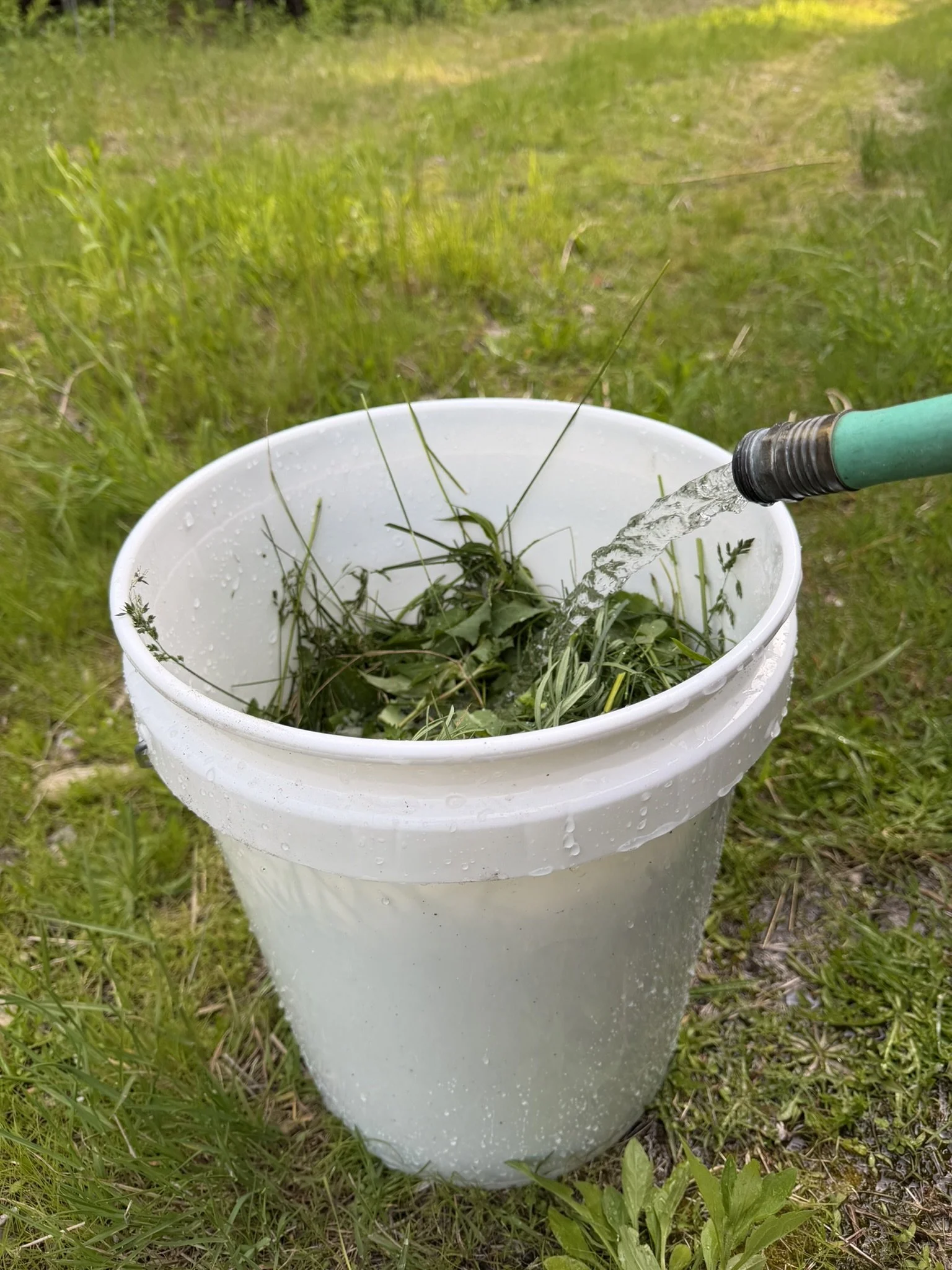
Our garden has exploded with life. Every Shasta daisy, lupine, and buttercup is buzzing or fluttering with a visiting pollinator. Our roses have plump buds forming, the peas are setting flowers, and our peonies are going to pop any day now. Along with the abundance of insects and blooms, the grass and weeds are also having their day. My after-work ritual usually involves a stroll through the garden, plucking a few handfuls of weeds from the vegetable beds. I often drop these off at the compost bin, but this time of year is also the right time to start a batch of made-from-weeds feed. It’s a very simple, very smelly process.
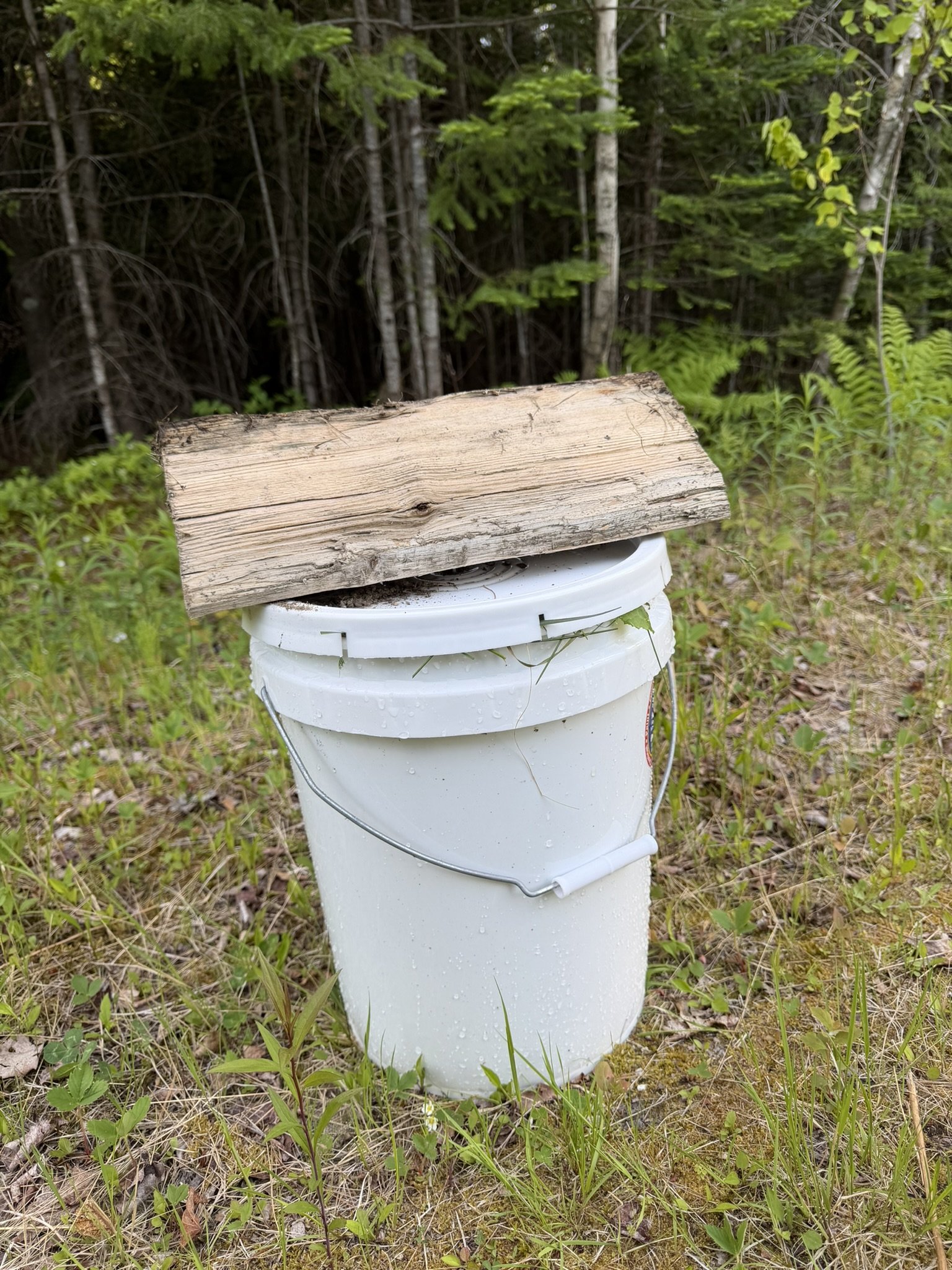
It can be made from just about any green plant material. Fill a bucket with pulled weeds, lawn clippings, and other similar greenery. Cover with water and a loose-fitting lid and leave it to ferment for a few weeks. I use a lid that came with my bucket, but a piece of wood or plastic would also work. The idea is to allow some air exchange as the concoction ferments, but not enough room for mosquitoes to enter and breed. I store my fermenting bucket of made-from-weeds feed away from any windows, doors, and frequented paths.
After a few weeks of fermentation, the organic material breaks down into a dark liquid rich in nutrients that benefit microbial life in the soil. In a few weeks, when the vegetable beds and potted plants are established, I’ll begin using a diluted mixture every other week: ten parts water to one part strained liquid feed. If mixing it in my two-gallon watering can, that’s about 3 ¼ cups of feed. I will still spread a broad-spectrum organic fertilizer in early July, but this feed will help ensure my soil microbiome is active and healthy.
There are a couple of things I try to avoid. First, I don’t want to get any diluted feed on the plants themselves. Instead, I direct the spout at the soil below the plant. Second, if herbicide was used in my garden or my neighbor’s garden, I would avoid using any greenery from that area in my made-from-weeds feed.
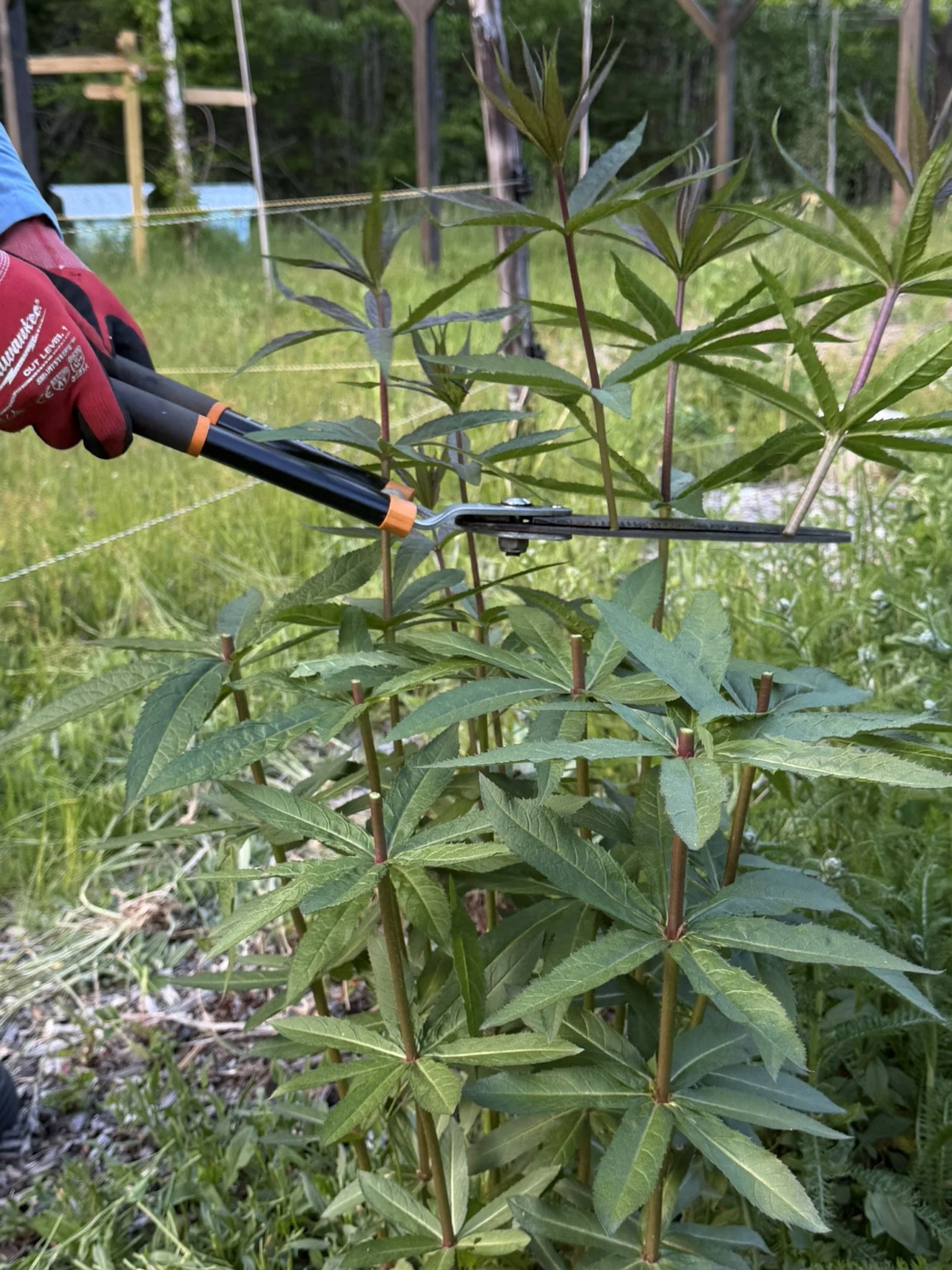
The next chore may seem like a step backward. I cut back some of my herbaceous perennials by about one-third. Yarrow, Culver’s root (Veronicastrum), monarda, and joe-pye weed get a mid-June haircut in my garden. These flop-prone perennials set flowers on the current season’s growth and grow very tall by high summer. Cutting them now, before they form flower buds, pushes their bloom period back by a few weeks, but it also creates shorter, sturdier plants that do not need staking. I sometimes leave a few and cut a few, extending the bloom period in the garden. It sounds painful to clip back a healthy plant just as it reaches its growth spurt, but the results are more blooms and less staking.
My other chore this week was to plant pumpkins and other squash. Squashes love the heat and only truly thrive when soil temperatures are above 65 degrees. If I planted them in May or even the first week of June, the seedlings would likely be stunted and may never fully recover. Pumpkins are some of my favorite garden vegetables. The fun part of pumpkins is in the growing. Their prolific vines that cover a lawn, those meandering little tendrils looking for something to cling to, and the orange fruit that appears in fairy tales, costumes, and pies. Squash, and especially pumpkins, do best in rich, moist soil. I planted my seedlings in a slightly mounded mixture of aged compost and a little native soil. The hopefully vigorous pumpkins are in an area where they will be free to roam. I will fertilize these regularly with a weak liquid organic fertilizer and the occasional made-from-weeds feed.
Garden chores are just a way of saying “gardening.” It means settling into the cycle of the season and noticing the rhythm and needs of your space. While every task in the garden may not be a delight, like weed-whacking for me, it makes me appreciate this short season of abundance.