ROSES REBOOTED
Lace doilies, avocado and dusty rose bathroom décor, skinny jeans, linoleum, and Jell-O salad. Trends fall out of fashion and change over time, often making their way back into pop culture and our lives in a generation or two. Perhaps apart from Jell-O salad. Thankfully. Sometimes cultural and fashion trends return with improvements to accommodate the modern world. For example, materials science has made advances in recent years, and many of the polyester and synthetic fabrics that became popular in the 1960s and ’70s have been made more comfortable and more sustainable. Roses are one of those trends from yesteryear that deserve to be in the spotlight in 2026 and beyond.
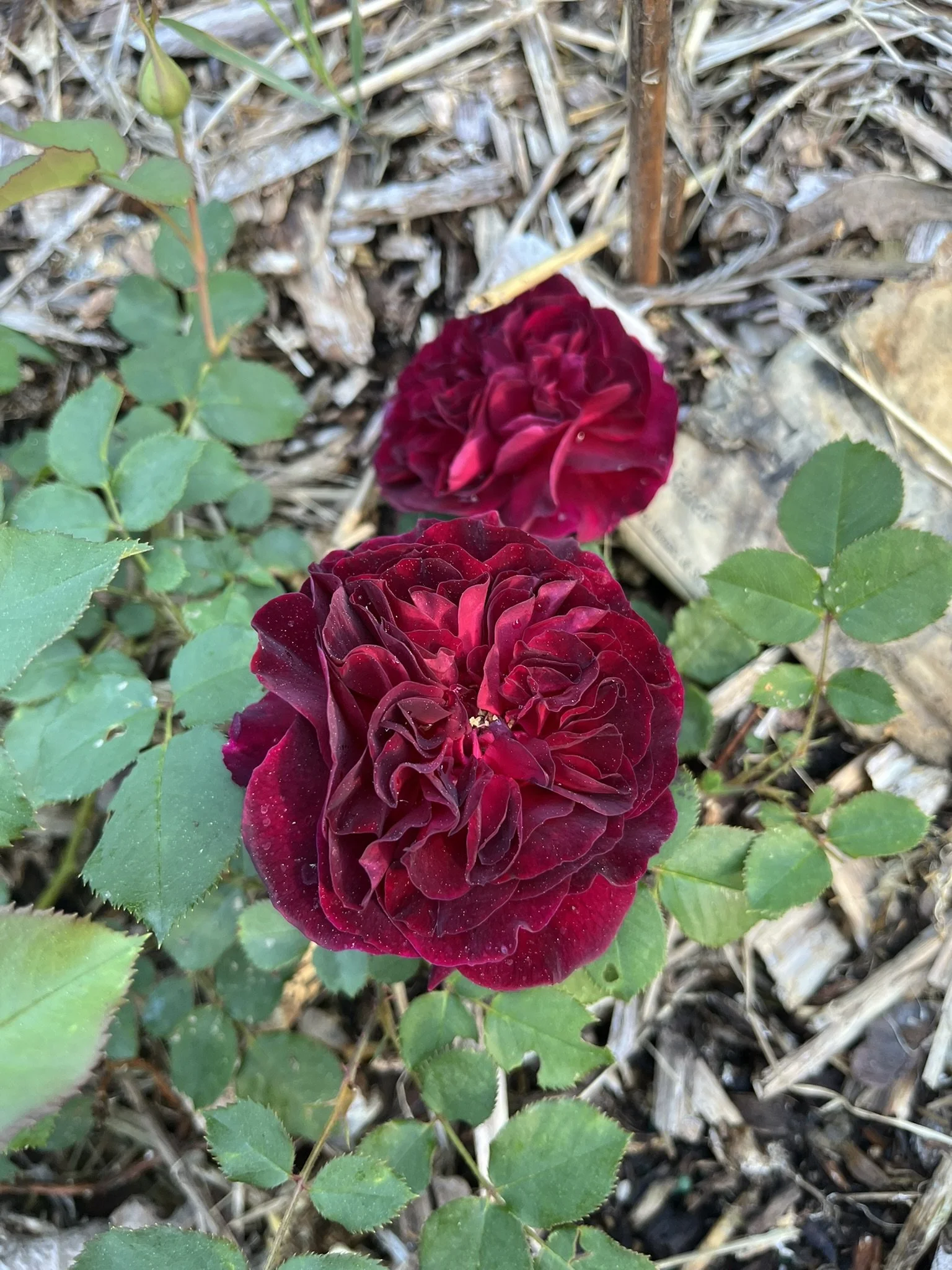
Munstead Wood
I grew up with the understanding that roses were fussy, disease-prone, fleetingly beautiful shrubs that your grandparents, or maybe great-grandparents, grew in their gardens. And indeed, that may have been the case. Roses have enjoyed the benefit of continual cultivation for the last couple hundred years, with growers selecting plants that feature desirable traits like fragrance, health, bloom period, size, color, and hardiness. Many modern roses are robust, repeat-blooming, fragrant anchors of the garden. I absolutely love them.

Bathsheba
Selection of roses for your space is key. In my garden, I choose repeat-flowering floribunda roses or English roses. Both have two main bloom periods, the first of which begins in mid-June and continues until the middle of July. Repeat-flowering roses typically take a bloom break for about four to six weeks, and then continue blooming until frost.
This past fall, I ordered a few more roses to fill out a new flower bed. When ordering roses online, I have found success with bareroot plants. These roses are ordered in the fall or early winter and usually ship close to the last frost date for our zone. In coastal Maine, that means early May. Bareroot roses arrive wrapped in plastic, sometimes with a little gel or moist sawdust to keep the roots from drying out and must be planted within a day or two of receipt. If I don’t have time to plant them in their permanent home right away, I tuck them into moist soil in a sheltered location outdoors until I can place them in their designated spot.
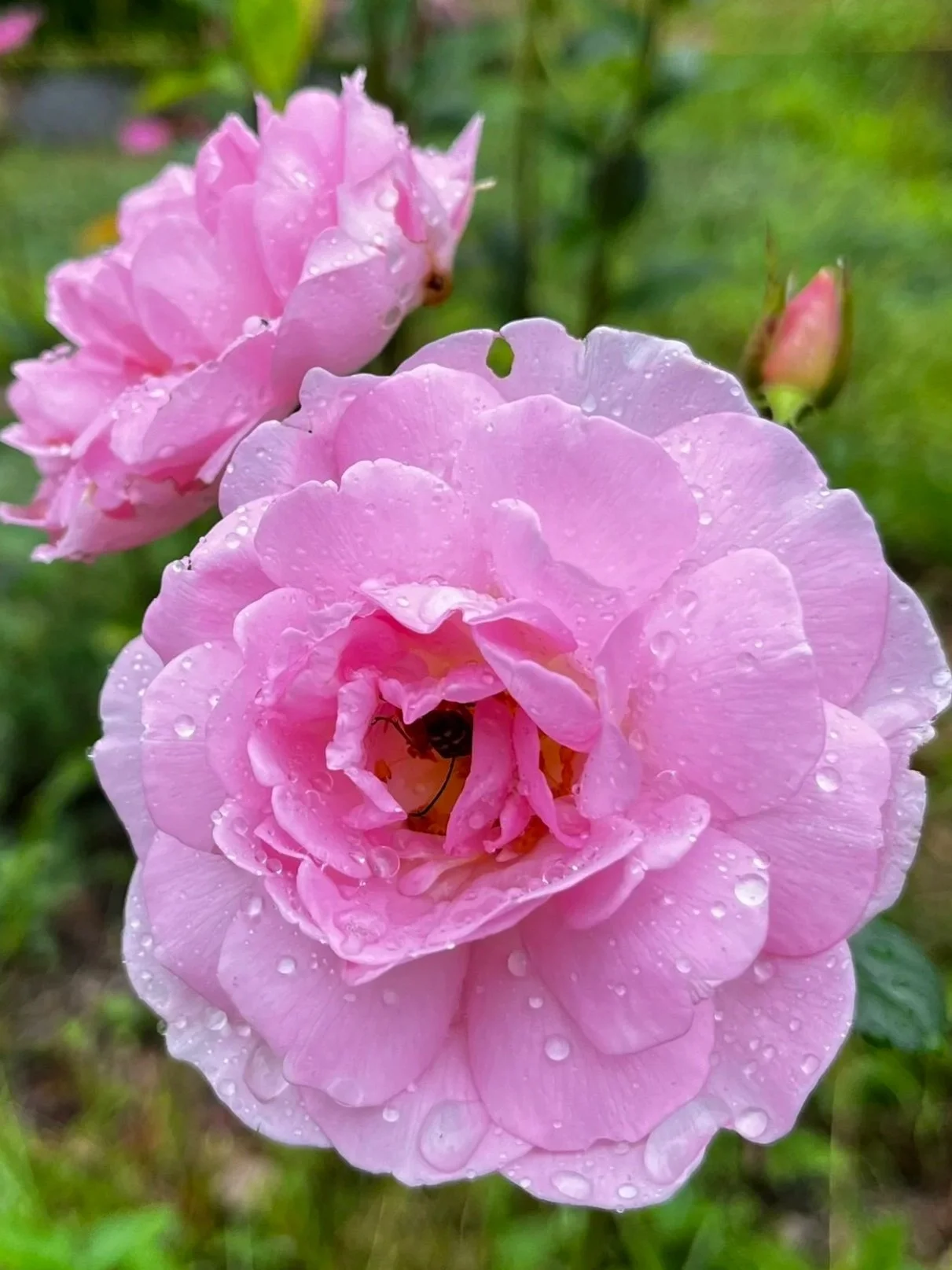
Scepter’d Isle English Rose
In addition to the type of rose and the shipping preparation, there are a couple of different rose structures available: grafted and “own root.” Grafted roses are cultivated roses that are spliced and grown onto the roots of a different rose. Grafted roses are typically found in large nursery operations and big box stores. They grow more quickly than “own root” roses but are sometimes less cold-hardy and may not have the same longevity.
“Own root” roses are roses that are wholly from a single plant. They may take longer to establish and may not bloom in the first year after planting. However, “own root” roses can live for many decades once settled. This year, I received a mix of “own root” and grafted roses.
In my garden, roses thrive and produce the most blooms when they receive at least six hours of sunlight a day. Floribunda and English roses enjoy rich, moist soil. I have found them to be tolerant of gravel-dominant soil if they have enough compost mixed in. They also do well in clay, as long as they are not sitting in water. My new flower bed is in a clay-dominant stretch of earth, which should suit these new plants just fine.
After choosing the spot where I want to plant my new roses, I dig a hole about six inches wider than the longest horizontal root and deep enough to cover a couple of inches above the old soil depth from the nursery. If I were planting a potted rose, I would dig the hole twice the diameter of the pot and two to three inches deeper than the pot. This is different from planting trees or other woody perennials, where I would plant no deeper than the soil level from the nursery. However, with roses, you want to encourage the plant to anchor.
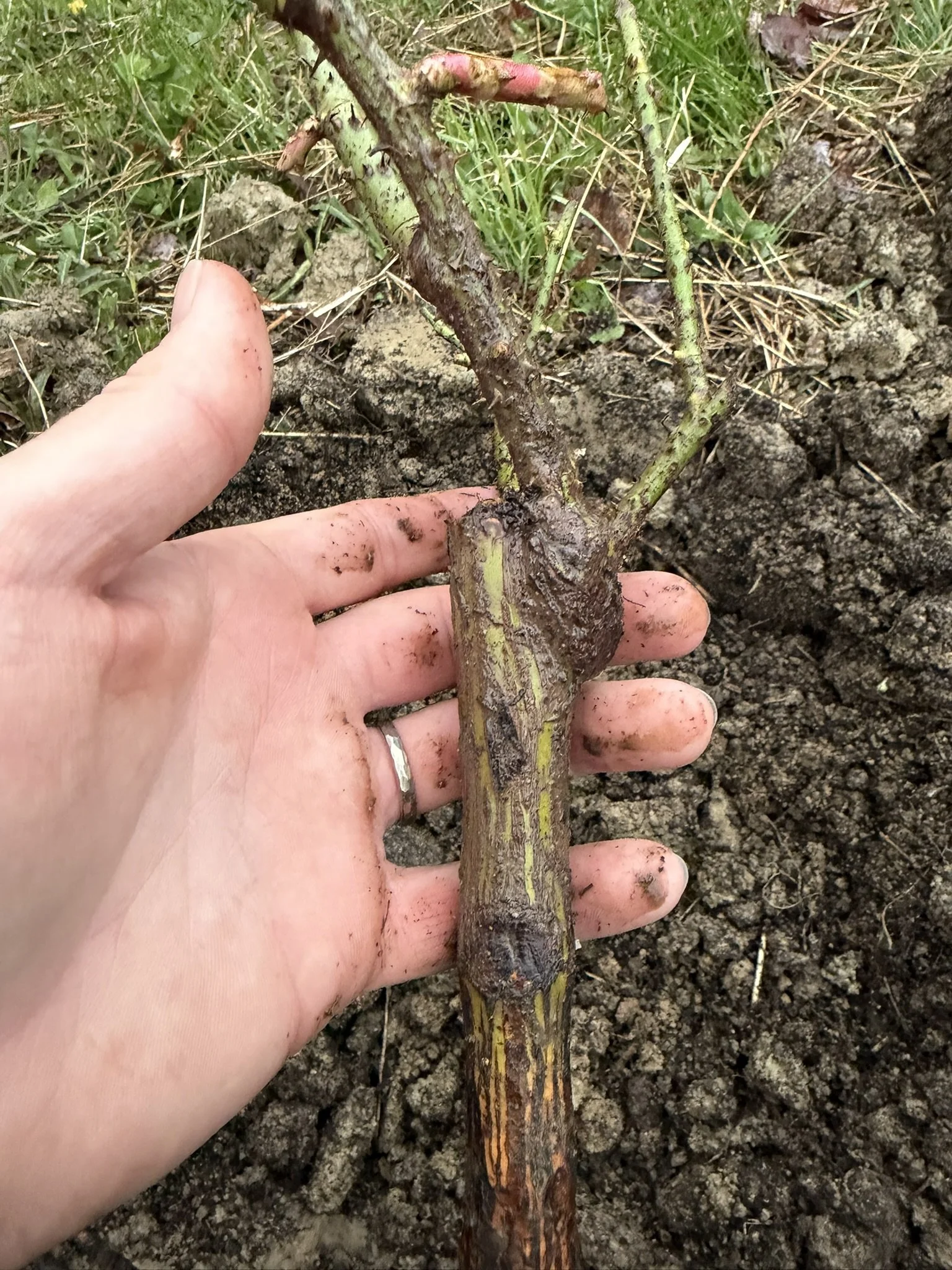
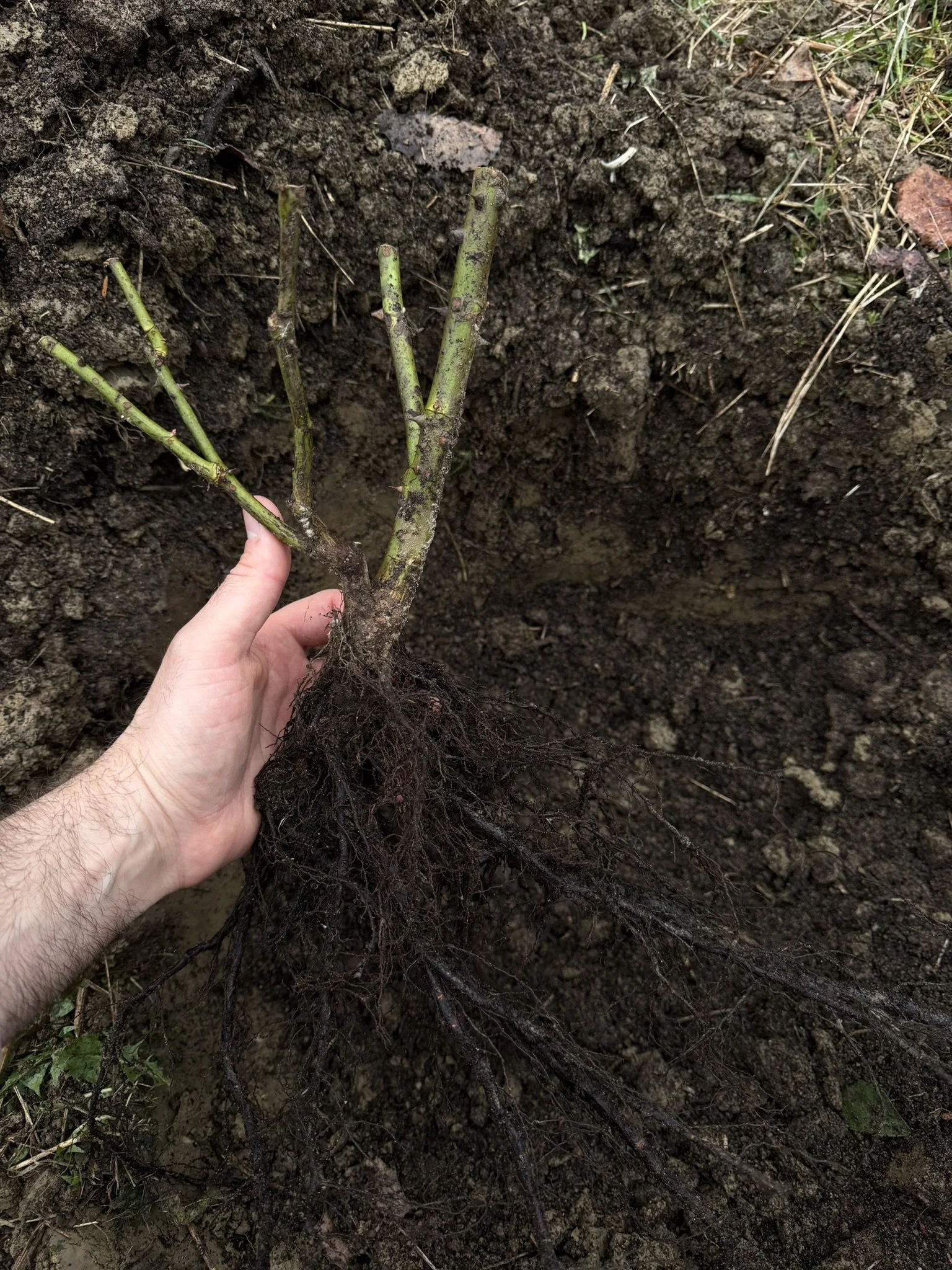
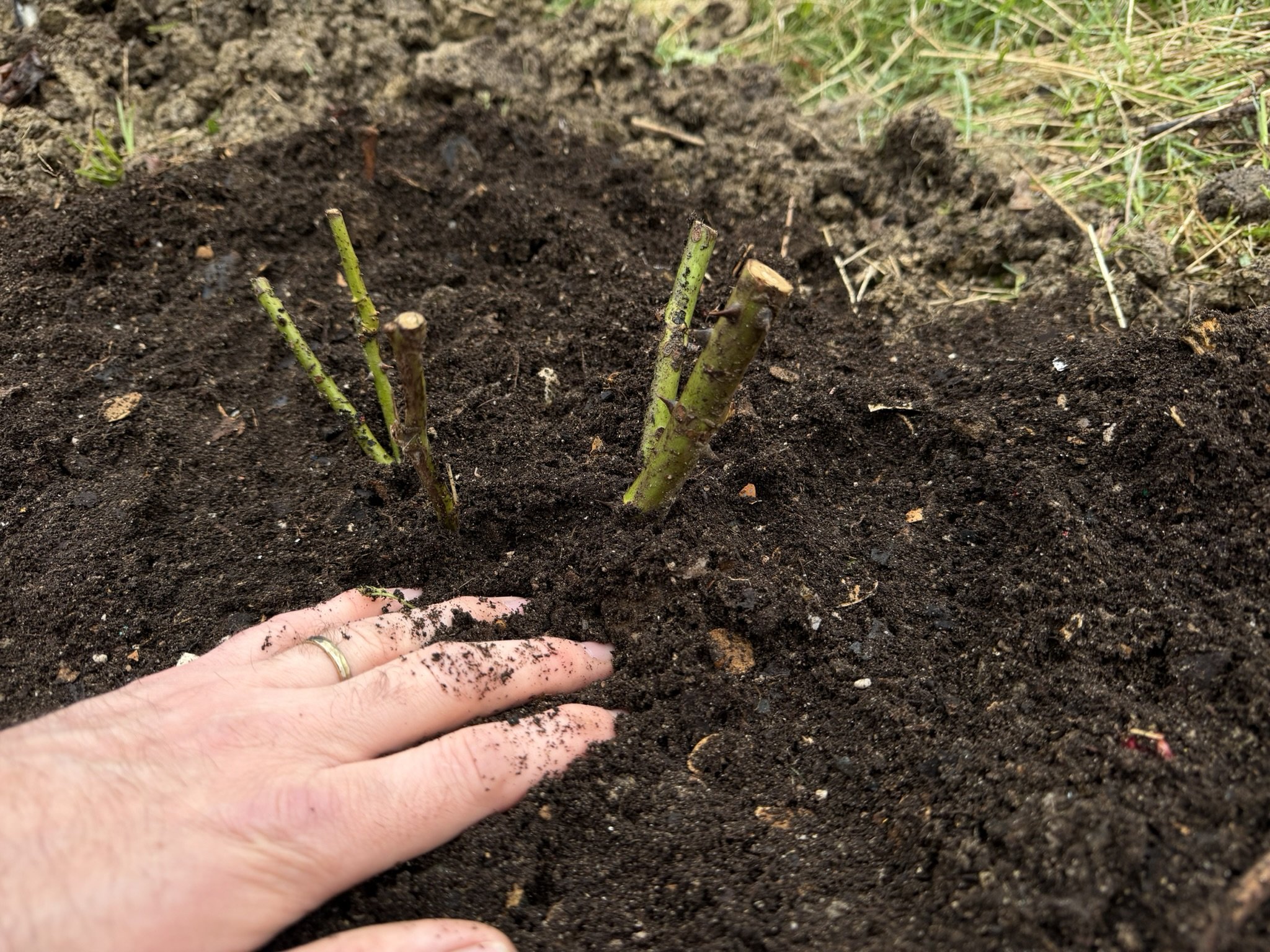
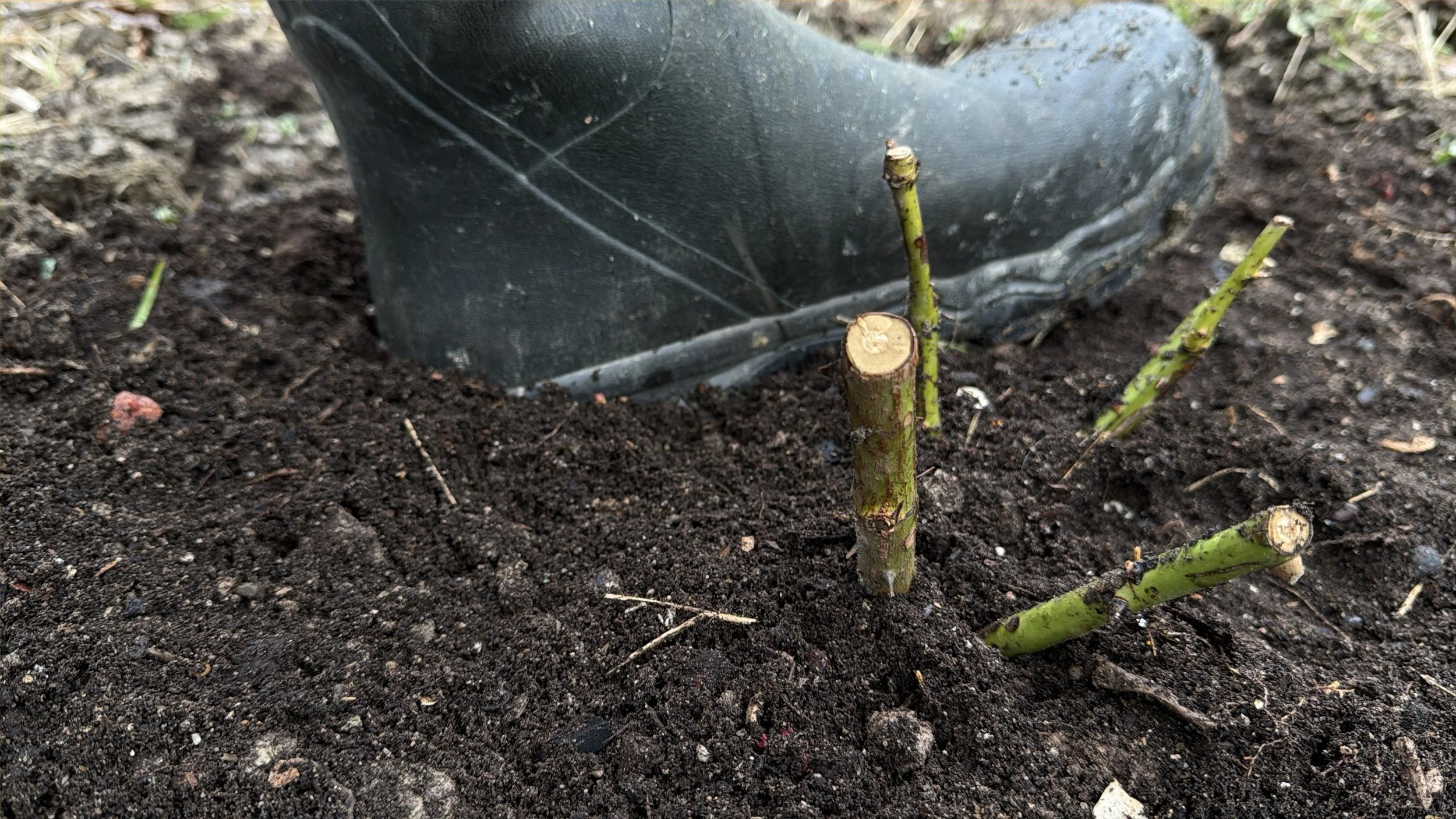
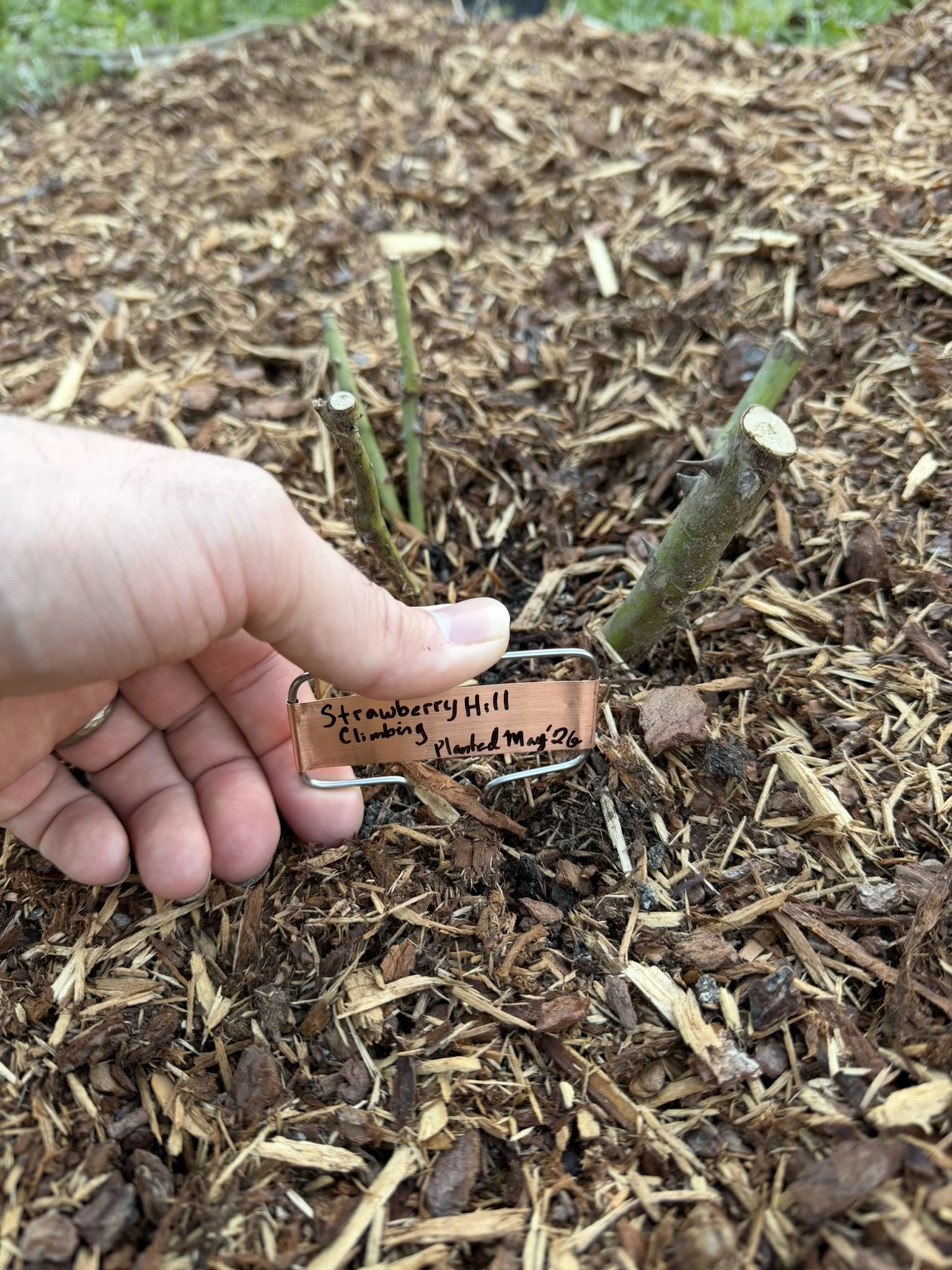
Grafted roses, in our northern climate, are susceptible to frost damage. Burying the graft point below soil depth helps protect the union from winter’s bite. The grafted portion may also root and take over from the rootstock. The roses in my new bed receive a little garden compost mixed in with the native clay soil, and then get a top dressing of more compost and, finally, finely shredded wood chips. They also receive a thorough watering, even though it was raining when I planted them. A good watering helps tamp down the soil and fill any air pockets around the roots.
Many modern roses are bred to be resistant to fungal infections and other diseases that plagued the rose gardens of 50 years ago. Their heady fragrance lingers through summer and wafts through open windows on sunny days. They are a show-stopping, repeat-blooming staple in my garden. Jell-O molds may be a thing of the past, but roses certainly deserve a place in your garden this year.